How Can Scammers Clone Your Voice in 3 Seconds?
Criminals can now copy your voice from a single voicemail or Instagram Reel, then call your family begging for money. Here's how the scam actually works and the one code word that stops it cold.
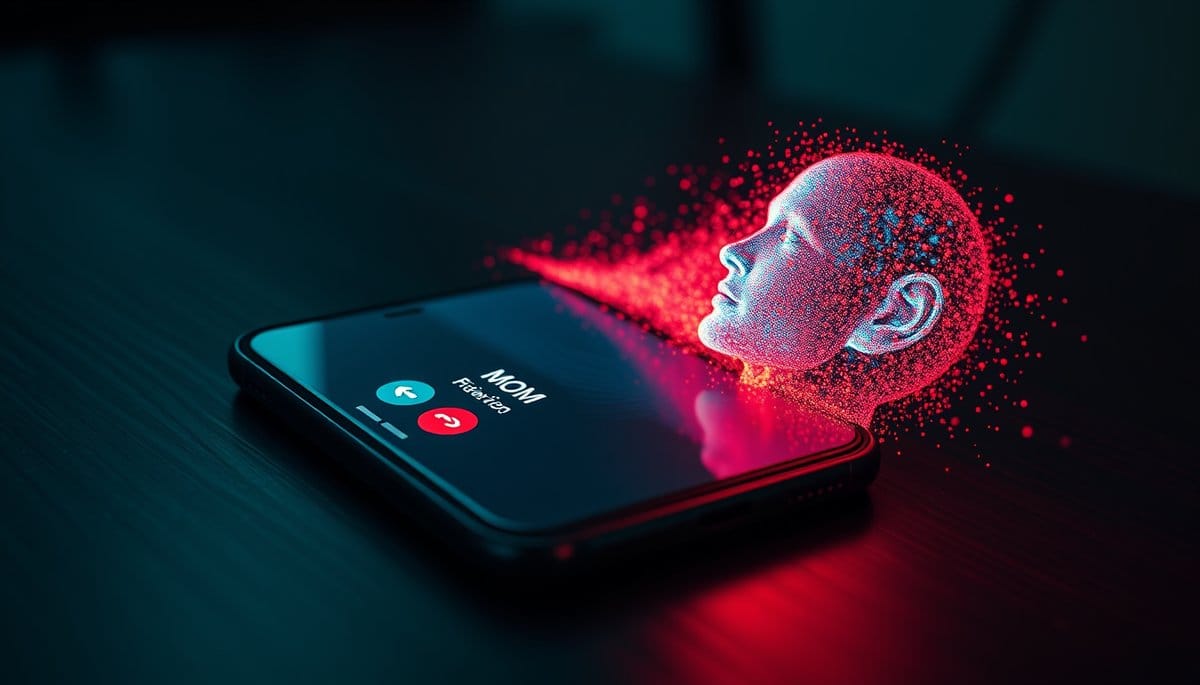
AI voice cloning tools can now replicate your voice from as little as 3 seconds of audio pulled off social media or a voicemail. Criminals use these fakes to call your relatives, imitate you in distress, and demand money or gift cards. The single best defense is a family code word that no clone can know.
The Grandmother Who Wired $15,000 to Nobody
A Georgia woman got a call from her grandson. He was crying, said he'd been in a car accident, hit a pregnant woman, and needed bail money fast. His voice cracked exactly the way it did when he was a kid. She wired the cash.
Her grandson was at work the whole time, phone in his pocket.
Investigators in Georgia and South Florida are tracking dozens of these cases. The pattern barely changes. The FBI's 2025 Internet Crime Report logged nearly $893 million in AI-enabled scam losses in a single year. Voice clones are the fastest-growing category because they hit an emotional nerve that voicemails and text scams never could.
What makes these calls work isn't technical polish. It's panic. The scammer keeps the victim on the phone, blocks them from hanging up to verify, and creates urgency. By the time anyone calls the real grandson to check, the money has already moved through three accounts.
How Your Voice Gets Stolen in Under a Minute
You don't have to be famous or targeted. Your voice is probably already sitting somewhere a scammer can grab it.
The process is depressingly simple.
**Harvest.** They pull audio from an Instagram Reel, a TikTok, a voicemail greeting, or a YouTube comment video. Three to ten seconds is enough for tools like ElevenLabs or open-source clones.
**Train.** The audio gets fed into a cloning model. Cheap commercial tools do this in under a minute for a few dollars a month.
**Script.** The scammer types what they want "you" to say. The model generates it in your voice, with your rhythm and accent.
**Spoof.** They fake the caller ID so the call appears to come from a familiar number.
The part people underestimate is spoofing. A real detail from a fraud investigator I spoke with: scammers often call the target's phone first, let it ring once, and hang up. So a missed call from "you" shows up. Then the panicked callback feels like the victim's own idea.
Why Smart People Fall for It Anyway
Most advice tells you to listen for robotic glitches. That advice is mostly useless now. Following it can actually make you more vulnerable because you trust a call that sounds clean.
The clones aren't fooling your ears. They're hijacking your brain's threat response.
When you hear a loved one crying, your amygdala fires before your reasoning does. Fraud psychologists call it emotional flooding. You physically cannot think clearly while your kid is sobbing on the line. Scammers know this, which is why every script includes a crisis: an arrest, an accident, a kidnapping.
They also weaponize secrecy. "Don't tell Dad, he'll be so mad." That single line isolates the victim from the one person who could break the spell with a simple text.
This is genuinely hard to defend against with logic alone because the whole attack is designed to shut logic off. I've seen sharp, skeptical people get taken because it was their daughter's voice. Knowing about the scam doesn't fully protect you. A pre-agreed plan does.
What to Do Before the Call Comes
Set these up this week. They take fifteen minutes total.
**Pick a family code word.** One word or phrase, nothing guessable, never posted online. If a relative calls in a panic, ask for it. No word, no money. This alone stops most voice-clone scams because a clone cannot know a secret you never recorded.
**Verify on a second channel.** Hang up and call the person back on their known number. Text them. If they answer while you're still "talking to them," you have your answer.
**Lock down your voicemail greeting.** Replace your recorded voice with the default robotic one. You just removed a free training sample.
**Make social audio private.** Set old videos with your voice to private or friends-only.
| Action | Time | Blocks | |---|---|---| | Family code word | 5 min | The core scam | | Second-channel rule | instant | Spoofed IDs | | Default voicemail | 2 min | Voice harvesting | | Private videos | 8 min | Future clones |
If you only do one thing, do the code word. Tell your parents tonight.
Key Takeaways
FAQ
Q: Can scammers really clone my voice from a short social media video?
A: Yes. Commercial tools need only 3 to 10 seconds of clear audio, and a TikTok or Instagram Reel provides plenty. The clone can then say anything the scammer types.
Q: If the call sounds slightly off, doesn't that mean it's fake?
A: Not reliably. Current clones are clean enough that most people can't hear the difference, and stress on a phone speaker masks any flaws, so never rely on your ears alone. Use a code word or a callback instead.
Q: How do I set up protection if my parents aren't tech-savvy?
A: Skip the settings and just agree on one code word over dinner tonight, since that requires zero technology. Tell them the rule: any emergency call demanding money gets the code word question, and no answer means hang up and call back.
Conclusion
Your voice is already harvestable, and no privacy setting fully undoes that. The move that actually protects your family costs nothing and takes five minutes: agree on a code word tonight, and make the rule that any panicked money request gets verified on a second phone call before a cent moves. Do it before someone calls pretending to be you.
Related Posts
- How Can Scammers Clone Your Voice in 3 Seconds?
AI voice cloning tools can replicate your voice from a single short audio clip — something freely available on your voicemail, TikTok, or Instagram. Scammers are already using this to call your parents, your boss, and your kids. The defenses are simple, but almost nobody has them set up. - How Are AI Deepfakes Used in Romance Scams?
Romance scammers are now using real-time AI deepfake video and cloned voices to impersonate attractive strangers — and sometimes even your own family members. The technology costs less than $20/month and is shockingly convincing. Here's what the attack looks like and how to protect yourself today. - How Are AI Deepfakes Stealing Billions From You?
A CFO in Hong Kong wired $25 million after a video call with people who didn't exist. AI deepfakes now clone voices from 3 seconds of audio and generate real-time video of anyone. This is happening to ordinary people right now — not just executives.