How Can Scammers Clone Your Voice in 3 Seconds?
AI voice cloning tools can replicate your voice from a single short audio clip — something freely available on your voicemail, TikTok, or Instagram. Scammers are already using this to call your parents, your boss, and your kids. The defenses are simple, but almost nobody has them set up.
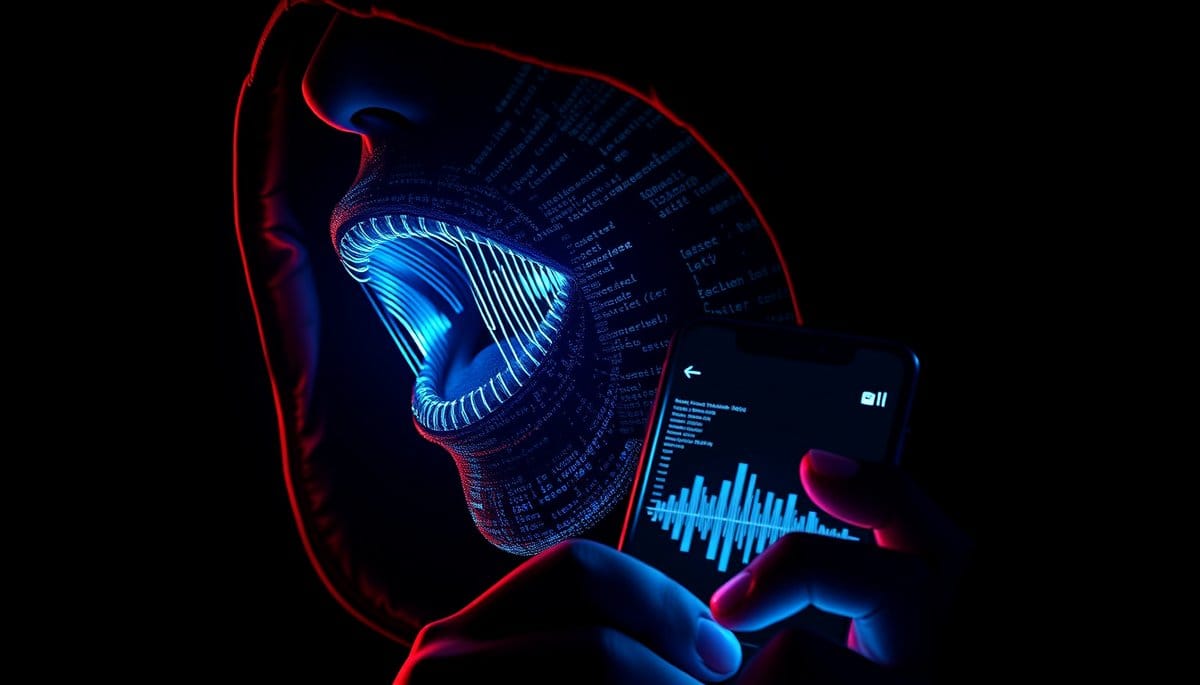
Scammers can clone your voice using as little as 3 seconds of audio pulled from a voicemail, social media video, or YouTube clip — then use it to call your family members, pretending to be you in a crisis. This is not a future threat. It is happening right now, and it costs victims an average of $11,000 per incident according to the FTC.
The Real Case That Should Keep You Up at Night
In 2023, a mother in Arizona received a phone call. Her daughter was sobbing on the other end, saying she'd been in a car accident, had injured someone, and desperately needed $15,000 in bail money. The voice was her daughter's — the pitch, the crying, the way she said 'Mom, please.' It wasn't her daughter. It was a scammer using an AI voice clone, and the real daughter was sitting at home, completely unaware.
This wasn't an isolated incident. The FTC received over 5,100 reports of family impersonation scams using AI-generated audio in 2023 alone, with total losses exceeding $11 million. That number is almost certainly undercounted — most victims are too embarrassed to report it.
The most brutal part? Many victims *knew* something felt slightly off. But the voice was close enough, and the emotional pressure was high enough, that they wired the money anyway. That's the trap. It's not designed to fool you when you're calm and skeptical — it's designed to fool you when you're terrified.
How the Attack Works — Step by Step
Here's exactly what happens, from the scammer's side of the screen:
1. **They find your audio.** Your voicemail greeting, a TikTok, a Facebook video, a podcast appearance, a YouTube comment. Three seconds is genuinely enough for tools like ElevenLabs or Resemble AI to produce a recognizable clone. Eleven seconds produces something nearly indistinguishable.
2. **They run it through a voice cloning tool.** Several of these tools are free or cost under $5/month. The scammer uploads your clip, the AI analyzes your vocal frequency, tone, cadence, and accent, and generates a model of your voice in under two minutes.
3. **They build the scenario.** Usually a crisis — car accident, arrest, hospital emergency, mugging abroad. The scenario is chosen specifically to trigger panic and bypass rational thinking.
4. **They make the call.** Using voice-over-IP services that mask caller ID, the scammer calls your family member. They speak *as you* — or in some cases, they play a short AI-generated clip of you crying or asking for help, then hand off to a 'lawyer' or 'police officer' who handles the money request.
5. **They collect.** Wire transfer, gift cards (Google Play, Apple), or Zelle. All methods that are nearly impossible to reverse.
The whole setup — from finding your audio to making the call — takes an experienced scammer under 20 minutes.
Why Smart People Fall For This — The Psychology Is Brutal
Most guides tell you that scam victims are elderly or tech-illiterate. That's wrong, and it's a dangerous assumption to hold about yourself.
The Arizona mother who lost $15,000 was a retired schoolteacher. A Connecticut financial advisor wired $25,000 after hearing what he believed was his son's voice. Intelligence doesn't protect you from acute emotional hijacking — and that's exactly what this attack is engineered to do.
Here's the surprising part: your brain *wants* to believe it's real. When you hear a voice you recognize — even one that's 85% accurate — your brain fills in the gaps. This is called auditory pareidolia, and it's the same reason you hear your name in a crowd even when nobody said it. Emotional urgency makes it worse. Under stress, the prefrontal cortex — the part that asks 'wait, does this make sense?' — gets flooded out by the amygdala's alarm response.
And scammers know this. They deliberately escalate the emotional stakes in the first 10 seconds of the call. 'Mom, I don't have much time.' 'You can't tell Dad.' 'They're going to arrest me if you don't do this now.' By the time your rational brain tries to engage, you've already been redirected to a 'lawyer' who takes over.
Three seconds of audio. Twenty minutes of setup. And a psychological exploit older than phones themselves.
Your Defense Checklist — Do These Before You Need Them
The good news: the defenses are simple. The bad news: you have to set them up *before* the call comes, not during it.
**1. Create a family safe word — right now, today.** Pick a word or short phrase that no one outside your family would know. Something weird and specific: 'purple mailbox,' 'Uncle Terrence's boots.' If someone calls claiming to be a family member in crisis, you ask for the safe word. If they can't give it, hang up immediately. This is the single most effective defense and takes 90 seconds to set up.
**2. Always call back on a number you already have.** If 'your son' calls from an unknown number, hang up and call your son's actual number. Don't call back the number that called you — it goes to the scammer. This sounds obvious. People don't do it when they're panicking.
**3. Slow everything down.** Legitimate emergencies allow for a 5-minute verification call. If the 'lawyer' or 'officer' on the line says there's no time to verify anything, that pressure is the scam. Real law enforcement does not demand immediate gift card payment.
**4. Lock down your public audio.** Make your social media videos private or friends-only. Change your voicemail to a short, text-based message rather than your actual voice. Less audio in the wild means a lower-quality clone — not impossible, but harder.
**5. Tell your parents and grandparents about this specific threat — not just 'be careful about scams.'** Vague warnings don't stick. Show them this article. Practice the safe word with them. Specificity is what makes the warning actually land.
Key Takeaways
- The FTC logged over $11 million in losses from AI voice impersonation scams in 2023 — and that's only reported cases, which experts estimate represent roughly 5% of actual incidents.
- ElevenLabs and similar tools can generate a convincing voice clone from as little as 3 seconds of audio — a sample easily sourced from any public voicemail greeting or social media video.
- Victims don't fall for this because they're stupid — they fall because emotional panic physically suppresses the brain's ability to apply skepticism, and scammers deliberately manufacture that panic in the first 10 seconds of the call.
- Set up a family safe word today — a random, private phrase all family members agree to use to verify identity in any emergency call. It takes 90 seconds and is currently the most reliable defense available.
- As real-time voice conversion improves (tools like RVC already exist), scammers will soon conduct live conversations in cloned voices without pre-recorded clips — making the safe word protocol not optional but essential within 18 months.
FAQ
Q: How do I know if a call from a family member is real?
A: Ask for the pre-agreed family safe word — if they can't give it, hang up and call them back on their actual saved number. Don't rely on voice recognition alone, and don't let emotional urgency rush you past this step.
Q: Can AI voice cloning be detected by phone companies?
A: Honestly, not reliably — not yet. Carriers can flag spoofed caller IDs through STIR/SHAKEN protocols, but the cloned voice itself travels as normal audio that no current carrier-level system can automatically identify as synthetic. This is a genuine gap in the defense landscape.
Q: What should I do if I think I was targeted or already sent money?
A: Call your bank immediately — wire transfers have a narrow window where a recall is possible, sometimes under 24 hours, so speed matters. Then file a report with the FTC at ReportFraud.ftc.gov and your local FBI field office, as these reports directly feed federal enforcement operations.
Conclusion
Voice cloning scams are not a hypothetical edge case — they're running right now in all 50 states, targeting people exactly like your parents, your kids, and you. The technology to pull this off costs scammers less than a Netflix subscription. Your defense costs nothing except five minutes of preparation. Pick up your phone, text your family group chat, and agree on a safe word today — that one action makes you dramatically harder to victimize than the overwhelming majority of people who will read this and do nothing.