How Are AI Deepfakes Used in Romance Scams?
Romance scammers are now using real-time AI deepfake video and cloned voices to impersonate attractive strangers — and sometimes even your own family members. The technology costs less than $20/month and is shockingly convincing. Here's what the attack looks like and how to protect yourself today.
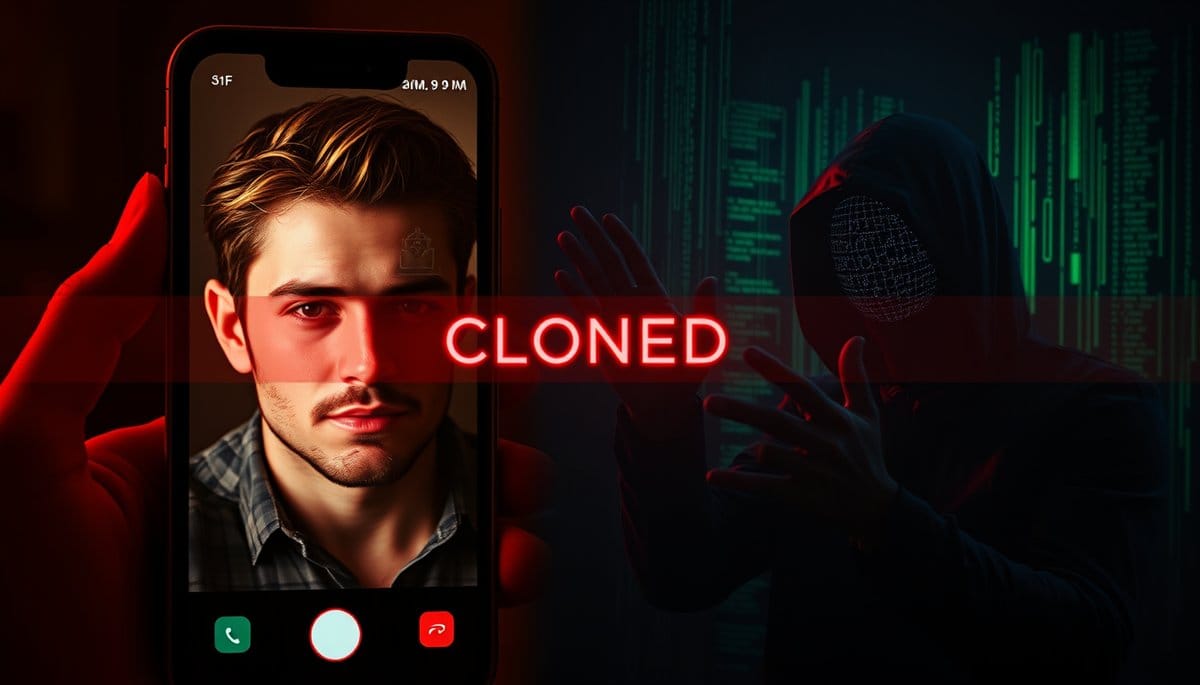
AI deepfakes allow romance scammers to generate fake real-time video calls and clone voices from audio samples as short as 3 seconds, making victims believe they're talking to a real person they've fallen for — or even a family member in danger. This isn't a future threat: it's happening right now, and the tools are cheap, accessible, and terrifyingly good.
The Real Case: She Sent $650,000 to a Man Who Didn't Exist
In 2024, a 53-year-old woman in France transferred over €600,000 (roughly $650,000 USD) to a man she believed was Brad Pitt. She'd been contacted on Instagram, received AI-generated photos of 'Brad' in personal settings alongside apparent medical documents, and exchanged months of emotionally intimate messages. The 'relationship' was manufactured entirely by scammers using AI image generation and scripted emotional manipulation. She never spoke to a real person.
That case made headlines because of the celebrity angle. But thousands of quieter versions happen every week. The FBI's Internet Crime Complaint Center reported $1.3 billion lost to romance scams in 2022 alone — and that figure predates the wide availability of real-time AI video tools like DeepFaceLive and voice cloners like ElevenLabs.
The new version of this attack is worse. Scammers aren't just sending fake photos anymore. They're getting on video calls — and the face you see moving, blinking, and smiling at you in real time is generated by AI running on a $30/month subscription.
How the Attack Works: A Step-by-Step Breakdown
Here's exactly how a modern AI-assisted romance scam unfolds:
1. **Target selection.** Scammers scrape dating apps, Facebook, and Instagram for profiles showing loneliness signals — recent divorce mentions, grief posts, empty-nester content. You're not randomly targeted. You're profiled.
2. **Persona construction.** Using tools like Midjourney or Stable Diffusion, they generate a consistent fake identity — usually an attractive professional (military officer, surgeon, offshore engineer) with dozens of coherent images across fake social profiles.
3. **Relationship building.** Weeks of daily messaging establish emotional intimacy. This phase is almost entirely human-run or AI-chatbot assisted. The goal: get you emotionally invested before any video call happens.
4. **The deepfake video call.** When you push for video proof, they deliver — using software like DeepFaceLive, which swaps a face onto a live webcam feed in real time. The voice is either cloned via ElevenLabs (trained on YouTube videos of the persona they're faking) or run through a real-time voice changer. The call is kept short. 'Bad connection' is the excuse.
5. **The crisis.** Once trust is established, a sudden emergency strikes — a medical bill, a stranded shipment, a business deal gone wrong. The ask is urgent. The emotional pressure is enormous.
6. **The exit.** Once money moves, contact drops. The persona disappears.
Why Smart People Fall for This — It's Not Gullibility
Most guides frame romance scam victims as naive. That framing is wrong, and it's dangerous because it makes people overconfident in their own judgment.
Here's the uncomfortable truth: the psychological mechanisms that make you a good partner — empathy, trust, emotional investment — are exactly what these attacks exploit. When you've exchanged 200 messages over six weeks with someone who remembers your mother's name and asks about your bad day, your brain has already decided this person is real. The video call doesn't create trust. It confirms trust that was already engineered.
On the technical side, the quality of current deepfakes genuinely surprises security researchers. ElevenLabs can clone a voice from a 3-second audio sample. DeepFaceLive runs at 30 frames per second on a consumer GPU. A 2023 study from MIT found that humans correctly identified AI-generated faces only 48% of the time — essentially coin-flip accuracy.
One detail that only becomes clear when you actually watch these scam calls: scammers deliberately introduce minor glitches. A slight video lag, a pixelated frame. It sounds counterintuitive, but those 'flaws' actually increase believability — they make the call feel like a real video connection, not a production. That's a genuinely clever manipulation most people never see coming.
Your Defense Checklist: What to Do Starting Today
Stop relying on 'gut feeling.' Your gut was not trained to detect AI-generated faces. Here's what actually works:
**1. Create a family safe word right now.** Pick a random word — not your dog's name, not your street — and share it only with your closest family. If anyone calls claiming to be a family member in an emergency, they must say the word. No word, no money moves. Do this before you finish reading this article.
**2. Never trust a first video call as identity proof.** Ask the person to hold up three fingers, touch their left ear, then wave — in that exact sequence, on the spot. Real-time deepfake software struggles with rapid unexpected physical instructions. Scammers will claim bad connection and disconnect.
**3. Reverse image search every photo.** Drag any profile photo into Google Images or TinEye. AI-generated faces won't show up, but stolen real-person photos often will. If results show a different name, that's your answer.
**4. Call back on a verified number.** If someone calls you claiming to be your bank, a family member, or any institution — hang up and call back using a number you independently looked up. Never call back on the number that called you.
**5. The '24-hour rule' for any money request.** If someone you've never met in person asks for money — gift cards, wire transfer, crypto — enforce a mandatory 24-hour wait and tell a trusted third party about the request. Urgency is a manipulation tool. Real emergencies have other solutions.
If you're skipping the safe word because it 'feels awkward to bring up' — that hesitation is exactly what scammers count on.
Key Takeaways
- A French woman lost $650,000 to an AI-fabricated 'Brad Pitt' persona in 2024 — and the FBI recorded $1.3 billion in romance scam losses in 2022 before real-time deepfake video tools were widely available.
- ElevenLabs can clone a convincing voice from just 3 seconds of audio, and DeepFaceLive generates real-time face-swapped video at 30fps on consumer hardware costing under $500.
- Victims aren't gullible — they're emotionally primed over weeks before any video call happens, meaning the deepfake isn't creating trust, it's confirming trust that was already manufactured.
- Set up a family safe word TODAY — a random word only your closest contacts know, required to verify identity in any emergency money request.
- As AI video quality reaches full photorealism (expected within 18–24 months), even the 'ask them to do something unexpected on camera' trick will stop working — physical in-person verification or cryptographic identity tools will become necessary.
FAQ
Q: How do I know if a call from a family member is real?
A: Ask them to say your pre-arranged family safe word — a random word agreed upon in advance that only real family members know. If you haven't set one up yet, hang up and call them back on a number you already have saved in your phone.
Q: Can AI voice cloning be detected by phone companies?
A: Honestly, not reliably — not yet. Major carriers like AT&T and Verizon have basic robocall filters, but they don't analyze voice authenticity in real time, and AI-cloned voices pass through standard call infrastructure without any flag.
Q: What should I do if I think I was already targeted by one of these scams?
A: Report it immediately to the FBI's Internet Crime Complaint Center at ic3.gov and contact your bank within 24 hours — wire transfers occasionally have a short reversal window. Don't feel ashamed; document every message and call detail before anything gets deleted.
Conclusion
AI deepfake romance scams are not a hypothetical — they are running right now, at scale, with tools anyone can rent for less than a Netflix subscription. The single most effective thing you can do today takes four minutes: text your family a safe word and explain the rule. That one friction point can stop even the most technically sophisticated attack cold, because no AI can guess a word it was never trained on.