How Are AI Deepfakes Infiltrating Your Hiring?
Scammers now use AI-generated faces and cloned voices to pass video interviews, get hired, and gain access to company systems. Some swap identities mid-process. Here's how the con works and how to stop it.
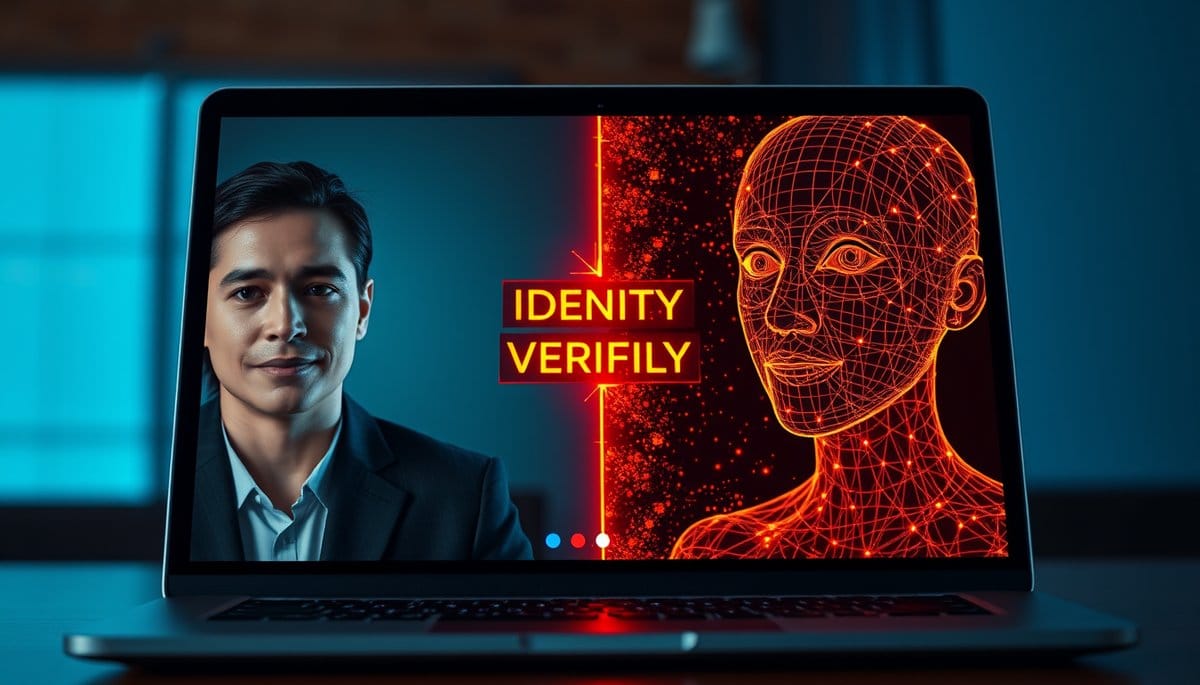
Criminals are using AI-generated faces, cloned voices, and stolen identities to pass remote job interviews and get hired at real companies. Once inside, they collect a paycheck, steal data, or plant malware. North Korean operatives alone have placed thousands of fake IT workers at Western firms this way.
The Engineer Who Never Existed
In 2024, security firm KnowBe4 hired a senior software engineer. He passed four video interviews. His face matched his ID. His references checked out. The day his company laptop arrived, it immediately started loading malware.
The "engineer" was a North Korean operative using a stolen American identity and an AI-enhanced photo. His video presence looked normal enough to clear four rounds of human screening.
This is not rare anymore. The U.S. Department of Justice has charged people running "laptop farms" inside America, rows of company-issued machines that let overseas workers appear domestic. One Arizona woman helped place workers at more than 300 companies and generated over $17 million in wages funneled back overseas.
The candidates are often technically skilled. They do the actual job. That is what makes them hard to fire and easy to miss. The salary is the point, and so is the access. A backend developer with admin credentials can quietly copy source code, customer databases, or financial records for months.
How a Fake Candidate Slips Through
The attack chains together several cheap tools. None of them are exotic.
1. **Identity theft or rental.** Real Social Security numbers and resumes are bought on the dark web or borrowed from willing accomplices for a cut of the salary. 2. **Face filtering.** Live deepfake software like DeepFaceLive maps a synthetic or stolen face onto the operator during the video call, smoothing inconsistencies in real time. 3. **Voice handling.** When accents would raise flags, real-time voice changers or an off-screen accomplice handle the talking. 4. **The mid-process swap.** This is the nasty part. The person who interviews may not be the person who shows up on day one. The skilled "candidate" passes the technical screen, then a different operator does the actual job. 5. **The laptop farm.** The company ships hardware to a U.S. address. A local helper plugs it in and installs remote access, so logins appear to come from Ohio while the worker sits in another country.
Each step is mundane. Combined, they defeat hiring processes built on the assumption that the face on the screen is a single, real, present human.
Why Smart Recruiters Get Fooled
You'd think a trained interviewer would notice. Most don't, and the reason isn't stupidity.
Video interviews trained everyone to accept low quality. A frozen frame, choppy audio, a slightly off lip-sync, we blame the wifi, not a deepfake. Scammers count on that tolerance. The glitches that would expose them are the same glitches we forgive every day on Zoom.
There's also the resume halo. When someone answers technical questions correctly, your brain stops auditing their face. Competence buys trust. The fake IT workers exploit this directly by actually being good at the job.
The contingent workforce makes it worse. When a staffing agency or managed service provider sources talent on your behalf, you may never run your own checks. You trust their verification, they trust a subcontractor's, and somewhere down the chain nobody actually confirmed a real human exists. SIA analysts flagged exactly this gap: mid-process identity swaps move through supplier pipelines that companies were never built to inspect.
This part is genuinely hard to measure, because the successful fakes are the ones you never caught.
What You Can Do Before You Hire
If your entire vetting process is a video call and a reference check, you're already exposed. Tighten these now.
- **Force a liveness test.** Ask the candidate to turn their head fully sideways, stand up, or hold a hand next to their face. Current real-time deepfakes struggle with profile angles and occlusion. Hands crossing the face cause visible warping. - **Verify the laptop's real location.** Check login IP and time zones against the claimed home address. A "Texas" hire logging in at 3 a.m. local with foreign network hops is a flag. - **Do a surprise live ID check.** Schedule a short unscheduled video call and ask them to hold their ID up live, then compare it to the submitted document. - **Audit your staffing suppliers.** Ask your MSP exactly how they verify identity and whether they re-verify between interview and start date. If they can't answer, that's your answer. - **Watch the first paycheck routing.** Insist on a U.S. bank account in the worker's legal name, not a third-party payment app.
None of this guarantees safety. A determined operator with a strong setup can pass a head turn. But every added physical, unpredictable check raises the cost and breaks the script they rehearsed.
Key Takeaways
FAQ
Q: How can I tell if a job candidate is using a deepfake on a video call?
A: Ask them to slowly turn their head fully to the side and pass a hand in front of their face; live deepfakes warp on profile angles and occlusion. Sudden refusal or 'connection issues' the moment you ask is itself a red flag.
Q: But aren't these scams only targeting big tech companies?
A: No. Operators apply broadly to any remote role with system access, including small firms and contractors, because smaller companies do lighter background checks. A 20-person startup with cloud admin access is an easier and equally valuable target.
Q: Where do I start if I hire through a staffing agency?
A: Email your MSP today and ask one question: do you re-verify a worker's identity between the interview and their start date? If the answer is no or unclear, require a live ID check on day one yourself.
Conclusion
Fake hires aren't a sci-fi worry; they're collecting salaries at real companies right now and shipping your data overseas. Before your next remote hire starts, add one unscriptable liveness check to the final interview and re-confirm their ID live on day one. Do it this week, because the operators are betting you won't bother.
Related Posts
- How Are AI Deepfakes Stealing Billions From You?
A CFO in Hong Kong wired $25 million after a video call with people who didn't exist. AI deepfakes now clone voices from 3 seconds of audio and generate real-time video of anyone. This is happening to ordinary people right now — not just executives. - How Are AI Deepfakes Used in Romance Scams?
Romance scammers are now using real-time AI deepfake video and cloned voices to impersonate attractive strangers — and sometimes even your own family members. The technology costs less than $20/month and is shockingly convincing. Here's what the attack looks like and how to protect yourself today. - How Are AI Deepfakes Hijacking Trucking Companies?
Organized rings are using AI-cloned carrier identities to book real freight loads, then vanish with the cargo. A single Manhattan case tied this scam to $5 million in stolen goods. The defenses are simpler than you think.