How Does AI-Powered CEO Fraud Bypass Your Security?
Attackers now clone an executive's voice from a few seconds of audio and join video calls as a fake CFO. One company lost $25 million this way. Here is how the scam works and the exact steps that stop it.
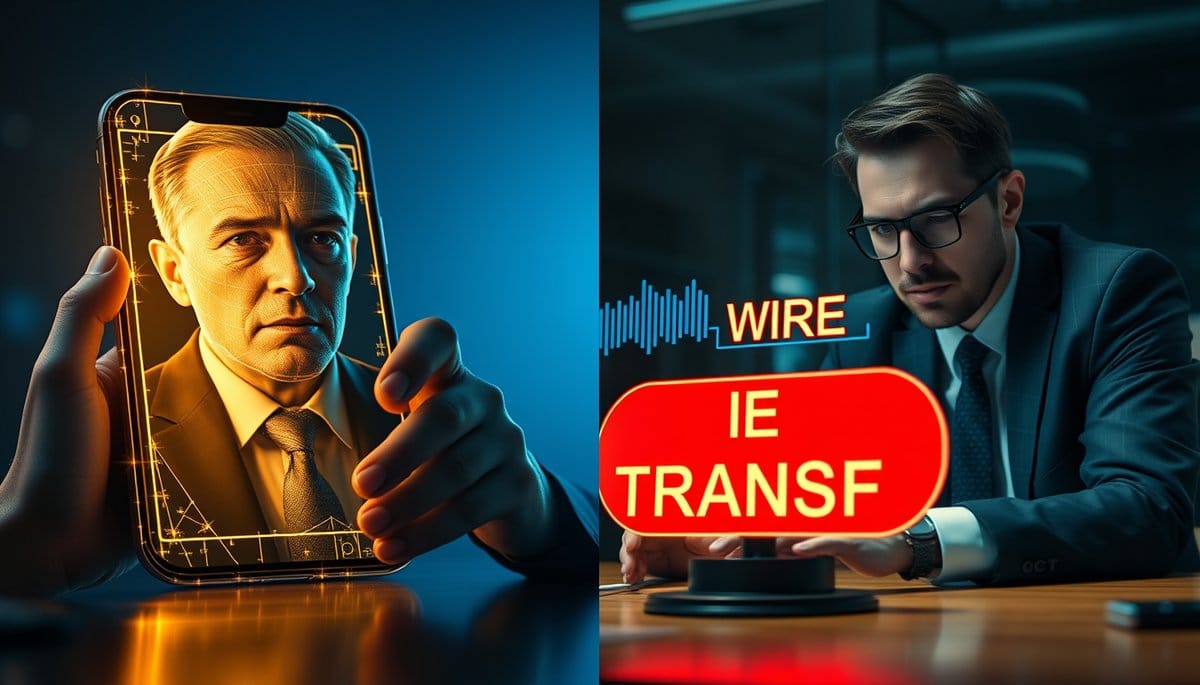
CEO fraud is when an attacker impersonates a senior executive to pressure an employee into sending money or sensitive data. AI has supercharged it: scammers now clone an executive's voice from a short audio clip and even generate live deepfake video, so the fake 'CFO' on your Zoom call looks and sounds completely real. If your only verification is recognizing the boss's voice, you are already exposed.
The $25 Million Video Call That Never Had a Real Person On It
In early 2024, a finance worker at the Hong Kong branch of engineering firm Arup joined a video call with the company's UK-based CFO and several colleagues. Everyone on the call looked right. They sounded right. The CFO explained a confidential transaction and instructed the worker to move funds. Over the following days, the employee made 15 transfers totaling about $200 million Hong Kong dollars, roughly $25 million USD, across five bank accounts.
Every single person on that call except the victim was a deepfake. The attackers had built video and voice avatars of real executives using publicly available footage, likely from earnings calls, conference talks, and LinkedIn videos. The employee later said the people looked exactly like the real colleagues.
This was not a clumsy phishing email full of typos. It was a fully staged meeting designed to overwhelm one person's skepticism with social proof. When five 'trusted' faces all agree, questioning them feels absurd.
How the Attack Actually Gets Built
The mechanics are more accessible than most people assume. Here is the typical build order attackers follow:
1. **Harvest audio and video.** They scrape earnings calls, podcast appearances, YouTube interviews, and company webinars. Three to ten seconds of clean speech is enough for a usable voice clone with tools like ElevenLabs. 2. **Clone the voice.** Commercial voice-synthesis platforms turn that sample into a model that can say anything typed into it, including in real time. 3. **Generate video (optional).** For high-value targets, they use face-swap and lip-sync tools to animate a photo or existing clip into a live-looking talking head. 4. **Research the target employee.** LinkedIn tells them who handles payments, who reports to whom, and when the CEO is traveling and unreachable. 5. **Strike with urgency.** A wire request lands during a 'confidential acquisition' or right before a holiday weekend, when double-checking feels like an overreaction.
The cost to run this? A few hundred dollars in software subscriptions and some patience. That asymmetry is the scary part. One successful hit funds thousands of failed attempts.
Why Smart People Hand Over the Money
Most guides blame the victims for being careless. That is often wrong. The employees who fall for this are usually doing exactly what their job asks: responding quickly to leadership.
Three pressures stack up at once. Authority, because the request comes from someone who can affect your career. Urgency, because the deal will supposedly collapse without immediate action. And secrecy, because you are told not to discuss it with anyone, which conveniently removes the one thing that would save you, a second opinion.
AI removes the last safety net people relied on. For years, the advice was 'call the person back to confirm.' But if the voice on that callback is also cloned, the check confirms the lie. I've seen training programs still teach voice callback as a gold-standard defense, and that guidance is now dangerously outdated.
The genuinely hard part to measure: how much fear plays into it. An employee sensing something is off but afraid to challenge a C-level executive will often override their own instincts. Scammers count on that hesitation.
What Actually Stops This Today
Verification has to move to a channel the attacker cannot fake in real time. A live voice or video call is no longer that channel.
Do these now:
- **Set a payment callback rule that uses a pre-saved number.** Never the number or contact provided in the request. Call the executive's known mobile from your own contacts, not a callback prompt. - **Require a second human approver** for any transfer above a set threshold, and make it a rule that cannot be waived by 'urgency.' - **Establish a verbal challenge phrase** for finance and leadership, a word only real staff know. If the 'CFO' cannot supply it, the call ends. - **Treat secrecy as a red flag, not a feature.** Any request that forbids you from confirming with a colleague is the request most worth confirming.
If your company's entire defense is 'trust the person you recognize on the call,' you are wasting everyone's time and one bad Tuesday from a seven-figure loss. Technology alone will not save you here. Deepfake detectors exist, but they lag behind generation tools and produce false results often enough that you cannot rely on them as your primary control.
Key Takeaways
FAQ
Q: Can attackers really fake a live video call, not just a recording?
A: Yes. The Arup attack in 2024 used live deepfake avatars of multiple executives simultaneously on one call, and consumer tools now animate faces in real time with a short delay.
Q: Won't a deepfake detector just catch these on the call?
A: Not reliably. Detection tools trail generation tools by months and produce false negatives often enough that treating them as a primary defense is a mistake. Use process controls instead.
Q: How do I start protecting my company this week?
A: Write one rule: no wire transfer above a set amount goes out without callback to a pre-saved number plus a second approver. Send it to your finance team today and make it non-negotiable regardless of who is asking.
Conclusion
CEO fraud stopped being an email scam and became a live performance you can watch and hear. The defense is boring and it works: verify money movements through a channel the attacker cannot control, and require a second person to sign off. Message your finance lead today and set that rule before someone with your CEO's cloned voice sets it for you.
Related Posts
- How Do AI-Generated Phishing Emails Bypass Corporate Filters?
In 2026, AI-crafted phishing emails started sailing past enterprise security filters that had caught similar attacks for years. The emails were grammatically perfect, contextually aware, and personalized down to the recipient's recent Slack messages. Corporate IT teams were not ready for this. - How Are AI Deepfakes Fooling Bank Security?
Banks built their fraud detection around human behavior patterns. AI fraudsters have learned to perfectly mimic those patterns. The result: billions lost while security systems wave the transactions through as legitimate. - How Does AI Fraud Hide in Your Shopping Cart?
AI-powered fraud doesn't just steal your credit card number — it builds a fake version of you, shops as you, and vanishes before your bank flags anything. The attacks are faster than fraud detection, and most shoppers have no idea they're exposed. Here's what's actually happening and what stops it.
Also on AI Future Lab
- [Deep Dive] AMOC Collapse and the Coming Global Food Crisis: When the Ocean Stops, Harvests Fail
{"@context": "https://schema.org", "@type": "NewsArticle", "headline": "[Deep Dive] AMOC Collapse and the Coming Global Food Crisis: When the Ocean Stops, Harvests Fail", "description": "", "publisher