How Are AI Deepfakes Hijacking Trucking Companies?
Organized rings are using AI-cloned carrier identities to book real freight loads, then vanish with the cargo. A single Manhattan case tied this scam to $5 million in stolen goods. The defenses are simpler than you think.
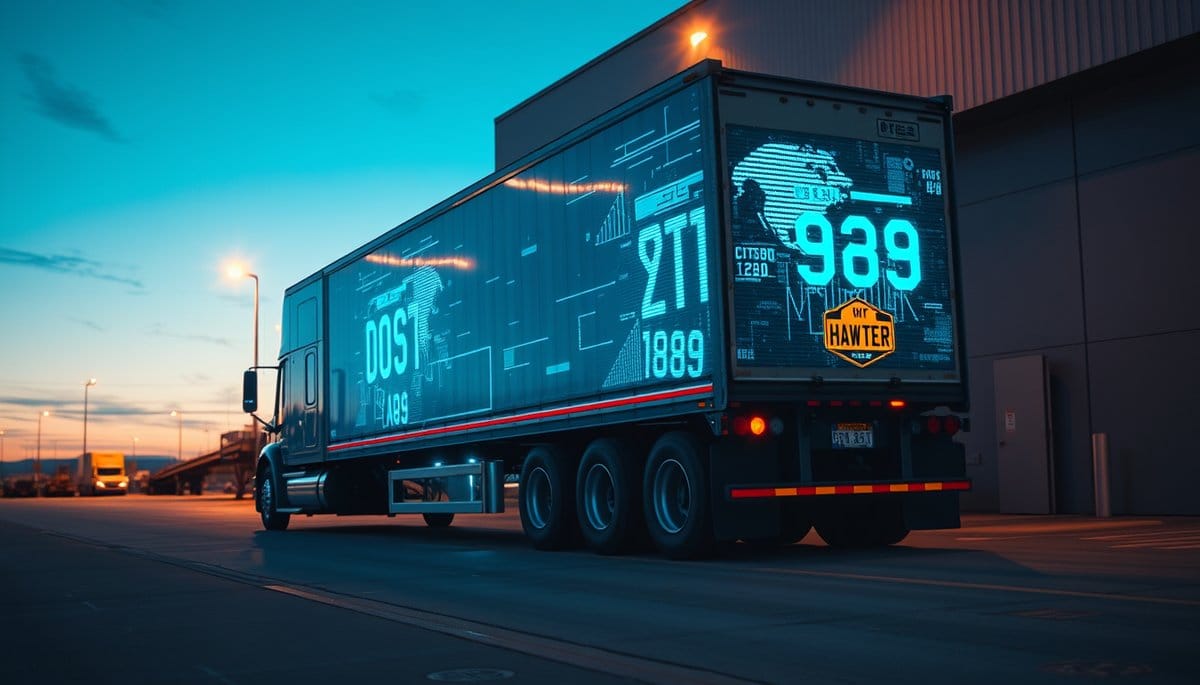
Criminal rings now use AI to impersonate legitimate trucking carriers, stealing their identities to book real freight loads online, then driving off with entire truckloads of goods. One Manhattan indictment tied this exact tactic to nearly $5 million in stolen freight. The scam works because it abuses the trust baked into how freight gets booked, not because anyone hacked a computer.
The $5 Million Manhattan Bust That Exposed the Playbook
In early 2026, the Manhattan district attorney indicted an organized, multistate crew accused of stealing nearly $5 million in goods. Their method wasn't lockpicks or guns. They impersonated legitimate trucking carriers, booked real loads through normal freight channels, and drove away with the cargo before anyone noticed the carrier was fake.
Verisk's CargoNet, which tracks these crimes across the industry, supported the case. The numbers around it are ugly. CargoNet logged 767 cargo theft incidents in Q1 2026 alone, with $131.6 million in losses, much of it concentrated in major freight hubs.
What makes this different from old-school cargo theft is scale. A crew used to hit one truck stop at a time. Now they can impersonate dozens of carriers from a laptop, submitting fraudulent paperwork that looks identical to the real thing. The cargo doesn't get broken into. It gets handed over willingly, to someone everyone believed was the rightful hauler.
How AI Turns a Real Carrier Into a Puppet
The scam runs in stages, and AI speeds up every one.
1. **Harvest the identity.** Criminals scrape a real carrier's DOT number, MC number, insurance certificate, and contact details from public load boards and FMCSA databases. All of this is legally available. 2. **Clone the paperwork.** AI tools generate convincing certificates of insurance, rate confirmations, and email signatures that match the real carrier's formatting down to the logo placement. 3. **Spin up the contact channel.** They register a lookalike domain (swap one letter, add a dash) and use AI to draft emails and even voice scripts that sound like a real dispatcher. 4. **Book the load.** Posing as the trusted carrier, they accept a shipment through a broker who has no reason to doubt them. 5. **Pick up and vanish.** A driver, sometimes an unwitting one hired through a separate job posting, collects the freight. By the time the real carrier says "we never booked that," the truck is gone.
The AI layer matters because it removes the old giveaways. Broken English, mismatched fonts, sloppy invoices. Those red flags are largely gone now.
Why Smart Brokers Still Fall For It
You'd think professionals who move freight daily would catch this. Many don't, and the reason is structural.
Freight runs on speed. A broker covering 80 loads a day has minutes, not hours, to vet a carrier. The whole system is built on the assumption that a valid MC number plus a matching insurance cert equals a real company. That assumption is exactly what the scam exploits.
There's also a trust shortcut. If an email comes from "the carrier you used last Tuesday," people don't re-verify. The lookalike domain slides right past a busy person scanning their inbox at 4 p.m.
This part is genuinely hard to defend against, because the fraud uses real, valid credentials belonging to a real, valid company. The broker isn't being careless in the obvious sense. They're trusting paperwork that was designed by a machine to be untrustable-looking-trustable.
If you're relying on a quick glance at an insurance certificate to clear a carrier, you're already beaten. The cert is the easiest thing to fake.
What You Can Actually Do Before The Truck Leaves
Whether you're a broker, a shipper, or a small carrier whose identity could get stolen, a few concrete moves cut your risk fast.
- **Call the carrier on the number listed in FMCSA, not the number in the email.** If they booked the load, they'll confirm it. If they didn't, you just stopped a theft. - **Check the email domain character by character.** "swift-logistics.com" and "swiftlogistics.com" are two different companies to a scammer. - **Use carrier monitoring services** like CargoNet, Highway, or DAT's CarrierWatch to flag identity mismatches and recently created accounts. - **Verify the driver and truck at pickup.** Match the driver's name and tractor number against what the carrier confirmed. A mismatch is a stop sign. - **If you're a carrier, set up Google Alerts for your own company name and MC number.** Catching a clone domain early lets you warn brokers before they get hit.
None of this requires fancy software. The single most powerful step is the callback to the verified number. It takes 90 seconds and it breaks the entire chain.
Key Takeaways
FAQ
Q: Can criminals really steal a whole truckload without breaking anything?
A: Yes, and that's what makes it dangerous. They book the load through legitimate channels using a stolen identity, so the cargo is voluntarily loaded onto their truck, like the Manhattan ring that moved nearly $5 million in goods this way.
Q: I'm a small carrier, not a broker. Why should I care?
A: Your DOT and MC numbers are public, which means your clean identity is exactly what thieves want to wear. If a fake version of your company steals a load, brokers may blacklist you before you even learn it happened.
Q: What's the first thing I should do today?
A: Set a rule that no load gets released without a callback to the carrier's FMCSA-listed phone number. Also set a Google Alert on your own company name and MC number to catch clone domains early.
Conclusion
Cargo theft stopped being a parking-lot crime and became an identity crime, and AI is what scaled it from one truck to hundreds. Today, do one thing: make a verified-callback rule mandatory before any load leaves the dock, using the FMCSA-listed number and never the one in the email. It costs 90 seconds and it's the cheapest insurance in freight.
Related Posts
- How Are AI Deepfakes Stealing Billions From You?
A CFO in Hong Kong wired $25 million after a video call with people who didn't exist. AI deepfakes now clone voices from 3 seconds of audio and generate real-time video of anyone. This is happening to ordinary people right now — not just executives. - How Are AI Deepfakes Used in Romance Scams?
Romance scammers are now using real-time AI deepfake video and cloned voices to impersonate attractive strangers — and sometimes even your own family members. The technology costs less than $20/month and is shockingly convincing. Here's what the attack looks like and how to protect yourself today. - How Are AI Deepfakes Impersonating Real Doctors?
Scammers are using AI to clone real doctors' faces and voices, then using those deepfakes to sell fake treatments, steal patient data, and drain bank accounts. The technology is cheap, the fakes are convincing, and most people have no idea it's even possible. Here's what you need to know right now.