How to Create a Family Safe Word for AI Voice Scams?
AI can clone your kid's voice from a 3-second TikTok clip and call your parents begging for bail money. A pre-agreed family safe word is the cheapest, fastest defense that actually works. Here's how to set one up tonight.
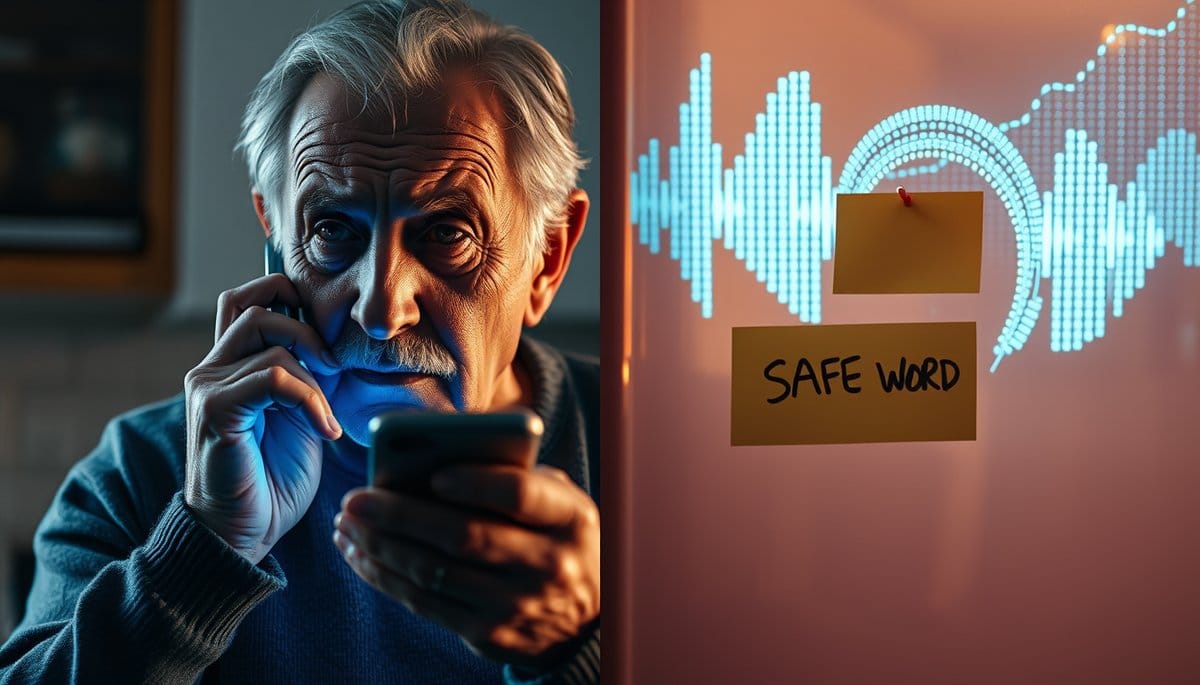
Pick a random, memorable word or phrase that no scammer could guess (not a pet name or birthday), share it with your family in person or over an encrypted app, and agree that anyone calling in a panic asking for money or personal info must say it first. If the caller can't produce the word, hang up and call the real person back on their known number.
The Grandmother Who Almost Wired $9,000 to a Fake Grandson
Early 2024, Brooklyn. A woman picks up at 6am to her grandson's voice sobbing that he's been in a car accident and a lawyer needs bail money wired immediately. The voice cracked exactly the way his did. The gravelly teenage tone, the nervous laugh, all of it.
She reached for her checkbook. Her daughter walked in and asked one question: what did he say the dog's name was? The line went quiet. Then it dropped.
The FBI logged over 880,000 fraud complaints in 2023 with losses topping $12.5 billion. Grandparent scams with cloned voices are climbing fast. This scammer had pulled audio from the grandson's public Instagram reels. Three seconds of clear speech was enough. No inside knowledge. No hacking. Just a free voice-cloning tool and a public social account.
How a 3-Second Clip Becomes a Weapon
The mechanics are boring, which is what makes them scary. Any scammer can do this in an afternoon.
1. Find your voice online. A TikTok, YouTube comment, voicemail greeting, wedding video. Three to ten seconds of clean audio works. 2. Feed it into a cloning tool. ElevenLabs or open-source models generate a synthetic voice matching tone and cadence in minutes. 3. Type what you want it to say. The clone reads it aloud in real time and can respond during a live call. 4. Spoof the caller ID. Cheap apps make the number appear as your actual family member's phone.
That's the pipeline. The tech that used to need a studio and an engineer now runs on a laptop. Voice cloning crossed the "fools your own mother" threshold in 2023 and has only gotten sharper since. This one is genuinely hard to defend against with technology alone, because the fake sounds real by design.
Why Smart People Hand Over the Money
You'd hang up, right? Probably not. Here's why.
These calls weaponize panic. When you hear a loved one crying that they're hurt or in jail, your brain's threat response fires before logic kicks in. Scammers script urgency on purpose: "Don't tell Mom." "I only have a minute." "They'll arrest me if you don't send it now." Time pressure kills your ability to verify.
The cloned voice removes the last doubt. Your ears confirm what your fear already believes. Most fraud advice says to listen for red flags in how someone talks. That advice doesn't work anymore, because the voice is flawless and the script is tight.
Every person who's been targeted mentions the same thing: the scammer keeps you on the phone. They won't let you hang up to "check." That refusal is the actual red flag, not the voice. If someone claiming to be family fights you on calling them back, you're talking to a scammer.
Setting Up Your Family Safe Word Tonight
A safe word is a shared secret a scammer can't clone or Google. It takes ten minutes and costs nothing.
Do this:
- **Pick something random and unguessable.** Not your pet's name, not a birthday, not your street. Use a weird noun pair like "purple tractor" or "velvet anchovy." Random beats meaningful. - **Make it easy to say under stress.** If it's a tongue-twister, a panicked relative will fumble it. Keep it short. - **Share it in person or over Signal.** Never text it over SMS or say it in a voicemail. Both can be intercepted or overheard. - **Set the rule: money or secrets require the word.** Any call asking to wire cash, buy gift cards, or share a login must include it. - **Add a callback rule for backup.** If someone can't give the word, hang up and dial the person's real number yourself.
Test it once at dinner so everyone remembers. If you have older parents, walk them through it directly. Don't email instructions and assume they read them. That's where this fails most often.
Key Takeaways
FAQ
Q: What makes a good family safe word?
A: Two unrelated, random words that aren't findable online or guessable from your life, like 'purple tractor,' and short enough to say while panicked. Avoid pet names, kids' names, birthdays, or anything posted on social media.
Q: Does a safe word actually work if the scammer sounds exactly like my daughter?
A: Yes, because the scammer can clone the voice but not a secret they've never heard. The one limitation: it only works if your family actually remembers and uses it under pressure, so test it at least once and refresh it if you suspect it leaked.
Q: How do I set this up with elderly parents who aren't tech-savvy?
A: Do it face to face, write the word on a sticky note near their phone, and role-play one fake panicked call so they practice asking for it. First step tonight: call them, agree on the word out loud, and have them repeat it back to you.
Conclusion
Voice cloning is cheap, fast, and already targeting families right now. No app on the market can reliably tell you a caller is fake. A safe word is the one defense that doesn't depend on catching a flaw in the voice. Pick two random words tonight, call the people you love, and agree on them before the fake call arrives instead of after.
Related Posts
- How Does AI Voice Cloning Enable Identity Theft?
CrowdStrike's 2026 threat report confirms what security researchers have been dreading: AI-driven identity attacks have become faster, cheaper, and almost indistinguishable from reality. Criminals no longer need your password — they need three seconds of your voice. Here's what's actually happening - How Are Tech Giants Stealing Your Voice for AI?
Nine class action lawsuits filed this week accuse Google, Amazon, Apple, and Microsoft of stealing the voices of journalists and voice actors to train AI. This isn't a future threat — it's happening now, and your voice is likely already in someone's training dataset. - How Are AI Deepfakes Used in Romance Scams?
Romance scammers are now using real-time AI deepfake video and cloned voices to impersonate attractive strangers — and sometimes even your own family members. The technology costs less than $20/month and is shockingly convincing. Here's what the attack looks like and how to protect yourself today.