How US Tech Powers Global Scam Networks?
US companies build the servers, chatbots, and payment rails that fuel a global cyberscam industry running out of forced-labor compounds. The same tools you trust are being turned against you, and there are specific defenses that actually work.
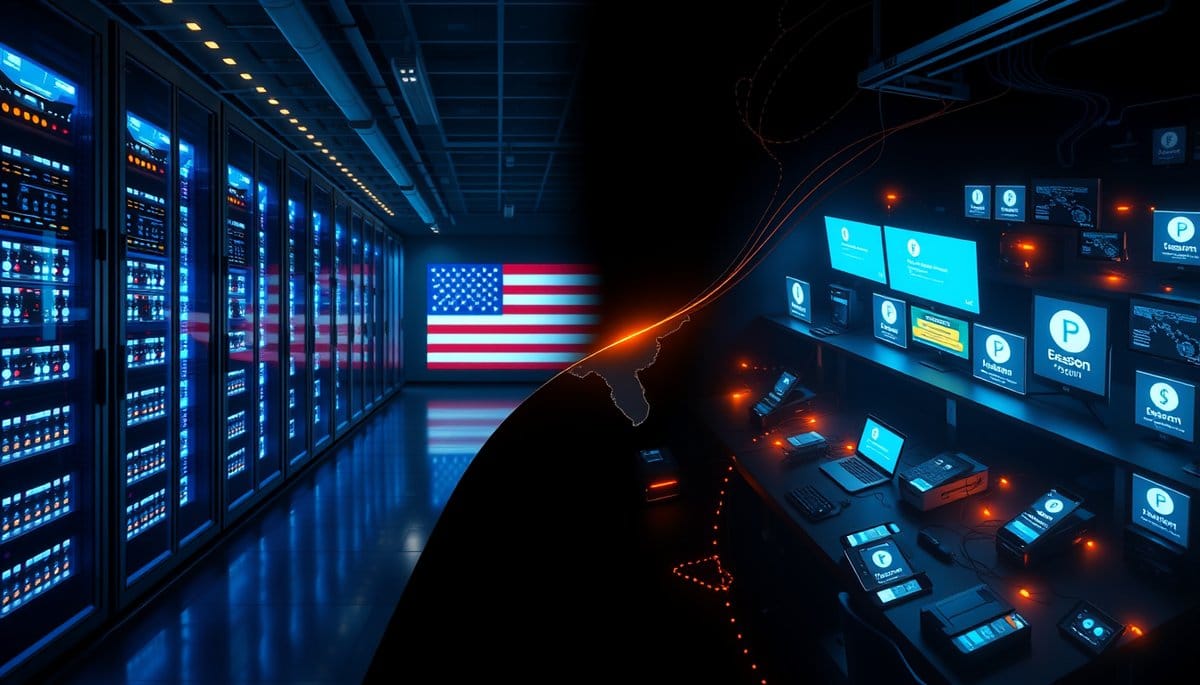
American technology, cloud servers from AWS and Microsoft, AI models, and US payment processors, now powers an industrialized global scam industry that steals billions every year. Scam operations, many run from forced-labor compounds in Southeast Asia, rent US infrastructure to look legitimate and reach American victims. You defend yourself by treating every unexpected message, call, and investment pitch as guilty until proven innocent.
The Scam Factory Running on US Servers
An AP and FRONTLINE investigation traced how the modern scam industry got industrialized, and the supply chain runs straight through Silicon Valley. Criminal syndicates operate massive compounds in Myanmar, Cambodia, and Laos, some staffed by trafficked workers forced to run scams at gunpoint. Those workers don't cook up their own tech. They rent it.
The compounds use US cloud hosting to keep fake trading platforms online. They use American-built AI chatbots to write flawless English pitches in seconds. They route stolen money through US-linked crypto exchanges and payment tools. When a victim in Ohio checks whether a website looks real, it does, because it's sitting on the same infrastructure your bank uses.
This is the part most coverage misses. The scam that drains your retirement account isn't some sketchy operation in a basement. It's a business with HR problems, quotas, and a tech stack that would look familiar to any startup founder. That professional polish is exactly why the losses are so large.
How One Fake Investment Text Becomes a Six-Figure Loss
The most common version is called "pig butchering," a grim term for fattening up a victim with fake affection before the slaughter. Here's the sequence investigators keep seeing:
1. A stranger texts you a wrong number. "Hi David, are we still on for lunch?" You reply that they have the wrong number. They're friendly. A conversation starts. 2. Over days or weeks, they build rapport. Photos, life stories, flirtation. All of it scripted, often AI-assisted. 3. They mention crypto profits. They offer to teach you. They send you to a real-looking trading platform hosted on US servers. 4. Your first small deposit shows fake gains. You can even withdraw a little. That withdrawal is the hook. 5. You invest big. Then the "platform" freezes your account and demands taxes or fees to release funds. The money is already gone.
One detail victims rarely mention: the platforms often include a live "customer support" chat that responds instantly and politely. That responsiveness feels like proof the company is real. It's a script.
Why Smart People Hand Over Their Savings
The lazy assumption is that only gullible people fall for this. That's wrong, and it's a dangerous belief because it makes you lower your guard. Doctors, engineers, and retired accountants get hit hard, partly because they trust their own judgment.
Three things do the real damage. First, isolation. Scammers move you off the dating app into a private chat fast, away from anyone who might warn you. Second, small wins. That tiny successful withdrawal rewires your risk assessment. Your brain files the platform under "real." Third, sunk cost. Once you've invested $40,000, admitting it's fake feels worse than sending another $10,000 to "unlock" it.
The AI layer makes it worse. Scammers no longer sound like non-native speakers with clumsy grammar, the old tell everyone was taught to watch for. AI writes warm, fluent, emotionally calibrated messages at scale. One operator can run dozens of victims at once, each convinced they're talking to a single devoted person.
If you're relying on "bad grammar" as your scam detector, you're already exposed.
What Actually Protects You Today
Software won't save you here. Habits will. Do these now:
- Never move a new contact from a dating app or social platform into WhatsApp or Telegram on their request. That migration is a red flag by itself. - Treat every unsolicited investment tip as a scam until independently verified. Real opportunities don't arrive by wrong-number text. - Refuse any platform that asks for "taxes" or "fees" to withdraw your own money. Legitimate exchanges deduct fees from the balance, they never demand new deposits. - Reverse-image-search profile photos and check for AI artifacts. Many scam photos are stolen or generated. - Set a rule with yourself: no financial decision within 24 hours of an emotional online conversation.
One honest caveat. This is genuinely hard when you're lonely or grieving, which is exactly who these operations hunt. If you feel embarrassed to tell a friend about someone you met online, that embarrassment is the trap doing its job. Tell them anyway. An outside opinion breaks the spell faster than any app.
Key Takeaways
FAQ
Q: What is pig butchering and why is it called that?
A: It's a long-con scam where criminals build a fake romantic or friendly relationship, then lure you into a bogus crypto investment. The name comes from 'fattening' a victim with trust before taking everything, and losses regularly run into six figures.
Q: If the scam site looks professional, how am I supposed to spot it?
A: Ignore how the site looks entirely, since scammers host on the same US servers as real companies. Judge the situation instead: an unsolicited contact, pressure to invest, and any demand for fees to withdraw your own money are the reliable tells.
Q: I think I already sent money. What do I do first?
A: Stop all payments immediately and report it to the FBI's Internet Crime Complaint Center at ic3.gov within hours, since fast reporting slightly improves recovery odds. Then tell your bank and a trusted person, because the scammers will pressure you to stay silent and send more.
Conclusion
US tech built the rails, but you decide who gets on the train. Today, do one thing: write yourself a personal rule that no online-only relationship gets a single dollar, ever, and share this warning with the person in your life most likely to be lonely enough to ignore it.
Related Posts
- How Are AI Deepfakes Used in Romance Scams?
Romance scammers are now using real-time AI deepfake video and cloned voices to impersonate attractive strangers — and sometimes even your own family members. The technology costs less than $20/month and is shockingly convincing. Here's what the attack looks like and how to protect yourself today. - How Are AI Deepfakes Targeting Your College?
AI voice clones and deepfake video calls now impersonate students and university leaders to steal financial aid, redirect tuition, and crack into campus accounts. A 15-second voicemail of you is enough. Here's how the scam runs and how to shut it down. - How Are AI Deepfakes Infiltrating Your Hiring?
Scammers now use AI-generated faces and cloned voices to pass video interviews, get hired, and gain access to company systems. Some swap identities mid-process. Here's how the con works and how to stop it.
Also on AI Future Lab
- [Deep Dive] Beyond Drug Discovery: The Nanotechnology Molecular Optimization (NMO) Benchmark
{"@context": "https://schema.org", "@type": "NewsArticle", "headline": "[Deep Dive] Beyond Drug Discovery: The Nanotechnology Molecular Optimization (NMO) Benchmark", "description": "", "publisher": {