How Does AI Voice Cloning Enable Identity Theft?
CrowdStrike's 2026 threat report confirms what security researchers have been dreading: AI-driven identity attacks have become faster, cheaper, and almost indistinguishable from reality. Criminals no longer need your password — they need three seconds of your voice. Here's what's actually happening
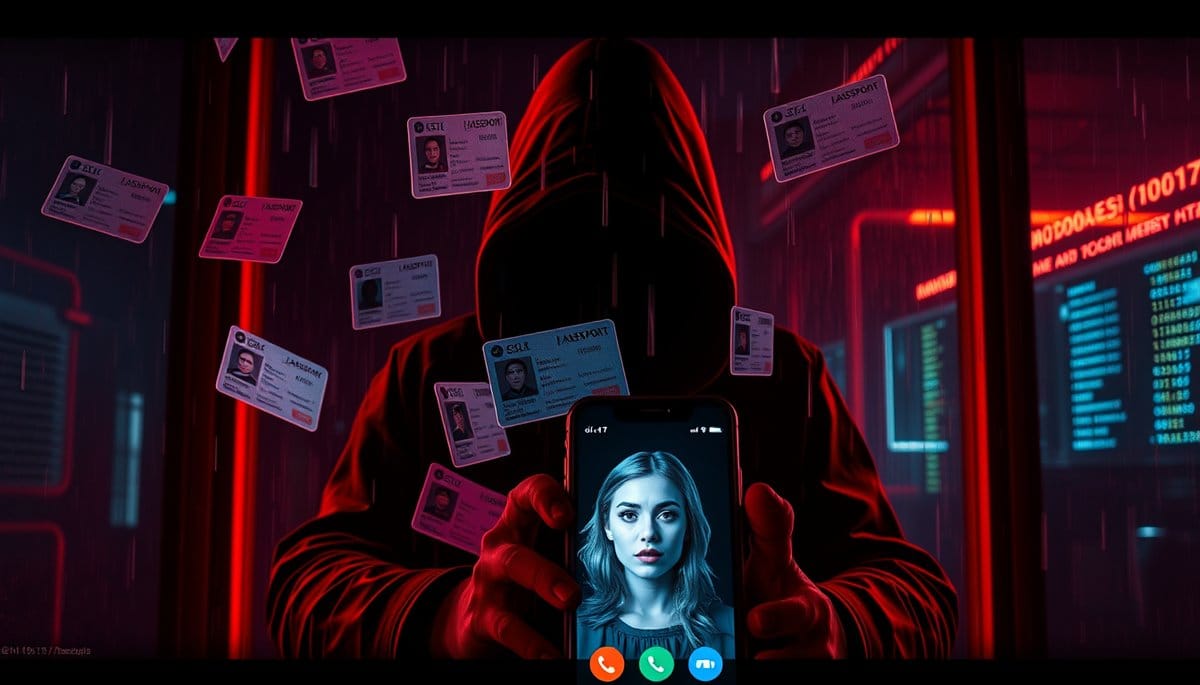
AI tools available right now — some free — can clone a human voice from a 3-second audio sample, generate a convincing deepfake video in under an hour, and craft a personalized phishing message that reads nothing like spam. CrowdStrike's 2026 Financial Services Threat Landscape Report documents this acceleration in real time: nation-state actors and criminal groups are already deploying these weapons against everyday banking customers, not just executives.
The Real Case: How AI Hit the Financial Sector Hard
CrowdStrike's 2026 Financial Services Threat Landscape Report isn't a theoretical warning. It's a post-mortem. The report documents a sharp surge in AI-assisted attacks targeting banks, fintech platforms, and crypto exchanges — with North Korea and China-linked threat actors leading the charge. These aren't lone hackers. They're organized operations using AI to scale attacks that previously required large teams of skilled fraudsters.
Here's what that looks like in practice: A bank customer receives a call that sounds exactly like their financial advisor. The voice is warm, specific — it mentions their last transaction, their account nickname, their branch location. It asks them to confirm their identity to 'unlock a flagged transfer.' The customer complies. The account is drained within 12 minutes.
The 'advisor' was never on the phone. An AI voice model, trained on publicly available audio from LinkedIn videos and a YouTube interview, did the talking. The personal details came from a data broker profile assembled for under $2. This isn't a future scenario. CrowdStrike flagged it as an active attack pattern in 2025.
How the Attack Actually Works, Step by Step
Most people imagine identity theft as someone guessing your password. That's 2015. Here's the 2025 version:
1. **Harvest your voice.** Scammers pull audio from a voicemail greeting, a TikTok video, a podcast appearance, or a Teams meeting recording leaked through a corporate breach. Three seconds is genuinely enough. Tools like ElevenLabs (legitimate, widely misused) or open-source alternatives can generate a convincing vocal clone from a single short sample.
2. **Build your profile.** Data brokers sell packages — your address history, employer, family members' names, financial institutions you use — for as little as $1.50. AI then cross-references this with your public social media to find behavioral patterns: when you travel, when you're stressed, what you care about.
3. **Craft the lure.** A large language model writes a phishing email or call script personalized to you specifically. Not 'Dear Customer.' Your actual name, your bank's real branch address, a reference to your recent purchase. Spam filters don't catch this because it contains no generic fraud language.
4. **Execute the attack.** The call comes in. The voice sounds like someone you trust — or like a credible official. The AI responds to your questions in real time using a guided script. You're asked to verify your identity by providing the last four digits of your SSN, a one-time code, or your mother's maiden name.
5. **Account takeover in minutes.** With that one piece, attackers bypass SMS two-factor authentication or answer security questions. Average time from first contact to account access: under 15 minutes.
Why Smart People Still Fall For It
Here's the counterintuitive part that most security guides get wrong: the people who fall for these attacks aren't naive. They're often careful, tech-savvy individuals who've read the warnings. That's exactly why this AI-powered version is so effective — it's designed to defeat the mental checklist you already have.
You check for bad grammar? These messages are flawless. You're suspicious of unknown numbers? The call comes from a spoofed number matching your bank's real line. You think you'd recognize a fake voice? Studies show humans correctly identify AI-cloned voices only about 50% of the time — essentially a coin flip.
The psychological mechanics are brutal. When a voice sounds like someone you trust, your brain releases the same low-threat response as a real conversation. Stress and urgency — 'your account will be locked in 10 minutes' — then overwhelm your rational evaluation. CrowdStrike's report specifically calls out 'AI-driven deception' as effective precisely because it triggers emotional responses before logic kicks in.
One detail that surprised even me when I dug into this: attackers deliberately make tiny mistakes on purpose — a slight pause, a small pronunciation error — because it makes the voice seem more human and less robotic. That imperfection is intentional. It's a feature of the attack, not a flaw.
Your Defense Checklist: Do These Today
If you're still relying on 'I'll just be more careful,' you're wasting your time. Vigilance alone fails against attacks designed by AI to defeat vigilance. Here's what actually works:
**1. Create a family safe word — right now.** Agree on a word or short phrase with anyone who might receive a 'grandparent scam' or fake emergency call. Something random that would never come up naturally: 'papaya,' 'Tulsa 1987,' whatever. If the caller can't produce it, hang up immediately.
**2. Never verify your identity to an inbound caller.** Banks do not call you and ask you to confirm your SSN, your card number, or a one-time code. Full stop. If a caller claims to be your bank, hang up and call the number on the back of your card yourself.
**3. Lock your credit now, not after something happens.** Go to Equifax, Experian, and TransUnion and place a security freeze. It's free. It takes 15 minutes. It blocks new accounts from being opened in your name even if an attacker has your SSN.
**4. Remove yourself from data brokers.** Use DeleteMe or a free tool like Privacy Bee to request removal from the brokers that sell your personal profile. This cuts off the raw material attackers use to personalize their scripts.
**5. Switch from SMS two-factor to an authenticator app.** Google Authenticator or Authy generates codes that can't be intercepted via SIM-swapping — an attack that's grown 400% alongside AI fraud, per the FTC. SMS codes can be rerouted. App-based codes cannot.
**6. Google yourself and audit your audio footprint.** If you have voicemail greetings, YouTube videos, or podcast appearances, that audio is harvestable. Consider a more generic voicemail greeting.
Key Takeaways
FAQ
Q: How do I know if a call from a family member is actually real?
A: Establish a family safe word in advance — a random word or phrase the real person would know but an AI impersonator wouldn't. If the caller can't provide it immediately when asked, treat the call as fake and hang up, then call the person back on a number you already have saved.
Q: Can phone companies detect and block AI voice cloning?
A: Honestly, not reliably — not yet. Some carriers are piloting voice authentication tools, but caller ID spoofing and voice synthesis move faster than telecom infrastructure can adapt. Don't wait for your phone company to protect you; assume the call screening isn't there.
Q: What should I do if I think I was already targeted or scammed?
A: Call your bank immediately using the number on your card — not a number a caller gave you — and report a potential account compromise. Then file a report at IdentityTheft.gov, which walks you through a step-by-step recovery plan specific to what was exposed.
Conclusion
AI identity theft isn't coming — it's here, it's documented, and it's being run by organized actors who treat it as a business. The single most important thing you can do in the next hour: place a credit freeze at all three bureaus and set up a family safe word with anyone you'd ever call in an emergency. Those two steps won't make you invincible, but they close the two doors that do the most damage. Everything else can wait until tomorrow. Those two things cannot.
Related Posts
- How Is AI Identity Fraud Targeting You Now?
Fraudsters are now using generative AI to clone your voice, fake your face, and impersonate you to your own family — in real time. This isn't a future threat. It's already happening at scale, and static passwords won't save you. - How Are AI Deepfakes Impersonating Real Doctors?
Scammers are using AI to clone real doctors' faces and voices, then using those deepfakes to sell fake treatments, steal patient data, and drain bank accounts. The technology is cheap, the fakes are convincing, and most people have no idea it's even possible. Here's what you need to know right now. - How Are AI Deepfakes Used in Romance Scams?
Romance scammers are now using real-time AI deepfake video and cloned voices to impersonate attractive strangers — and sometimes even your own family members. The technology costs less than $20/month and is shockingly convincing. Here's what the attack looks like and how to protect yourself today.