How Are Tech Giants Stealing Your Voice for AI?
Nine class action lawsuits filed this week accuse Google, Amazon, Apple, and Microsoft of stealing the voices of journalists and voice actors to train AI. This isn't a future threat — it's happening now, and your voice is likely already in someone's training dataset.
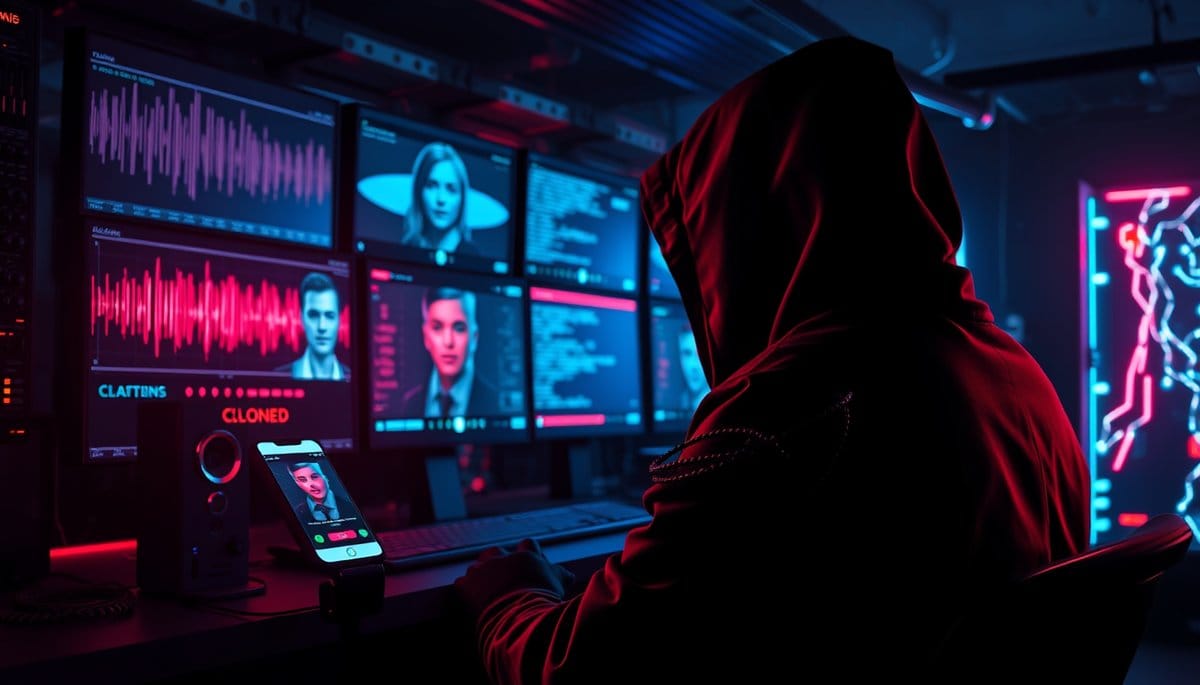
Tech giants including Google, Amazon, Apple, and Microsoft are being sued in federal court for harvesting the voices of real journalists and voice actors — without consent — to build the AI voice systems you interact with every day. Once your voice is in a training dataset, it can be cloned in seconds and used to impersonate you to your family, your bank, or your employer.
The Real Case: Journalists and Voice Actors Are Suing Tech Giants This Week
This isn't a hypothetical. Between Monday and Wednesday of this week, nine separate class action lawsuits landed in Chicago's federal court. The plaintiffs — a group of well-known Chicago-based journalists, podcasters, and professional voice actors — accuse Google, Amazon, Apple, Microsoft, and others of systematically scraping and using their voices without permission to train AI models.
The legal filings run hundreds of pages. They invoke Illinois' Biometric Information Privacy Act, one of the strictest voice and biometric data protection laws in the country, which requires explicit written consent before any company can collect or use your voiceprint. The plaintiffs say none of that consent was given.
Think about what these people do for a living: they record podcasts, broadcast radio, narrate audiobooks. Thousands of hours of clean, professionally recorded audio — exactly what an AI needs to learn to sound convincingly human. Their voices didn't just leak. According to the lawsuits, they were deliberately harvested.
If it happened to professionals with legal resources to fight back, it's already happened to you.
How the Attack Works: From Stolen Audio to a Call From 'Your Son'
Here's the exact chain of events that turns a scraped voice sample into a scam call targeting your family:
1. **Audio is collected.** Your voice exists online already — in a podcast interview, a YouTube video, a public Facebook video, a TikTok, a voicemail you left that got shared. AI companies (and criminals) can scrape all of it automatically.
2. **The voice model is built.** Tools like ElevenLabs, Resemble AI, and open-source models like Tortoise TTS can generate a convincing voice clone from as little as 3 seconds of clean audio. Give it 30 seconds and the clone becomes nearly indistinguishable from the real person.
3. **A script is written by another AI.** The scammer uses ChatGPT or a similar model to write a panicked, emotionally urgent message — 'Mom, I've been in an accident, I need bail money right now, please don't call Dad.'
4. **The call is placed.** Using a spoofed phone number that matches a known contact, the AI voice plays the script live or as a pre-recorded message.
5. **Payment is requested immediately.** Wire transfer, Zelle, gift cards — methods that can't be reversed. The pressure is intentional. Panic kills critical thinking.
The whole operation, from scraped audio to active scam call, can run in under an hour with tools that cost less than $20/month.
Why People Fall For It — And It's Not Because They're Gullible
Most security guides frame this as an education problem. 'Just be more aware.' That framing is wrong, and it lets the technology off the hook.
Voice clones work because human brains are wired to trust voices, not verify them. You've spent your entire life learning to recognize your daughter's voice, your spouse's breathing patterns, the way your dad trails off at the end of sentences. When an AI replicates those micro-patterns — which it can, with enough training data — your brain authenticates it automatically, before your skepticism even has a chance to load.
Here's the part that genuinely unsettles security researchers: emotional urgency physically degrades your ability to think critically. A voice call where someone sounds like your child and claims to be in danger triggers a stress response that measurably narrows your focus. You're not being fooled because you're careless. You're being exploited at a neurological level.
One more thing most people don't know: the clone doesn't need to be perfect. Studies on voice fraud show victims often notice something 'slightly off' — but dismiss it because the emotional stakes of being wrong (ignoring a real emergency) feel too high. Scammers exploit that exact cost-benefit calculation on purpose.
Your Defense Checklist: What to Do Before the Call Comes
Waiting until it happens to you is too late. These steps take 15 minutes now and could save thousands of dollars — or prevent a family member from wiring their retirement savings to a criminal.
**1. Create a family safe word. Do it today.** Pick a word no one would guess — not a pet's name, not a birthday. Something random: 'Pineapple Thursday,' 'Blue Stapler.' Tell every family member that if they're ever in an emergency and call for help, they must say this word. If the caller can't produce it, hang up.
**2. Always call back on a number you already have.** If you get a panicked call from a family member, hang up and call them back on the number saved in your contacts — not the number that called you. Spoofed numbers disappear the moment you try to return the call from a different line.
**3. Set a delay rule for any financial request.** No money moves without a 10-minute cooling-off call to a second family member. Criminals hate delays — they rely on you acting while panicked.
**4. Audit your public audio footprint.** Search your name on YouTube, TikTok, and podcast platforms. If you have hours of clean audio publicly available, consider whether it needs to be there. This is genuinely hard to fully solve, but reducing the available sample pool matters.
**5. Tell your parents about this post.** Seriously. Older adults are disproportionately targeted. Forward this to them. The safe word setup alone could stop the most common variant of this attack cold.
If you're relying on caller ID as your main defense, you're wasting your time. It's been spoofable for over a decade.
Key Takeaways
FAQ
Q: How do I know if a call from a family member is real?
A: Ask for your pre-agreed safe word — if they can't give it, treat the call as suspicious and hang up. Then call the person back directly on their saved contact number, which verifies you're reaching the real device, not a spoofed line.
Q: Can phone companies detect AI voice cloning?
A: Honestly, not reliably — not yet. Carriers can flag spoofed numbers with STIR/SHAKEN protocols, but the actual audio content of a call is not analyzed in real time for AI-generated speech. Detection tools exist for recorded audio forensics, but nothing stops a cloned voice call from going through.
Q: What should I do if I think I was already targeted by a voice cloning scam?
A: Report it immediately to the FTC at ReportFraud.ftc.gov and file a police report — both create a paper trail that matters for any financial recovery attempts. If money moved, contact your bank within 24 hours and specifically use the phrase 'authorized push payment fraud,' which triggers a different review process than a standard dispute.
Conclusion
The lawsuits filed this week are important — but legal proceedings move slowly and your voice is already out there. The safe word takes five minutes to set up and it works right now, against the exact attack that's scaling fastest. Text your family today, pick a word, and make it non-negotiable. That one step puts you ahead of 95% of the people who will become victims this year.
Related Posts
- How Does AI Voice Cloning Enable Identity Theft?
CrowdStrike's 2026 threat report confirms what security researchers have been dreading: AI-driven identity attacks have become faster, cheaper, and almost indistinguishable from reality. Criminals no longer need your password — they need three seconds of your voice. Here's what's actually happening - How Are AI Deepfakes Stealing Billions From You?
A CFO in Hong Kong wired $25 million after a video call with people who didn't exist. AI deepfakes now clone voices from 3 seconds of audio and generate real-time video of anyone. This is happening to ordinary people right now — not just executives. - How Are AI Deepfakes Impersonating Real Doctors?
Scammers are using AI to clone real doctors' faces and voices, then using those deepfakes to sell fake treatments, steal patient data, and drain bank accounts. The technology is cheap, the fakes are convincing, and most people have no idea it's even possible. Here's what you need to know right now.