How Is AI Identity Fraud Targeting You Now?
Fraudsters are now using generative AI to clone your voice, fake your face, and impersonate you to your own family — in real time. This isn't a future threat. It's already happening at scale, and static passwords won't save you.
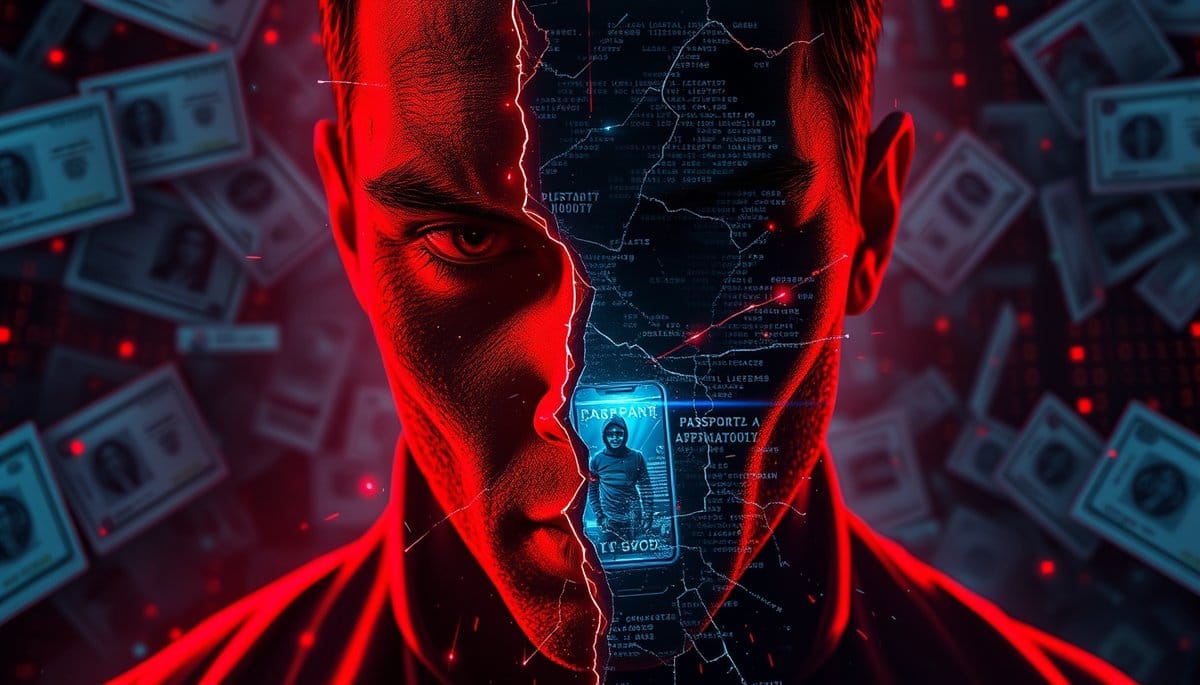
AI-powered identity fraud has crossed a threshold where your voice, face, and personal data can be weaponized against you and the people you love — using footage you've already posted publicly. With AI-generated fraud projected to cause $40 billion in losses in 2025 alone, this is no longer a corporate IT problem. It's a kitchen-table emergency.
The Real Case: $40 Billion and a Fraud Machine That Never Sleeps
According to reporting from CyberScoop, fraudsters are now using generative AI to automate impersonation at industrial scale. We're not talking about one hacker in a basement. We're talking about organized operations running AI tools that mass-produce fake identities, clone real voices, and launch thousands of simultaneous fraud attempts — the way a factory runs a production line.
The projected damage: $40 billion in losses from fake identity fraud next year alone. That number comes from the convergence of several threats hitting at once — synthetic identity creation, AI voice cloning used in 'grandparent scams,' and deepfake video calls that have already fooled financial executives into authorizing wire transfers.
The most chilling part isn't the dollar figure. It's the speed. Security teams that used to have months to patch vulnerabilities now have days — sometimes hours — before a new AI-generated attack method goes mainstream. Static defenses built on passwords, security questions, and call center verification scripts are being outpaced in real time.
Regular people are the softest targets. Corporations at least have IT departments. You have a phone and whatever instincts you walked in with.
How the Attack Works: A Step-by-Step Breakdown
Here's the actual sequence. It's faster and cheaper than you'd expect.
1. **Harvesting.** The attacker scrapes your public social media — Instagram videos, TikTok clips, Facebook posts. Eleven seconds of your voice is enough for modern cloning tools. Three seconds works for basic impersonation. You've almost certainly posted more than that.
2. **Cloning.** Tools like ElevenLabs (legitimate software being misused) can generate a voice clone in under two minutes. The clone can say anything — typed text gets spoken in your voice, with your cadence, your accent, your verbal tics.
3. **Targeting your contacts.** The attacker calls your parent, your sibling, or your employer. Your cloned voice says you're stranded, injured, or arrested. You need money wired immediately. The emotional urgency short-circuits rational thinking.
4. **The deepfake escalation.** More sophisticated attacks use video. Tools like DeepFaceLab or commercial face-swap APIs overlay your face onto a live video call. A CFO in Hong Kong wired $25 million after a deepfake video call appeared to show his company's CEO and colleagues giving the order.
5. **Synthetic identity creation.** For financial fraud, attackers combine real partial data — your real name, a fabricated SSN that passes checksum validation, a generated address — to create a 'Frankenstein identity' that passes automated bank screening.
The whole pipeline, from harvest to first contact, can run in under an hour.
Why Smart People Fall For It Every Single Time
Here's the part most security guides skip because it's uncomfortable: this works on intelligent, skeptical people. Not just elderly victims. Not just people who 'should have known better.'
The reason is biological, not technical. When you hear a voice that sounds like your child — the specific rhythm of how they pause before a sentence, the way they say 'um' — your brain's threat-detection system doesn't consult a checklist. It floods you with cortisol and tells you to act.
That's the trap. Urgency plus familiarity is a combination human psychology essentially cannot resist under pressure.
Here's the surprising fact most people don't know: voice cloning doesn't need to be perfect to work. It only needs to be convincing enough during an emotionally destabilizing moment. A 70% accurate clone of your voice, delivered to your panicking mother at 11pm when she thinks you're in a car accident, will work. Attackers know this. They're not trying to fool forensic audio analysts. They're trying to fool someone who loves you.
The other thing working against victims: caller ID spoofing makes the call appear to come from your actual number. So even the basic instinct — 'this number looks wrong' — gets neutralized before the conversation even starts.
Most guides say 'trust your gut.' Here's why that's often wrong: your gut is exactly what this attack is engineered to exploit.
Your Defense Checklist: 6 Steps to Take Before Tomorrow
This is the actionable part. Do not skip it.
**1. Create a family safe word — tonight.** Pick a random word that has no emotional or logical connection to your family (not a pet's name, not a street you lived on). Share it with every family member in person or via encrypted message. Anyone calling and claiming to be a family member in distress must say the word. No word, no money, no action — no exceptions.
**2. Establish a call-back protocol.** If you receive a distressing call from any family member or colleague, hang up. Call them back directly on a number you already have saved. Do this even if the original call felt completely real. Especially then.
**3. Lock your voice online.** Audit your public social media for videos where your voice is audible. Consider making them private or friends-only. This won't stop a determined attacker who already has clips, but it raises the cost of targeting you.
**4. Freeze your credit — not just a fraud alert.** A freeze at all three bureaus (Equifax, Experian, TransUnion) stops synthetic identity fraud from opening accounts in your name. A fraud alert is weaker and temporary. A freeze is free and permanent until you lift it.
**5. Set a verbal PIN with your bank.** Call your bank and ask if you can add a verbal passphrase to your account. Many banks support this for phone-based transactions. If a caller claims to be you, the passphrase requirement blocks the impersonation.
**6. Never wire money under phone-call pressure.** No legitimate emergency requires an immediate wire transfer before you can make a second call. That urgency is the attack. Legitimate emergencies tolerate a 10-minute pause to verify.
Key Takeaways
- AI-generated fraud is projected to cause $40 billion in losses in 2025 — that's not a corporate statistic, it hits individuals and families directly through voice scams and synthetic identity theft.
- Modern voice cloning tools can produce a convincing audio clone of you from as little as 3-11 seconds of recorded audio — which you've almost certainly already posted publicly.
- The counterintuitive reason victims fall for this isn't gullibility — it's that the attack is deliberately timed and framed to trigger your protective instincts, which are the same instincts that make you a good parent or sibling.
- Create a family safe word tonight and share it in person or via Signal — this single step costs nothing and directly defeats the 'grandparent scam' and voice-clone emergency fraud variants.
- This threat is accelerating, not plateauing: as real-time deepfake video APIs become cheaper, expect live video calls impersonating family members to become as common as robocalls are today — probably within 18 months.
FAQ
Q: How do I know if a call from a family member is real?
A: Ask for your pre-agreed family safe word — if they don't have it, treat the call as suspicious regardless of how the voice sounds. Then hang up and call them back on their actual saved number before taking any action.
Q: Can AI voice cloning be detected by phone companies?
A: Honestly, not reliably right now — most carrier-level fraud detection is built around call origin spoofing, not audio authenticity, and generative audio detection is still years behind generation capability. This is a genuine gap, and it means the defense burden currently sits with you, not the phone network.
Q: What should I do if I think I was already targeted by one of these scams?
A: File a report with the FTC at reportfraud.ftc.gov immediately — even if you didn't lose money, the report feeds pattern detection used to warn others. If financial information was shared, call your bank's fraud line within 24 hours, as most institutions have a narrow window for transaction reversal.
Conclusion
The $40 billion projection isn't a distant forecast — the infrastructure to hit that number is already deployed and running. The people most likely to be victimized aren't careless. They're loving, trusting, and emotionally present when someone who sounds like their kid calls in distress. That's not a weakness to be ashamed of. But it is a vulnerability you can close. Do one thing right now: text your family and set a safe word before you go to sleep tonight. That single conversation is worth more than any password manager or security app you'll ever buy.
Related Posts
- How Are AI Deepfakes Impersonating Real Doctors?
Scammers are using AI to clone real doctors' faces and voices, then using those deepfakes to sell fake treatments, steal patient data, and drain bank accounts. The technology is cheap, the fakes are convincing, and most people have no idea it's even possible. Here's what you need to know right now. - How Does AI Fraud Hide in Your Shopping Cart?
AI-powered fraud doesn't just steal your credit card number — it builds a fake version of you, shops as you, and vanishes before your bank flags anything. The attacks are faster than fraud detection, and most shoppers have no idea they're exposed. Here's what's actually happening and what stops it. - How Are AI Deepfakes Used in Romance Scams?
Romance scammers are now using real-time AI deepfake video and cloned voices to impersonate attractive strangers — and sometimes even your own family members. The technology costs less than $20/month and is shockingly convincing. Here's what the attack looks like and how to protect yourself today.