How Did AI Deepfakes Cost This Company $25M?
In early 2024, an Arup employee in Hong Kong joined a video call with his CFO and several coworkers. Every one of them was an AI deepfake, and he sent $25.6 million before anyone noticed. No server was hacked. Only his trust was.
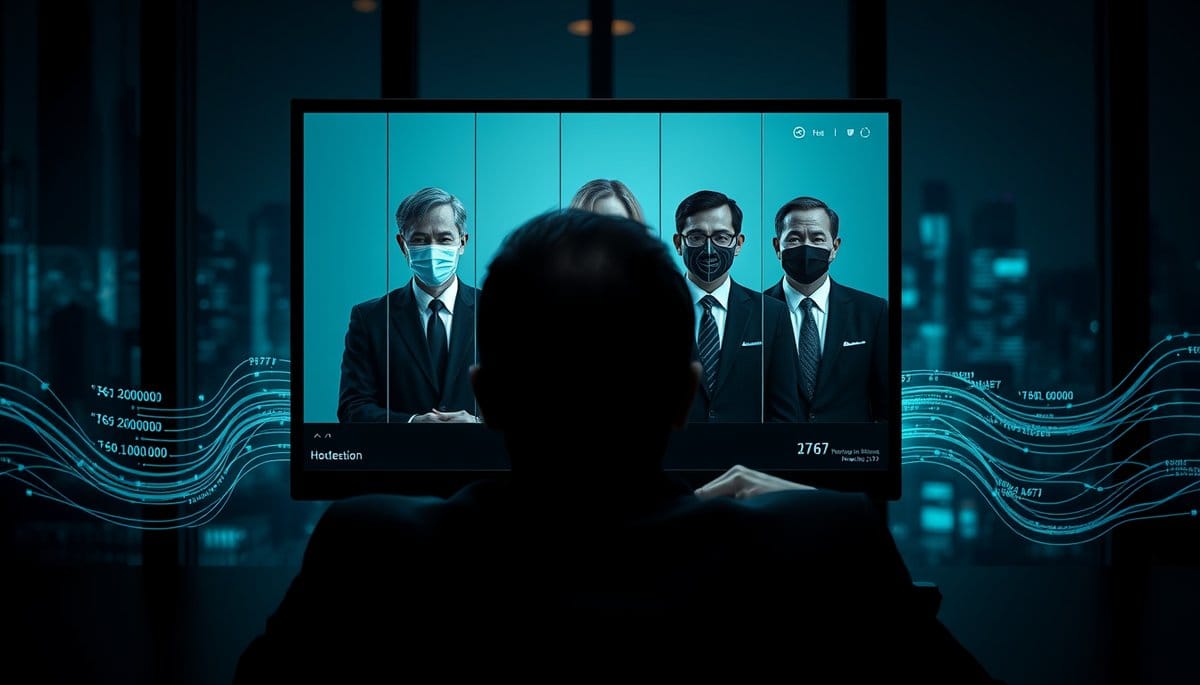
In January 2024, a finance employee in the Hong Kong office of British engineering firm Arup joined a video call with what looked like the company's UK-based CFO and several colleagues. Every person on that call was an AI deepfake. Following their instructions, he made 15 transfers totaling HK$200 million (about US$25.6 million) to five bank accounts before anyone discovered the fraud.
Inside the Arup Call Where Every Face Was Fake
The employee did the right thing first. In January 2024 he received a message, supposedly from Arup's chief financial officer in London, asking him to carry out a confidential transaction. He suspected phishing. Good instinct.
Then the scammers invited him to a video conference. On screen sat the CFO plus several people he recognized from work. They looked right. They sounded right. His suspicion evaporated.
| Stage | What happened |
|---|---|
| Hook | Message from the 'CFO' requesting a secret transaction |
| Doubt | Employee flags it as possible phishing |
| Proof | Multi-person video call with deepfaked executives |
| Payout | 15 transfers to 5 Hong Kong bank accounts |
| Discovery | Employee checks with head office, far too late |
Hong Kong police disclosed the case in February 2024 without naming the company. Arup confirmed it was the victim in May. Its global CIO, Rob Greig, later stressed that none of the firm's systems were compromised. Nobody broke into a server. The attackers broke into one person's trust, using faces and voices built from publicly available footage.
That detail should bother you, because most corporate security budgets still go toward protecting the server.
How Scammers Build a Fake Boardroom From Public Footage
Hong Kong police never named the software used, and I won't pretend to know it. The general recipe is no secret, though, and none of it requires a government budget.
1. Harvest footage. Executives at large firms appear in webinars, earnings calls, conference keynotes and YouTube interviews. A few minutes of clear video per person is enough raw material. 2. Clone the voices. Commercial voice-cloning tools can produce a convincing copy from under a minute of clean audio. 3. Build the faces. Open-source projects like DeepFaceLab and DeepFaceLive map one face onto another, either pre-rendered or live over a webcam feed. 4. Script the meeting. According to police, the fake participants mostly gave instructions, asked the victim to introduce himself, then ended the call abruptly. Little back-and-forth meant fewer chances to slip. 5. Keep the pressure on. After the call, the scammers stayed in touch through instant messages, emails and one-on-one video calls.
Step 4 is the clever part. Real-time face swaps still glitch when someone turns to full profile or passes a hand across their face. Anyone who has run DeepFaceLive on a gaming laptop knows the lips often trail the audio by a fraction of a second. On a corporate call with ordinary network lag, that delay looks normal.
Why Seeing Your Boss on Camera Switches Off Your Doubt
Most guides tell you to watch for odd blinking, mismatched earrings or smeared teeth. If that's your main defense, you're wasting time. Detection by eye is a race you lose a little more every month, and the Arup attackers didn't need perfect fakes. They needed plausible ones for one short meeting.
Three pressures did the real work:
- Social proof. One fake executive invites scrutiny. Five familiar faces nodding along make the request feel like company consensus. - Authority. The CFO influences your career. Questioning him on camera, in front of colleagues, feels like a professional risk. - Secrecy. A 'confidential transaction' hands you a reason not to ask anyone else, which is exactly what the scammer needs.
The counterintuitive part: video made the victim less careful. Years of phishing training taught office workers that email is risky. Nobody trained them to distrust a face. Seeing someone you know triggers a trust reflex far older than any security awareness course.
I'll admit this part is genuinely hard to measure. Nobody publishes numbers on how many people would have paid in the same situation. My honest guess is most of us would.
Five Checks That Would Have Saved $25 Million
None of these defenses involves spotting a fake. Every one of them assumes the fake is flawless.
| Defense | What it blocks | Cost to set up |
|---|---|---|
| Call back on a number you already have | Impersonation on any channel | Free |
| Two-person approval above a set limit | One fooled employee draining an account | A policy memo |
| Pre-agreed code word for urgent money requests | Convincing fake voices and faces | Free |
| An off-script question only the real person can answer | Pre-recorded or scripted deepfakes | Free |
| Payee verification and holds on new accounts | Fast cash-out to mule accounts | One call to your bank |
The callback rule alone would have saved Arup. Hang up, find the CFO's number in the company directory (never from the message itself), and dial. Two minutes.
One warning from watching these rules fail: people skip the check when they feel embarrassed to ask. Make verification mandatory, so asking is policy and nobody has to feel rude.
Key Takeaways
FAQ
Q: Did Arup ever get the $25 million back?
A: No public recovery has been reported, and Hong Kong police had made no arrests in the case as of the latest public updates. Arup stated its financial stability and business operations were not affected, which says more about the company's size than about the money coming home.
Q: Can't deepfake detection software just catch this?
A: Tools like Intel's FakeCatcher and Reality Defender can flag many fakes, but they work best on known generation methods and struggle with compressed, laggy video calls. Use them as an extra layer, never as a replacement for callback and two-person approval rules.
Q: How do I test whether a video call is real while I'm on it?
A: Ask the person to turn their head fully sideways or wave a hand slowly in front of their face, since many real-time face swaps still distort under those conditions. Then hang up and call them back on a known number anyway, because newer models are getting better at passing those tests.
Conclusion
The Arup case proved that a video call is no longer proof of anything, and the next version of this attack will be cheaper and more convincing. Before you close this tab, set one rule with your finance team or your family: no money moves until someone calls back on a number they already had. It's a small habit, and it's the one defense attackers can't render with a GPU.
💡 Lucas's Insight
Related Posts
- How Are AI Deepfakes Impersonating Real Doctors?
Scammers are using AI to clone real doctors' faces and voices, then using those deepfakes to sell fake treatments, steal patient data, and drain bank accounts. The technology is cheap, the fakes are convincing, and most people have no idea it's even possible. Here's what you need to know right now. - How Are AI Deepfakes Used in Romance Scams?
Romance scammers are now using real-time AI deepfake video and cloned voices to impersonate attractive strangers — and sometimes even your own family members. The technology costs less than $20/month and is shockingly convincing. Here's what the attack looks like and how to protect yourself today. - How Are AI Deepfakes Stealing Billions From You?
A CFO in Hong Kong wired $25 million after a video call with people who didn't exist. AI deepfakes now clone voices from 3 seconds of audio and generate real-time video of anyone. This is happening to ordinary people right now — not just executives.