How Are Scammers Using Your Child's SSN for Fraud?
Synthetic identity fraud takes a real Social Security number, often a child's, and attaches it to an invented name to grow a credit profile for a person who never existed. Your credit monitoring probably won't catch it. A freeze, a child credit check, and an SSA account will.
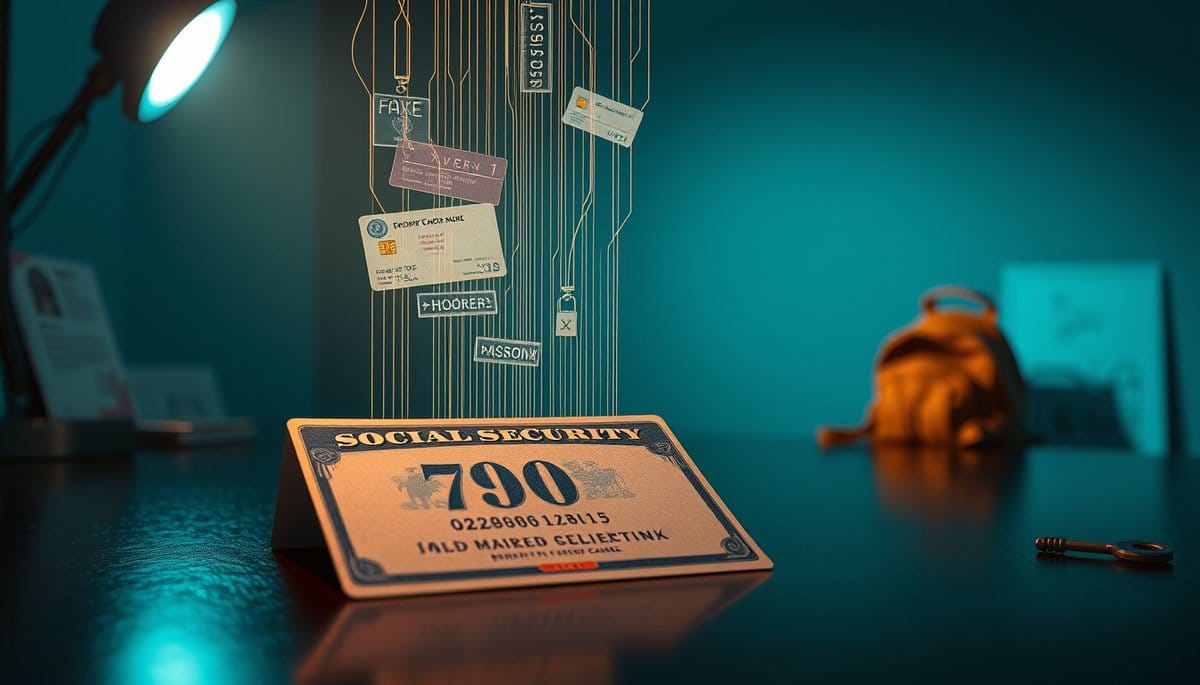
Synthetic identity fraud happens when criminals combine a real Social Security number, usually belonging to a child, an elderly person, or someone deceased, with a fake name and birthdate to create a person who doesn't exist. They spend months building that fake person a strong credit score, then max out every account and vanish. Your best protection is freezing your credit at all three bureaus, freezing your kids' credit too, and checking your Social Security earnings record, because standard credit monitoring often misses this entirely.
The 7,000 People Who Never Existed
In 2013, federal prosecutors in New Jersey unraveled a ring that had invented more than 7,000 fake identities. None of these people were real. They had names, birthdates, addresses, and credit histories, but no bodies.
The group used those identities to obtain more than 25,000 credit cards. They rented over 1,800 drop addresses, including mail drops and apartments, so each fake person had somewhere to receive statements. Then they did something patient and clever: they made payments on time, for years.
The scores climbed. Credit limits went up. Banks sent pre-approved offers to people who had never been born.
When the ring finally cashed out, the confirmed losses topped $200 million. The Department of Justice called it one of the largest credit card fraud schemes ever charged in the United States.
> The banks weren't fooled by a single forged document. They were fooled by good behavior.
That detail should bother you. Fraud detection systems are built to flag people who act suspiciously. A synthetic identity pays its bills on time, keeps its balances low, and looks like the ideal customer until the day it disappears with every dollar of available credit.
How a Fake Person Gets a 750 Credit Score
Building a synthetic identity follows a predictable recipe. Criminals run it like a farm.
1. Harvest a real SSN. Data breaches leak billions of records. Children's numbers are prized because nobody checks them for 15 years. 2. Invent the person. Pair the SSN with a made-up name, a fake birthdate, and a drop address. Sites like OnlyFake, exposed by 404 Media in 2024, were selling AI-generated driver's license images for about $15. 3. Apply and get rejected. This sounds pointless, but the rejection itself creates a credit file at the bureau. The fake person now officially exists. 4. Piggyback. The fraudster pays to add the fake person as an authorized user on someone's old, high-limit card. The synthetic file inherits years of good history overnight. 5. Farm for 12 to 24 months. Small cards, on-time payments, gradual limit increases. 6. Bust out. Max every line, open new ones, and walk away.
TransUnion estimated that lender exposure to suspected synthetic identities across auto loans, credit cards, and personal loans hit $3.1 billion by mid-2024, the highest it had ever recorded. Generative AI is speeding up step two dramatically. A convincing fake ID used to need a skilled forger. Now it needs a prompt.
Why Your Credit Monitoring Never Beeps
Most guides tell you to sign up for credit monitoring and relax. For this specific threat, that advice is close to useless.
Credit bureaus organize files around a combination of name, birthdate, and SSN. When a fraudster attaches your SSN to the name "Daniel Reyes" with a different birthday, the bureau frequently creates a brand new file instead of merging it with yours. Your monitoring service watches your file. The fake person lives in a separate one. You get no alert.
That is why the victims are so often people who aren't watching at all. A Carnegie Mellon CyLab study found children were 51 times more likely than adults to have their SSN used by someone else. A kid has no credit file to monitor, so the fake one becomes the only one. The damage surfaces at 18, when a student loan or first apartment application is denied because someone who doesn't exist has run up debts.
I'll be honest about one gap. Nobody knows the true scale here, because many synthetic losses get written off as ordinary bad debt. The fake borrower simply "defaults" and the bank never realizes it was fraud. If you're paying $30 a month for monitoring and calling it protection, you're paying for the wrong lock.
Locking Down Your SSN This Week
No single tool stops synthetic fraud completely. Together, these tools make your number a bad investment for a fraudster.
| Defense | Cost | Stops synthetic fraud? | Time to set up |
|---|---|---|---|
| Credit freeze (Equifax, Experian, TransUnion) | Free | Partly, blocks lenders checking your file | 20 minutes |
| Child credit freeze | Free | Strongly, prevents a file from being created | 1 to 3 weeks by mail |
| my Social Security account | Free | Detects someone working under your SSN | 15 minutes |
| IRS Identity Protection PIN | Free | Blocks fake tax returns using your SSN | 10 minutes |
| Paid credit monitoring | $10 to $30/month | Rarely | 5 minutes |
Freezing a child's credit is the slowest step. Each bureau wants copies of the birth certificate, Social Security card, and your ID, usually by mail. The letter you hope to receive says no credit file exists. When I went through this, the Experian response took nearly three weeks to arrive. If a file already exists for a 6-year-old, you've found a problem.
Key Takeaways
FAQ
Q: How do I check if my child's SSN is being used for synthetic identity fraud?
A: Request a child credit report from each of the three bureaus by mail, including copies of the birth certificate, Social Security card, and your own ID. If any bureau returns an existing file for a 10-year-old, someone has built credit on that number and you should file a report at IdentityTheft.gov immediately.
Q: If I freeze my credit, am I fully protected from synthetic identity fraud?
A: No, and that's the honest limitation. A freeze blocks lenders from pulling your existing file, but a fraudster using your SSN with a different name may trigger a new file, which is why checking your Social Security earnings record at ssa.gov matters as a second layer.
Q: Who pays the debt when a synthetic identity busts out?
A: Usually the lender absorbs the loss, but your SSN can stay tangled in collections and IRS records for years. Victims have spent months proving to agencies that the income or debts tied to their number weren't theirs, so catching it early saves a mountain of paperwork.
Conclusion
Synthetic identity fraud succeeds because fake people behave better than real ones and nobody watches the numbers of children, seniors, or the deceased. Tonight, freeze your credit at all three bureaus, which takes about 20 minutes online. Tomorrow, mail freeze requests for your kids, because a child's SSN is the most valuable target in your house.
💡 Lucas's Insight
Related Posts
- How Are Scammers Using Your Photo Data for Fraud?
The photos you post carry hidden data that scammers harvest to impersonate you, forge documents, and route wire fraud. Most people never check, and the risk is climbing fast. - How Is AI Identity Fraud Targeting You Now?
Fraudsters are now using generative AI to clone your voice, fake your face, and impersonate you to your own family — in real time. This isn't a future threat. It's already happening at scale, and static passwords won't save you. - How Do AI-Generated Voice Clones Commit CEO Fraud?
CEO fraud is a scam where criminals impersonate a company leader to push an employee into wiring money or sharing data. AI voice cloning now lets attackers copy an executive's voice from a single podcast clip. Ferrari, WPP and LastPass have all been targeted in the past two years.