How Do AI-Generated Voice Clones Commit CEO Fraud?
CEO fraud is a scam where criminals impersonate a company leader to push an employee into wiring money or sharing data. AI voice cloning now lets attackers copy an executive's voice from a single podcast clip. Ferrari, WPP and LastPass have all been targeted in the past two years.
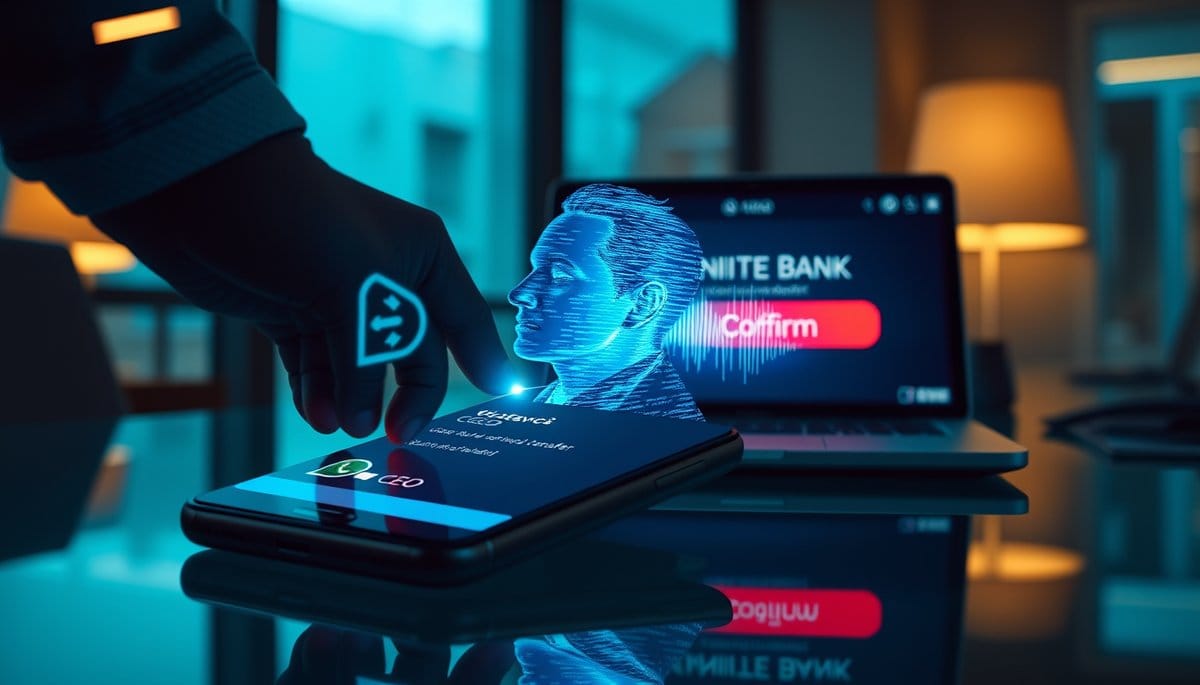
CEO fraud is a scam where a criminal pretends to be a senior executive to pressure an employee into sending money, gift cards, or sensitive data. AI has made it far more dangerous, because attackers can now clone an executive's real voice from public audio and send convincing voice notes or make live calls. The only reliable defense is procedural: never move money based on a request that arrives through a channel you didn't initiate.
The Ferrari Call That Almost Worked
In July 2024, a senior Ferrari executive started getting WhatsApp messages from CEO Benedetto Vigna. The profile photo was Vigna. The messages hinted at a big confidential acquisition and a currency hedge that needed handling. Then came a phone call, in Vigna's voice, complete with his southern Italian accent.
The executive noticed tiny mechanical intonations. So he asked one question: what was the title of the book Vigna had recommended to him a few days earlier? The caller hung up.
Ferrari wasn't alone:
- WPP, May 2024: Attackers set up a fake WhatsApp account using CEO Mark Read's photo, then scheduled a Microsoft Teams meeting featuring a voice clone of a senior executive and YouTube footage. They targeted an agency leader to set up a new business and hand over money and personal details. It failed. - LastPass, April 2024: An employee got calls, texts and a voicemail on WhatsApp featuring a deepfaked voice of CEO Karim Toubba. The employee ignored it because the CEO would never contact them on WhatsApp. - UK energy firm, 2019: A managing director heard his German parent company's CEO on the phone and wired €220,000 to a Hungarian supplier. That one worked.
The famous cases are the failures. Nobody holds a press conference for the ones that succeeded.
How an Executive Gets Cloned in One Afternoon
Executives are the easiest people on earth to clone. They give keynotes, do podcasts, and speak on quarterly earnings calls that get posted publicly. A typical attack runs like this:
1. Recon. The attacker pulls the org chart from LinkedIn and finds who in finance can approve payments. Press releases reveal deal activity they can reference. 2. Voice harvest. They download a few minutes of the CEO talking from YouTube or an earnings call replay. Consumer tools like ElevenLabs can produce a usable clone from roughly a minute of clean audio. Microsoft's VALL-E research model showed a clone from 3 seconds. 3. Channel setup. A new WhatsApp number with the CEO's headshot, or a lookalike email domain such as company-group.com. 4. Pretext. A secret acquisition, an urgent vendor payment, a regulatory issue. Always confidential, always time-sensitive. 5. The voice note. A 20-second message in the CEO's voice: "I need you on this, keep it between us." 6. Cash-out. Money goes to a mule account and gets split across banks within hours.
One detail from testing consumer cloning tools: clones handle scripted, confident sentences almost perfectly and get shaky with laughter, interruptions, or unusual names. Attackers know this. That's why they prefer one-way voice notes over live calls. WhatsApp compresses the audio heavily anyway, which smears away the artifacts you might otherwise catch.
Why Loyal, Competent Employees Are the Easiest Targets
Most security awareness training tells staff to listen for a robotic voice. If that's your main defense, you're wasting everyone's time. The voice will sound right, or close enough, over a compressed phone line when the employee is rushing.
The people who fall for CEO fraud aren't careless. They are the helpful ones. The attacker is exploiting three traits companies actively reward:
| What the attacker exploits | What it sounds like | Why it works |
|---|---|---|
| Authority | "This comes straight from me." | Questioning the CEO feels career-limiting |
| Secrecy | "Don't loop in legal yet, the deal isn't public." | Cuts off the colleague who would spot the scam |
| Urgency | "Needs to clear before 5pm." | Removes time to verify |
| Flattery | "You're the only one I trust with this." | Makes the target feel chosen |
Secrecy is the real weapon. A mid-level finance manager who gets a personal request from the CEO feels trusted, and the instruction to stay quiet feels like part of the honor. That isolation is the entire point.
I'll be honest about one thing: nobody knows the real success rate. Companies rarely report the losses they absorb quietly, so the FBI's numbers are almost certainly an undercount.
The Verification Rules That Stop the Wire
Forget detection. Build rules that make the voice irrelevant.
- Call back on a known number. Hang up and dial the executive from the company directory, never the number that contacted you. - Two approvals for any payment over a set threshold, such as $10,000, with no exceptions for the CEO. - Have leadership say it out loud: "I will never ask you to move money secretly or over WhatsApp." LastPass's employee caught the scam because of exactly this norm. - Use a personal check question, Ferrari style. Something only the real person would know and that isn't online. - Verify any change to vendor bank details by calling the vendor directly.
One real friction point: callbacks fail when the executive is genuinely on a plane. Your policy has to say the payment waits. Every time.
Key Takeaways
FAQ
Q: What is the difference between CEO fraud and regular phishing?
A: Regular phishing casts a wide net with generic messages, while CEO fraud targets one specific person using the name, voice and context of their own boss. The 2019 UK energy firm case worked because the managing director recognized his parent company CEO's accent and speech patterns.
Q: Can't companies just use deepfake detection software to catch cloned voices?
A: Detection tools help at the margins, but they lag behind new cloning models and rarely run on personal WhatsApp calls where these attacks happen. Ferrari's attack was stopped by a human asking a personal question, which no software could have done.
Q: What should I do if I get a message from my CEO asking for an urgent payment?
A: Stop, don't reply on that channel, and call the executive back using the number in your company directory. Then forward the message to your IT or security team, since attackers usually hit several employees in the same week.
Conclusion
CEO fraud now arrives in your boss's actual voice, and your ears are no longer a security control. Today, agree with your manager or finance lead on one rule: no payment moves without a callback to a directory number, no matter who asks. If you run a company, record a short message to staff saying you will never request secret payments, and send it this week.
💡 Lucas's Insight
Related Posts
- How Does AI-Powered CEO Fraud Bypass Your Security?
Attackers now clone an executive's voice from a few seconds of audio and join video calls as a fake CFO. One company lost $25 million this way. Here is how the scam works and the exact steps that stop it. - How Does the 4-Second Pause Stop AI Voice Fraud?
Scammers need about three seconds of your voice to clone it. You need four seconds of silence to beat them. The 4-second rule is a pause-and-call-back habit that works even when the voice on the phone sounds exactly like your daughter, your boss, or your mother. - How Are Scammers Stealing Your Voice From Social Media?
Every talking-head Story, TikTok voiceover and podcast guest spot you have ever posted is usable training audio. Cloning tools now need 15 to 30 seconds of clean speech, and criminals scrape it in bulk from public profiles, not from hacked accounts.
Also on AI Future Lab
- Week 25 AI Lab Review: Superconductor Research Summary
{"@context": "https://schema.org", "@type": "NewsArticle", "headline": "Week 25 AI Lab Review: Superconductor Research Summary", "description": "", "publisher": {"@type": "Organization", "name": "AI F