How Are AI-Cloned Border Forms Scamming Travelers?
Governments are moving border arrival forms online, and AI-powered scammers have already started cloning them. A single fake 'digital arrival card' can hand over your passport number, home address, and card details in under two minutes.
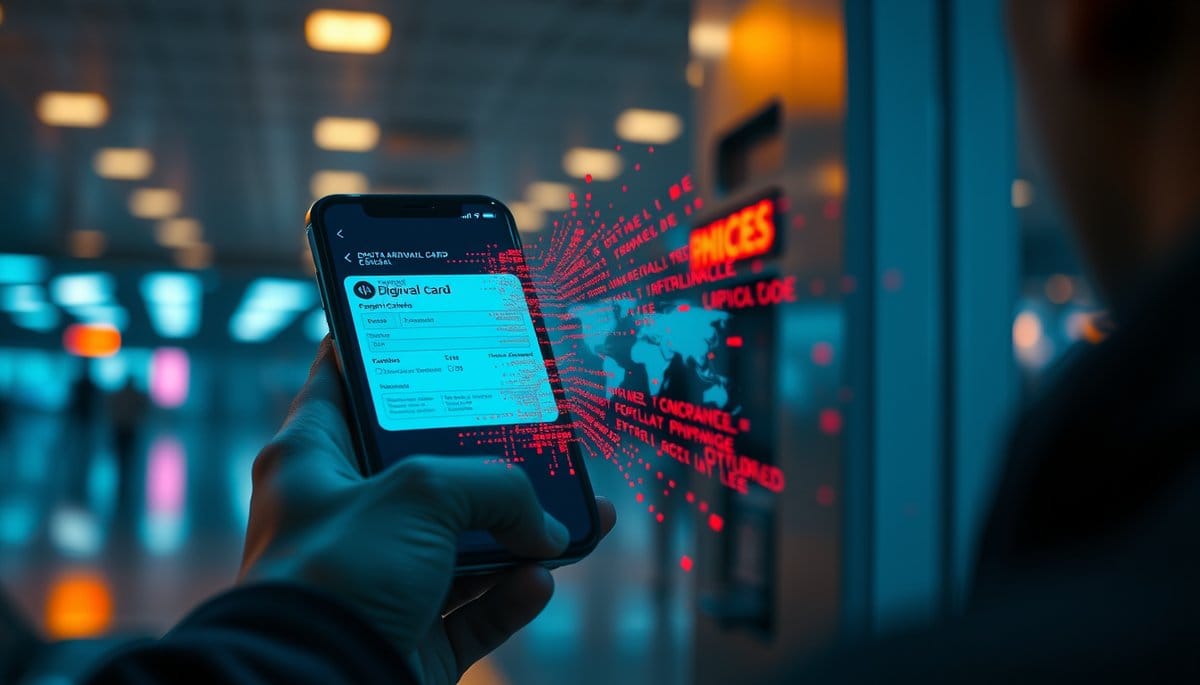
As governments digitize border arrival forms, scammers are cloning those official forms with AI and pushing fake versions through search ads, texts, and QR codes. If you fill one out, you hand over your passport number, home address, travel dates, and payment details to criminals. Only ever access arrival forms through the official government domain you type yourself.
Australia Went Digital, and the Fakes Arrived First
The Australian federal government confirmed it will phase in a digitized incoming passenger form over the next 18 months after more than 450,000 travelers used it in trials. That sounds like progress. Faster lines, less paper, fewer scribbled customs cards. But every time a government moves a document online, scammers get a fresh template to copy.
We have watched this exact pattern play out with the UK's ETA, the US ESTA, and Canada's eTA. Within weeks of each launch, hundreds of lookalike sites appeared, charging 'processing fees' for forms that are free or nearly free through official channels. One US ESTA scam network processed tens of thousands of applications before takedown.
The digital arrivals form is a richer target. It collects your passport number, flight details, home address, and health declarations in one place. That's a full identity kit. A scammer doesn't need to hack a government server when they can just build a convincing copy and wait for tired travelers to type everything in themselves.
How AI Builds a Fake Arrival Form in Minutes
The old way of building a phishing site took skill. Someone had to design pages, write believable copy, and register domains one at a time. AI collapsed all of that into a few prompts.
Here's the workflow criminals now use:
1. **Scrape the real form.** A tool copies the official page layout, fonts, and government crest in seconds. 2. **Generate clean copy.** A language model rewrites instructions in flawless, official-sounding English, removing the typos that used to give scams away. 3. **Spin up domains.** Scripts register dozens of variations like 'australia-arrival-form.com' or 'gov-au-passenger.net' at once. 4. **Buy search ads.** They bid on terms like 'Australia digital arrival card' so their fake sits above the real one in Google. 5. **Add a payment page.** The real form is free. The fake charges a $40 to $90 'processing fee' and pockets your card number too.
The whole kit can be assembled in an afternoon. I've seen fake government portals that were more polished than the actual ones, because the scammers had time and motivation the civil service didn't.
Why Smart Travelers Still Get Caught
You'd think you'd never fall for this. Most people say that right up until they're standing at a gate with a dying phone battery and a connecting flight in 40 minutes.
That's the trap. These scams don't target your intelligence. They target your context. You're rushed, jetlagged, and genuinely unsure what the new rules are, because the rules actually did just change. When a government keeps announcing new digital requirements, uncertainty becomes the scammer's best weapon. You can't tell a fake rule from a real one when both are new to you.
Search ads make it worse. If you Google the form the night before your flight, the top result might be a paid ad for a scam site. Most people trust the top result. They shouldn't.
The payment step is the cruelest part. A small 'fee' feels normal for government processing, so handing over your card doesn't trigger alarm. By the time you realize the real form was free, they have your passport data and your card on file.
What to Do Before Your Next Trip
Protecting yourself doesn't require any tech skill. It requires one habit: never reach a government form through a link, ad, or QR code you didn't verify.
Do these before you travel:
- **Type the official domain yourself.** For Australia, that means the site ending in .gov.au. Bookmark it. Never trust a texted or emailed link. - **Ignore paid search results.** The official form is almost never the ad at the top. Scroll to the organic government link. - **Refuse to pay unexpected fees.** If a form suddenly asks for $50 to process an arrival card, close it. Legitimate arrival forms are typically free. - **Check the URL letter by letter.** 'gov-au.com' and 'australia.gov.au' are not the same. Scammers count on you not looking. - **Use a credit card, never a debit card.** If you do get scammed, credit cards let you claw the money back. Debit pulls straight from your bank.
If you already submitted to a fake form, call your bank immediately and treat your passport as compromised. Watch for loan or account applications in your name over the next six months.
Key Takeaways
FAQ
Q: How do I know if an arrival form website is the real government one?
A: Check that the domain ends in the official government suffix for that country, like .gov.au for Australia, and that you typed it yourself rather than clicking a link. If the site charges a fee for a basic arrival card, it's almost certainly fake.
Q: But aren't some travel forms genuinely paid, like the US ESTA?
A: Yes, and that's exactly what scammers exploit. The real US ESTA costs $21, so fake sites charge $80 and still look plausible, which is why you should confirm the exact official fee on the .gov site before paying anything.
Q: I think I already filled out a fake form. What do I do first?
A: Call your bank right now to freeze or replace the card you used, since your payment details are the fastest thing scammers cash out. Then report your passport details as compromised and monitor your credit for new accounts over the next several months.
Conclusion
The move to digital borders is happening whether we like it or not, and scammers are already sitting on the finish line waiting. Before your next flight, do one thing today: find the real arrival form for your destination, verify the .gov domain, and bookmark it so you never have to search for it under pressure at the gate.
Related Posts
- How Are AI Deepfakes Used in Romance Scams?
Romance scammers are now using real-time AI deepfake video and cloned voices to impersonate attractive strangers — and sometimes even your own family members. The technology costs less than $20/month and is shockingly convincing. Here's what the attack looks like and how to protect yourself today. - How Are AI Deepfakes Targeting Your College?
AI voice clones and deepfake video calls now impersonate students and university leaders to steal financial aid, redirect tuition, and crack into campus accounts. A 15-second voicemail of you is enough. Here's how the scam runs and how to shut it down. - How Are AI Deepfakes Infiltrating Your Hiring?
Scammers now use AI-generated faces and cloned voices to pass video interviews, get hired, and gain access to company systems. Some swap identities mid-process. Here's how the con works and how to stop it.