Why Are AI Voice Clones So Hard to Detect?
Your ears are no longer a reliable way to catch an AI-cloned voice message from a family member, especially after WhatsApp compression smooths out the glitches. The tells that still work are about context: urgency, secrecy, money, and details only the real person would know. The only dependable defe
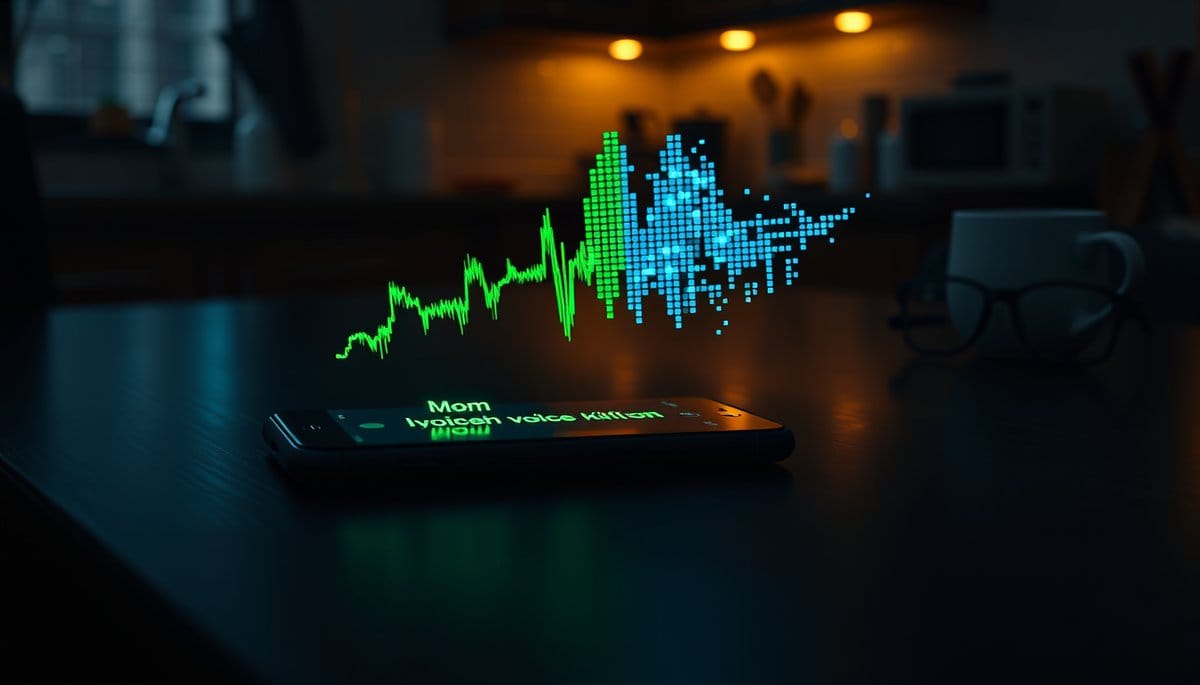
In most cases you can't tell by listening, and you shouldn't try to. Modern voice clones built from a few seconds of audio fool most people, and messaging apps compress voice notes in ways that hide the few artifacts that remain. Treat any voice message that asks for money, secrecy, or urgent action as unverified until you call the person back on a number you already have or they give your family safe word.
The Voice That Sounded Exactly Like Her Daughter
In January 2023, Jennifer DeStefano's phone rang in Scottsdale, Arizona. Her 15-year-old daughter was sobbing on the line: "Mom, I messed up." Then a man took over and demanded $1 million, later dropping to $50,000. DeStefano told the U.S. Senate she never once doubted it was her child. It wasn't. Her daughter was safe on a ski trip, and the voice was almost certainly synthetic.
That was a live call. The version showing up now is quieter and, honestly, smarter from the scammer's side: a voice note on WhatsApp, Messenger, or iMessage.
> "Hey, it's me. My phone broke, I'm using a friend's. I really need you to send £400 for the vet, I'll explain later. Please don't tell Dad yet."
Three things make voice notes more dangerous than calls:
- No live conversation. The scammer never has to answer an unexpected question. - Unlimited retakes. They can generate 20 versions and send the most convincing one. - Built-in excuse. "New number" explains why it didn't come from the usual contact.
Starling Bank surveyed 3,000 UK adults in 2024 and found 28% believed they'd been targeted by an AI voice cloning scam in the previous year. Nearly half didn't know these scams existed.
How a Fake Family Voice Message Gets Built in Under 10 Minutes
No hacking is involved. The raw material is sitting on your family's social media.
1. Harvest the voice. The scammer pulls audio from an Instagram Story, a TikTok, a birthday video, or a public voicemail greeting. McAfee's researchers found three seconds of audio can produce an 85% voice match. 2. Map the relationships. Facebook tagging, public comments, and LinkedIn tell them who is "Mom," who is "Grandpa," and what the pet is called. 3. Clone it. Consumer tools such as ElevenLabs, or free open-source models like XTTS, turn that sample into a voice that reads any script typed into it. 4. Write the script for emotion. Crying, a shaky breath, a panicked "please." Short sentences hide flaws better than long ones. 5. Send it from a new number with a text first: "Hi Mum, new phone, saving this number."
When I cloned my own voice for testing with about 30 seconds of podcast audio, the timbre was unsettlingly close on the first try. It stumbled in one place: it stressed my sister's nickname on the wrong syllable. That tiny slip is exactly what a scammer fixes by trying another take before hitting send.
Why Your Ears Are the Worst Detector in the Room
Most guides tell you to listen for robotic tones, weird pauses, or missing breaths. That advice is dated, and relying on it is dangerous. If you're replaying a voice note five times hunting for glitches, you're wasting time and building false confidence.
One technical detail most people miss: WhatsApp and other messaging apps compress voice notes heavily using the Opus codec. That compression flattens the high-frequency hiss, metallic edges, and subtle warbling that used to expose cloned audio. The platform is accidentally cleaning up the fake for the scammer.
Some tells still work sometimes. Context tells work far more often.
| Warning sign | Type | How reliable |
|---|---|---|
| Flat emotion despite "crying" words | Audio | Medium, fading fast |
| No background noise or room echo at all | Audio | Low, easily faked |
| Wrong pet name, nickname, or pronunciation | Content | High |
| Unknown or "new" number | Context | High |
| Asks for money, gift cards, or crypto | Context | Very high |
| Asks you to keep it secret from family | Context | Very high |
| Refuses or dodges a callback | Context | Near certain |
I'll be honest about the hard part. Nobody has good numbers on how often trained listeners catch modern clones in compressed voice notes, because the models improve faster than studies get published. McAfee found 70% of people weren't confident they could tell a clone from the real thing. I'd guess the real figure is worse.
The 60-Second Check for Every Urgent Voice Message
Your brain trusts a loved one's voice before your logic catches up, and fear shuts down skepticism. So decide your rules now, while you're calm.
1. Hang up the emotion. Don't reply to the voice note. Put the phone down for ten seconds. 2. Call back on the number saved in your contacts, never the new one. If they don't answer, call someone who's with them. 3. Ask for the safe word. Pick a random phrase as a family, something like "purple lighthouse," never a pet's name or a birthday that's online. 4. Ask a memory question that isn't on social media: "What did we eat after Grandpa's funeral?" 5. Never pay from a voice note alone. Gift cards, crypto, and wire transfers are the scammer's favorites because they're nearly impossible to reverse.
Then reduce the raw material. Set Instagram and TikTok to private and replace your custom voicemail greeting with the default robotic one.
Key Takeaways
FAQ
Q: Can a scammer send an AI voice note from my family member's real WhatsApp account?
A: Yes, if they've taken over the account through a stolen six-digit verification code, which is one of the most common WhatsApp hijack methods. That's why a callback to a regular phone call, or asking for the safe word, matters even when the message comes from a familiar contact.
Q: Don't AI voice detector apps solve this?
A: They help a little in lab settings, but they struggle with short, compressed voice notes, and they tend to lag behind each new cloning model. A 20-second WhatsApp clip is exactly the kind of audio they handle worst, so treat any 'likely human' result as weak evidence at best.
Q: How do I set up a family safe word without scaring my parents?
A: Frame it as a fire drill: tell them it's a two-word phrase you'll say if you ever need emergency help, and that they should ask for it before sending money. Choose something random like 'orange ferry,' share it in person or on a call, and never write it in a group chat.
Conclusion
Your ears will keep getting worse at this as cloning improves, while a safe word and a callback will keep working. Before you go to bed tonight, call one family member, agree on a random safe word, and agree that nobody sends money because of a voice message alone.
💡 Lucas's Insight
Related Posts
- How to Create a Family Safe Word for AI Voice Scams?
AI can clone your kid's voice from a 3-second TikTok clip and call your parents begging for bail money. A pre-agreed family safe word is the cheapest, fastest defense that actually works. Here's how to set one up tonight. - How Does AI Outpace Deepfake Detection Tools?
Deepfake generators get retrained in days while detection tools take months to catch up. That lag is why a fake can be online for weeks before anyone flags it, and why you can't trust detection software to save you. - How Do AI-Generated Voice Clones Commit CEO Fraud?
CEO fraud is a scam where criminals impersonate a company leader to push an employee into wiring money or sharing data. AI voice cloning now lets attackers copy an executive's voice from a single podcast clip. Ferrari, WPP and LastPass have all been targeted in the past two years.