How Can You Protect Kids From Voice Cloning?
Scammers need about 3 seconds of your child's voice to clone it and call you screaming for help. A family safe word, chosen randomly, shared only in person, and never hinted at by you, beats any deepfake detector on the market.
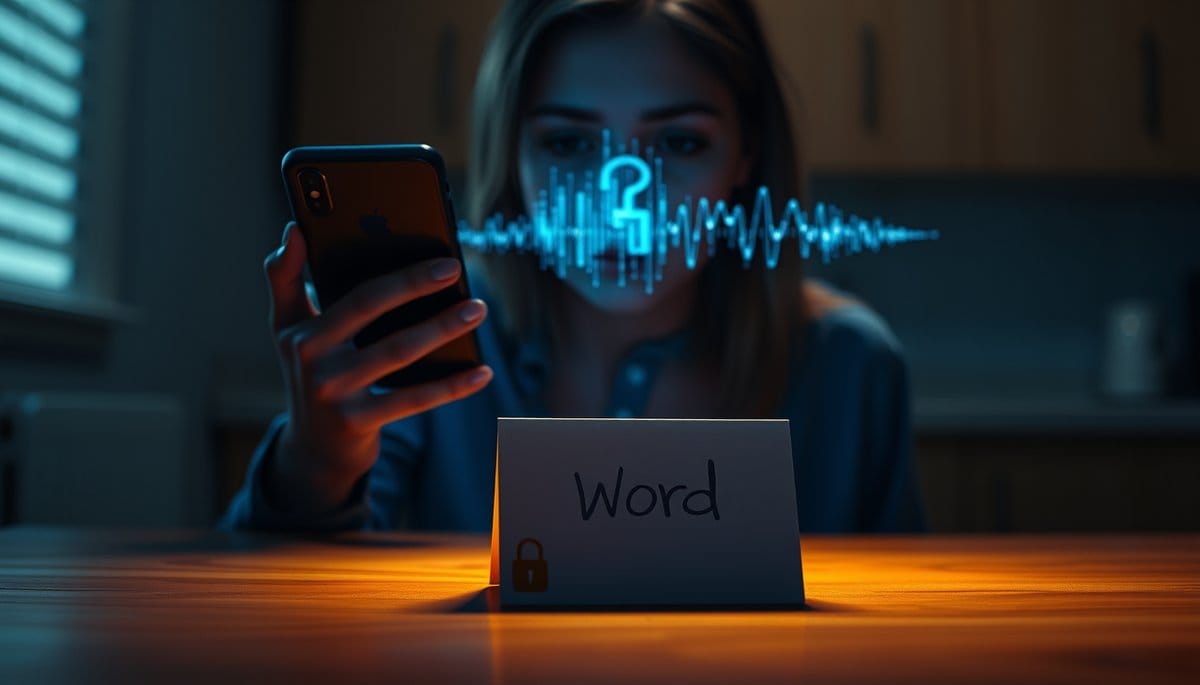
Gather your family in person, pick two random unrelated words that appear nowhere online (like 'copper pelican'), and agree that anyone calling in an emergency must say the phrase first, with no hints from you. If the caller can't produce it, hang up and call that person back on their known number. A safe word works because it tests knowledge, which a voice clone can't fake, instead of testing sound, which it fakes perfectly.
The Call That Made a Mother Hear Her Daughter Sobbing
In January 2023, Jennifer DeStefano of Scottsdale, Arizona picked up a call from an unknown number. Her 15-year-old daughter Brianna was away on a ski trip. The voice on the line was Brie's, crying: 'Mom, I messed up.'
Then a man took over. He said he had her daughter. He demanded $1 million, then dropped it to $50,000, and described in graphic detail what he would do to the girl if DeStefano called anyone.
She believed every second of it. Testifying before a U.S. Senate committee in June 2023, she said she never doubted it was her child. The voice, the crying, the inflection all matched.
What saved her was luck. Another parent nearby called her husband, who reached Brie directly. She was safe, resting, with no idea any of this was happening.
> Brie never said those words. Software did.
DeStefano had no plan. She had a friend with a second phone and a few minutes of grace. Most families won't get that. One question the scammer couldn't answer would have ended that call immediately.
How Scammers Build Your Child's Voice From a TikTok
This attack is cheap, fast, and requires zero hacking skill. A typical run looks like this.
1. Harvest audio. Instagram stories, TikTok videos, a YouTube clip from a school play, even a voicemail greeting. McAfee researchers found that 3 seconds of audio can produce a clone with an 85% voice match. 2. Clone the voice. Commercial tools like ElevenLabs and free open-source projects like RVC produce convincing clones in minutes. Paid tiers start around $5 a month. 3. Script the panic. Clones sound best in short, emotional bursts. So the 'child' cries, says two sentences, and a fake kidnapper, lawyer, or police officer takes over. That handoff is deliberate, since a longer conversation would expose the clone. 4. Isolate you. 'Don't hang up. Don't call anyone.' Staying on the line keeps you from verifying. 5. Extract fast payment. Wire transfers, gift cards, crypto, or a courier who shows up at your door for cash.
The whole operation can be set up in an afternoon, and one clone can target every relative listed on a public Facebook profile.
Why Recognizing Your Kid's Voice Is Worthless Now
If you're counting on 'I'd know my own child's voice,' stop. Around 2023, this stopped mattering. A Starling Bank survey in 2024 found 28% of UK adults had been targeted by a voice clone scam in the past year. 46% didn't know these scams existed.
The psychology is brutal. Hearing your child cry triggers a fear response that shuts down slow, skeptical thinking. Scammers know this, which is why they open with screaming instead of a calm request.
Most safe word guides tell people to pick something memorable, like a dog's name or first street. That's wrong. A dog's name appears in 40 Instagram captions. Your first street turns up in data broker listings and old security-question breaches.
I learned something painful running a test call on my own family. When I pretended to be in trouble, my mother asked 'What's our word?' and then, after two seconds of silence, said it herself to help me along. Panic makes people helpful. That single habit would have handed a scammer the password.
The rule has to be absolute. The caller says the word first, and you never prompt or hint.
The 10-Minute Safe Word Setup for Tonight
The FBI officially recommended family code words in a December 2024 public service announcement. Setting one up properly takes about ten minutes.
1. Meet in person or on a live video call. Skip the family group chat, since phones get lost and accounts get hijacked. 2. Generate two random words. Open a dictionary to two random pages or use a dice-based word list. 'Copper pelican' beats anything meaningful. 3. Set the caller-first rule. No word, no money, no exceptions. 4. Add a fallback. If the word isn't given, hang up and call back on the number saved in your contacts. 5. Store it privately. A shared vault in Bitwarden or 1Password works. A sticky note on the fridge doesn't. 6. Rotate it after any real use, and once a year anyway.
| Safe word choice | Verdict | Why |
|---|---|---|
| Pet's name | Fails | Posted on social media constantly |
| Childhood street | Fails | Common security question, leaked in breaches |
| Birthday or anniversary | Fails | Public records and Facebook |
| Inside joke | Risky | Often referenced in texts and comments |
| Two random words | Works | Unscrapable, unguessable, easy to drill |
Grandparents are the hardest group to get right. Some will forget the word within a month. Practice once every few months with a calm, no-stakes test call.
Key Takeaways
FAQ
Q: What should my family do if a caller can't give the safe word?
A: Hang up and call your family member directly on the number already saved in your phone, never one the caller provides. If you can't reach them, call another relative or local police before sending any money.
Q: Can't scammers just hack or guess our safe word?
A: They can if you pick something public like a pet's name or text it in a group chat, which is why random words shared in person matter. No defense is perfect, and a hacked email or phone could expose a stored word, so rotate it yearly and after any suspicious incident.
Q: How do I get my elderly parents to actually remember the safe word?
A: Choose two concrete, visual words like 'copper pelican' and run a calm practice call every three months. Write a short reminder card that says 'Ask for the word, never say it first,' with the word itself kept in a password manager or memorized.
Conclusion
Voice clone scams target the one sense you trust most, and no app can reliably catch them mid-call. Before you go to bed tonight, gather your household in person, pick two random words, and agree that nobody gets money without hearing them first. Do the same with your parents this week, because they are the ones scammers are calling.
💡 Lucas's Insight
Related Posts
- How to Create a Family Safe Word for AI Voice Scams?
AI can clone your kid's voice from a 3-second TikTok clip and call your parents begging for bail money. A pre-agreed family safe word is the cheapest, fastest defense that actually works. Here's how to set one up tonight. - How Does AI Voice Cloning Enable Identity Theft?
CrowdStrike's 2026 threat report confirms what security researchers have been dreading: AI-driven identity attacks have become faster, cheaper, and almost indistinguishable from reality. Criminals no longer need your password — they need three seconds of your voice. Here's what's actually happening - How Do AI-Generated Voice Clones Commit CEO Fraud?
CEO fraud is a scam where criminals impersonate a company leader to push an employee into wiring money or sharing data. AI voice cloning now lets attackers copy an executive's voice from a single podcast clip. Ferrari, WPP and LastPass have all been targeted in the past two years.