How Does AI Outpace Deepfake Detection Tools?
Deepfake generators get retrained in days while detection tools take months to catch up. That lag is why a fake can be online for weeks before anyone flags it, and why you can't trust detection software to save you.
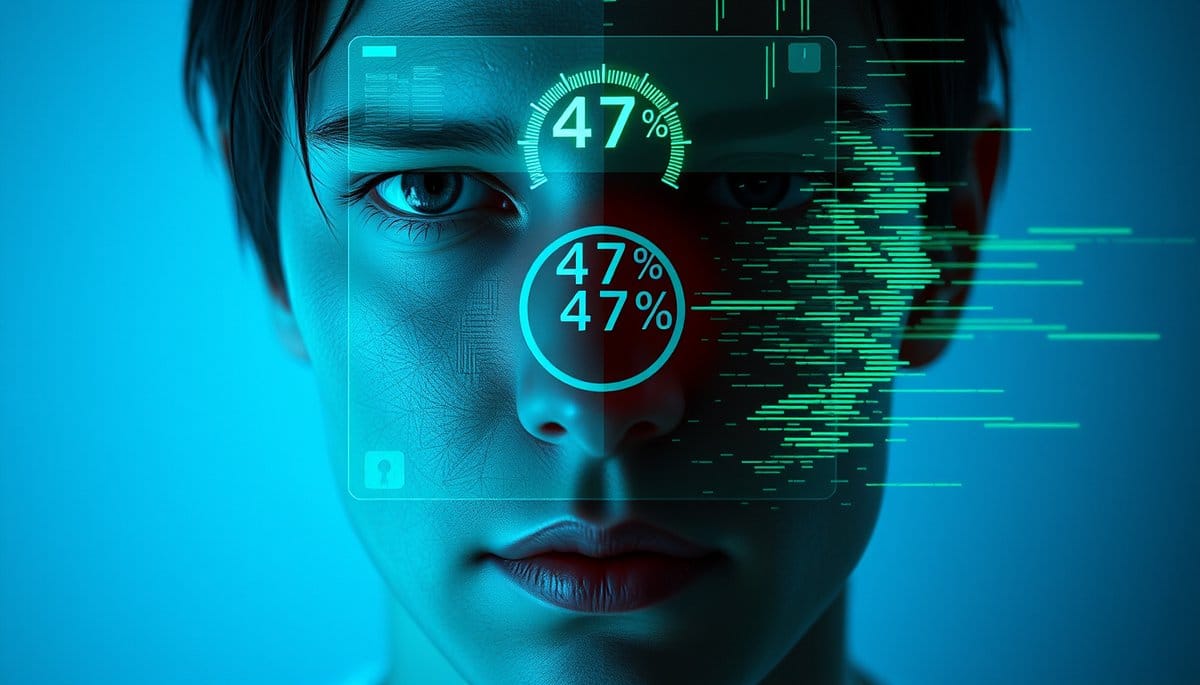
Deepfake detectors struggle because AI generators are retrained and improved in days, while detection models take weeks or months to build, test, and deploy. Every time a detector learns to spot a flaw, the next generation of fakes fixes that flaw. It's a race where the defender always starts a lap behind.
The Detector That Worked Last Month Is Already Blind
In early 2024, researchers at a European fraud lab tested a commercial deepfake detector against videos made with the then-current version of a popular face-swap tool. It caught roughly 9 out of 10. They retested the same detector months later against clips from an updated version of the same tool. Detection dropped below 30%.
Nothing about the detector broke. The generator simply got better at the exact artifacts the detector was trained to hunt: unnatural blinking, mismatched lighting on the jawline, that faint shimmer around hair edges. Once generator developers saw which tells detectors relied on, they trained those tells out.
This is the core problem. Detectors learn from a fixed dataset of known fakes. Generators learn continuously, sometimes trained directly against the detectors meant to catch them. A defense frozen in place versus an attack that never stops moving.
How the Speed Gap Actually Opens Up
The timeline mismatch is brutal when you lay it out step by step.
1. A new generation model drops, often open-source, and spreads across forums within hours. 2. Someone posts fakes made with it. These circulate for days before anyone collects enough samples. 3. A detection team gathers a labeled dataset, retrains their model, and validates it. Two to eight weeks, realistically. 4. They push the update to customers, who then have to actually install it. 5. By deployment day, the generator has already shipped another version.
Generators win because they get to iterate privately and release when ready. Defenders have to react to something that already exists in the wild. Adversarial training, where a generator is explicitly optimized to beat a specific detector, collapses that cycle even further. Some research groups showed a detector could be defeated in a single afternoon of targeted fine-tuning once its scoring behavior was known.
This part is genuinely hard to measure, because vendors rarely publish how stale their models are. That silence should worry you more than any single benchmark.
Why 'Just Use a Detection App' Is Bad Advice
Most guides tell everyday people to run suspicious media through an online deepfake checker. If you're relying on that as your main defense, you're wasting time and building false confidence.
These consumer tools give a confidence score, something like "82% likely authentic." People read that as a verdict. It isn't. It's a guess based on patterns the tool learned from old fakes, and it fails silently on anything novel. Worse, it produces false positives on real, low-quality footage, so a genuine grainy phone video from your daughter might get flagged as fake.
The counterintuitive truth: detection is the weakest link in the defense chain, not the strongest. The stronger approach is provenance. Systems like C2PA and Content Credentials attach a cryptographic signature at the moment of capture, marking where a file came from and whether it was edited. That doesn't ask "does this look fake," which is losable. It asks "can this prove it's real," which is far harder to forge. Adobe, Sony, and several camera makers have already shipped it.
What Actually Protects You Today
You can't out-detect a generator that updates weekly. You can change how you verify.
- Verify the person, not the pixels. If a video call or voice message asks for money, access, or urgency, hang up and call back on a known number. This defeats deepfakes regardless of how good they get. - Treat any confidence score under 95% as meaningless, and treat scores above it with suspicion too. - Check for Content Credentials on important media. On supported files you can inspect the provenance at contentcredentials.org/verify. - Slow down on urgency. Nearly every deepfake scam engineers a reason you can't pause. That pressure is the tell, not the pixels. - For families and small teams, agree on a verification habit for any financial or sensitive request: a callback, a second channel, a shared question only you'd know.
One detail from people who've run these tests: the most convincing fakes fall apart the instant you ask the caller to turn their head sideways or wave a hand in front of their face. Real-time generators still choke on sharp profile angles and fast occlusion.
Key Takeaways
FAQ
Q: Can any deepfake detector be trusted right now?
A: For high-stakes decisions, no single detector should be your final answer, because accuracy against the newest generators can fall below 30%. Use them as one weak signal, then confirm through a callback or provenance check like Content Credentials.
Q: But won't detection AI eventually catch up to generation AI?
A: Unlikely in a lasting way, because generators can be trained directly against detectors, giving attackers a structural advantage. This is why provenance and human verification will matter more than detection long-term, not less.
Q: How do I actually check if a video is real today?
A: Start by uploading it to contentcredentials.org/verify to see if it carries a cryptographic capture signature. If it doesn't and the content matters, contact the supposed source directly on a number or account you already trust.
Conclusion
The detection arms race is one defenders are losing by design, and no app will reliably tell you what's fake next year. Pick one habit today: for any urgent request involving money or access, hang up and call the person back on a number you already have. That single reflex beats every deepfake, no matter how fast the AI gets.
Related Posts
- How to Spot Deepfake Video Call Scams?
Scammers can now fake a live video call of your CEO or your child. The good news: even the best deepfakes still fail simple physical tests you can run mid-call. Here's exactly how to catch them. - How Are AI Deepfakes Targeting Your College?
AI voice clones and deepfake video calls now impersonate students and university leaders to steal financial aid, redirect tuition, and crack into campus accounts. A 15-second voicemail of you is enough. Here's how the scam runs and how to shut it down. - How Do AI Phishing Tools Actually Stop Attacks?
AI-generated phishing emails now pass every grammar check, mimic your boss's writing style, and arrive personalized with your real job title. Spam filters built before 2022 miss most of them. A specific stack of behavioral AI tools can catch what legacy security cannot.