What Are the Warning Signs of AI Romance Scams?
Bad grammar and refusing video calls used to give romance scammers away. Chatbots now write their messages, cloned voices send their voice notes, and face-swap software runs their live video calls. The warning sign that still holds up is money. Any online partner you haven't met who steers you towar
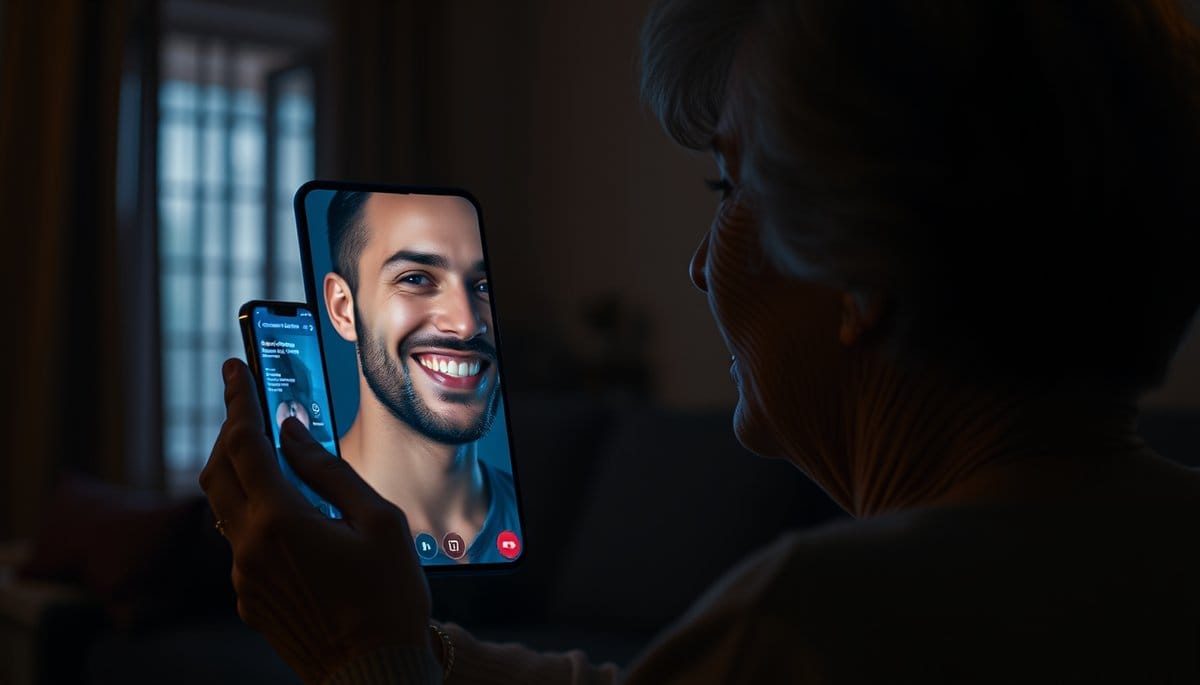
The biggest warning sign of an AI-powered romance scam is someone you've never met in person who, sooner or later, steers the conversation toward money, crypto, or an 'investment opportunity.' Flawless messages, constant availability, and even convincing video calls no longer prove anyone is real, because AI now produces all three. Treat any request for money from an online-only partner as a scam, every time.
The Fake Brad Pitt Who Needed Money for Kidney Surgery
In early 2023, a French interior designer named Anne got an Instagram message from someone claiming to be Brad Pitt's mother. Soon after, 'Brad' himself started writing to her. He sent poems, talked about a future together, and eventually proposed.
Then came the problems. His assets were frozen in his divorce from Angelina Jolie, he said, and he needed kidney treatment. He sent AI-generated photos of himself in a hospital bed, looking gaunt and alone. Over roughly 18 months, Anne sent about €830,000, most of it from her divorce settlement.
When French broadcaster TF1 aired her story in January 2025, the internet laughed at her. The hospital photos were obviously fake. The skin was too smooth and the lighting was wrong.
> That reaction is exactly what scammers count on. Ridicule keeps victims quiet, and quiet victims keep paying.
Her case stuck with me because the fakes were crude. She didn't fall for perfect technology. She fell for 18 months of daily attention, and the AI images only needed to be good enough to back up a story she already believed. Today's tools produce far better fakes than the ones that fooled her.
Inside the Scam Factory: How One Operator Runs 30 Fake Lovers
Modern romance fraud runs like a call center. Many operations are based in compounds in Southeast Asia and West Africa, and AI has turned each worker into a small army. The typical pipeline looks like this:
1. Build the face. The operator generates a photo that doesn't match anyone real, so reverse image searches come up empty. Or they take real photos from an Instagram model and face-swap them. 2. Script the romance. Large language models write warm, grammatically perfect messages in any language. One operator can keep 20 to 30 conversations going and remember every detail you mentioned. 3. Send the voice. Voice cloning tools turn a few seconds of sample audio into intimate voice notes in a consistent accent. 4. Fake the video call. Real-time face-swap software such as DeepFaceLive lets the scammer appear as their profile photo on a live call. In 2024, WIRED documented Nigerian 'Yahoo Boys' doing this openly on Telegram. 5. Pivot to money. The pitch is either an emergency (medical bills, customs fees, a frozen account) or the more lucrative 'pig butchering' setup, where they show you a crypto trading platform that 'made them rich.'
The last step makes the most money. In 2023, the FBI's IC3 recorded $3.9 billion lost to cryptocurrency investment fraud, and much of it started with a friendly or flirty message.
Why 'Just Ask for a Video Call' Is Now Dangerous Advice
Most scam guides still say a refused video call is the big red flag. That advice is now backwards. A scammer who *agrees* to a video call can be more dangerous, because the call becomes proof in your mind. If you're relying on 'we video chatted, so he's real,' you're trusting the exact thing the scam is built to fake.
| Old warning sign | Why it fails now | AI-era warning sign |
|---|---|---|
| Broken English, odd phrasing | Chatbots write flawlessly in any language | Messages are *too* polished and arrive instantly at any hour |
| Refuses video calls | Live face-swap handles short calls | Calls are short, dimly lit, or the camera 'freezes' when they move |
| Photos found in reverse image search | AI-generated faces match no one | Zero online history before this year, no tagged photos by friends |
| Inconsistent story details | AI remembers everything you said | Perfect memory, but vague about their own daily life |
| Asks for money early | Pig butchering waits weeks or months | Brings up crypto, trading, or 'my uncle's platform' casually |
Victims rarely fall for this because they're gullible. They fall because the AI partner never has a bad day. It replies at 3 a.m. and never gets bored of your stories, which no real person manages. The FTC counted $1.14 billion in reported romance scam losses in 2023, and it estimates that most victims never report at all.
Five Tests That Still Expose an AI Lover
None of these tests is foolproof, and I'd be lying if I said they'll keep working forever. Right now, they catch most operations.
- Break the face-swap. On a call, ask them to turn fully sideways, pass a hand slowly across their face, or put on and take off glasses. Current face-swaps tend to smear at the jawline and ear during a full profile turn, and the frame edges of glasses often warp. - Change their lighting. Ask them to switch on a lamp beside them. A real face changes. A swapped face often keeps the same flat glow. - Check the platform's birthday. If they push a trading site, look up the domain at lookup.icann.org. Scam platforms are often registered only weeks earlier. - Search the photos two ways. Run their pictures through Google Lens *and* TinEye. If nothing comes up anywhere, that's suspicious too, because real people leave traces. - Tell one person everything. Describe the relationship, including the money talk, to a friend you trust. Scammers work hard to isolate you, so this step breaks their whole method.
And one rule with no exceptions: never send money, crypto, or gift cards to someone you haven't met in person.
Key Takeaways
FAQ
Q: Can AI really fake a live video call on a dating app?
A: Yes. Free real-time face-swap software can map a stranger's face onto a scammer's webcam feed with only a short delay, and WIRED documented scammers demonstrating this openly on Telegram in 2024. Short, dim calls where the person avoids turning their head are the most common sign.
Q: If they never ask for money, can it still be a scam?
A: Yes, because pig butchering scams often wait weeks or months and never ask directly. Instead, they 'share' a crypto platform where they made money and encourage you to try it, and the first small withdrawals usually work so you'll deposit more.
Q: I think I'm talking to a scammer right now. What should I do first?
A: Stop sending money immediately and save screenshots of every conversation, wallet address, and website. Then report it at reportfraud.ftc.gov and ic3.gov, and contact your bank, because transfers caught within the first 24 to 72 hours are sometimes recoverable.
Conclusion
AI has removed every easy tell that romance scammers used to leave behind, so polish, patience, and video calls prove nothing anymore. The one line they still have to cross is asking for your money, directly or through an 'investment.' Today, text one friend about anyone you're dating online whom you haven't met in person, and agree that any money request gets discussed with them first.
💡 Lucas's Insight
Related Posts
- How Do Deepfake Video Calls Enable Romance Scams?
Romance scammers used to fail one test: the video call. Real-time face-swap software killed that defense. A criminal in a Southeast Asian scam compound can now appear on camera as a smiling stranger, speak in a cloned voice, and run forty relationships at once. - How Do AI Romance Scams Target You?
The man texting you good morning every day may be a language model running on a laptop in a scam compound. AI romance fraud has industrialized: one operator now runs dozens of relationships at once, complete with live deepfake video calls and a fake investment app that shows fake profits. - How to Spot Deepfake Video Call Scams?
Scammers can now fake a live video call of your CEO or your child. The good news: even the best deepfakes still fail simple physical tests you can run mid-call. Here's exactly how to catch them.