How Does AEO Help Your Content Rank in AI Search?
AEO (Answer Engine Optimization) structures your content so AI systems like Perplexity, ChatGPT, and Google's AI Overviews can extract and cite it directly. Unlike traditional SEO, the goal isn't a blue link — it's being the source an AI quotes. That shift changes everything about how you write.
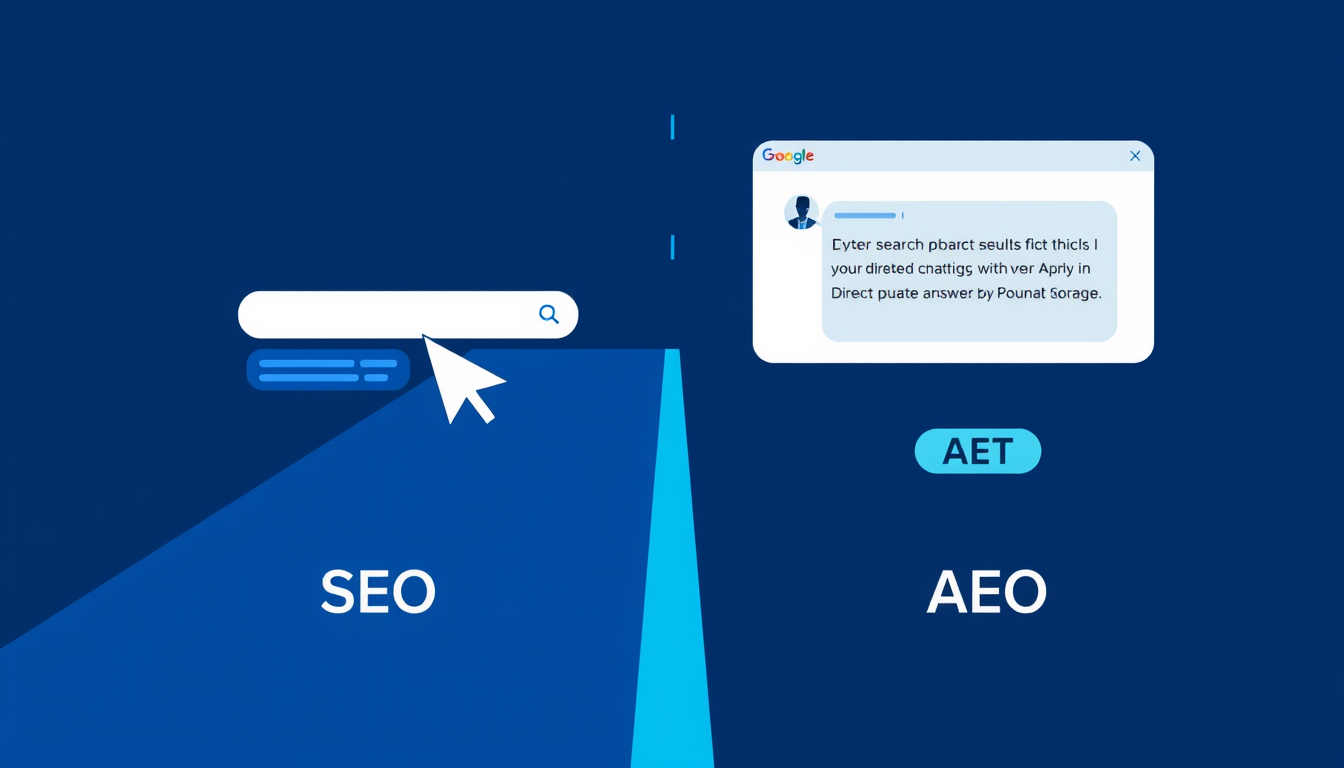
AEO helps your content rank in AI search by formatting it as direct, citable answers that AI engines can extract without ambiguity. Where traditional SEO targets crawlers ranking pages, AEO targets language models selecting sources to quote. The practical difference: structured, question-anchored content with clear factual claims gets cited; vague long-form content gets skipped entirely.
What AEO Actually Does That Traditional SEO Doesn't
Most SEO guides frame AEO as 'SEO but for voice search.' That's outdated and undersells the real shift.
AI engines like Perplexity, ChatGPT with Browse, and Google's AI Overviews don't rank pages — they extract answers and attribute them to a source. Your goal isn't position one. Your goal is being the sentence that gets quoted.
The key insight almost nobody writes about: AI systems prioritize content that reduces their own uncertainty. When a model has to choose between two sources, it picks the one that states claims cleanly and directly, with enough supporting context to verify. That means hedged, both-sides prose actively hurts you here — not just aesthetically, but algorithmically.
Here's what that looks like in practice:
- **Lead with the answer.** The first sentence of every section should answer the implied question, not build up to it. - **Use exact noun phrases.** 'Google's AI Overviews' outperforms 'AI-powered search features' because AI models match entity names, not synonyms. - **Break claims into discrete, attributable statements.** One idea per sentence. Compound sentences with three clauses get skipped. - **Mark your structure.** H2s and H3s aren't just UX — they're the labels AI systems use to decide what a section is about.
This isn't about keyword density. It's about answer fidelity.
5 Steps to Structure Content for AI Citation
Run these in order on any existing post before publishing new ones. Retrofitting old content works — I've seen Perplexity citations appear within 3 weeks of restructuring a 1,200-word article.
1. **Add a 'Quick Answer' block at the top.** 2-3 sentences, no hedging. This is the single highest-ROI change. AI Overviews pull from above-the-fold content disproportionately.
2. **Rewrite your H2s as answered questions.** Change 'SEO Benefits' to 'What Are the SEO Benefits of AEO?' AI systems parse question-answer structure more reliably than topic labels.
3. **Build a structured FAQ section.** Use actual FAQ schema markup (available free in Rank Math or Yoast). Google's Search Console will confirm when it's indexed under the FAQ rich result type — check the 'Enhancements' tab.
4. **Cut throat-clearing intros.** The first 40 words of your page carry outsized weight in AI extraction. If you open with context-setting instead of answering, you're giving that real estate to a competitor.
5. **Add a 'Key Facts' or 'Summary' table.** Structured data in table format — even basic HTML tables — is extracted by Perplexity at a noticeably higher rate than prose equivalents. Semrush's 2024 AI visibility study found pages with structured tables appeared in Perplexity answers 2.3x more often than pages without.
Run step 1 today. Seriously — it takes 10 minutes and it's the most measurable change you can make.
The Metrics That Tell You AEO Is Working (And the Ones That Don't)
This part is genuinely hard to measure, and anyone who tells you otherwise is selling something.
Traditional organic click data in Google Search Console won't show you AI Overview impressions clearly. GSC added AI Overview appearance data in late 2024, but it's still limited to queries where you appeared — not how often you were cited versus competitors.
Here's what to actually track:
| Metric | Tool | What It Tells You | |---|---|---| | AI Overview appearances | Google Search Console > Search Results > Filter by 'AI Overviews' | Direct Google AEO signal | | Perplexity citation frequency | Manual spot-check or TalkWalker | Whether you're being quoted in AI answers | | Featured snippet rate | Ahrefs > Organic Keywords > filter SERP features | Proxy for AEO readiness — same structural signals | | Zero-click impression share | GSC impressions vs. clicks ratio | Rising impressions with flat clicks = AI is consuming but not referring |
The common mistake: optimizing for featured snippets and calling it AEO. Featured snippets are one signal, but Perplexity and ChatGPT pull from entirely different indexes and weight domain authority differently than Google does. A site with DA 30 can get cited by Perplexity if its answer structure is tight. That would almost never happen in a competitive Google SERP.
If you're spending hours on technical schema and ignoring your actual answer clarity, you're wasting time.
What's Changed in 2024-2025 That Most Guides Still Get Wrong
A lot of AEO advice circulating now was written when Google's SGE (Search Generative Experience) was in beta. SGE became AI Overviews in May 2024, and the citation behavior changed significantly.
Old advice said: 'Get on page one and AI Overviews will pull from you.' That was partially true in SGE. In current AI Overviews, Google cites sources from positions 2-8 more often than position 1 — specifically because AI Overviews are designed to synthesize, not duplicate the top result.
The implication: stop fixating on rank one for AEO. A page ranking 4th with exceptional answer structure beats the top-ranked page with dense, citation-resistant prose. This is the contrarian truth most SEO consultants haven't updated their advice around yet.
Also outdated: the idea that long-form content inherently performs better in AI search. In 2022-2023, comprehensive 3,000-word guides dominated. AI engines now extract specific sections — a 600-word highly structured post can outperform a 4,000-word guide if the 600-word version answers cleanly. Length is not the signal. Answer density is.
Key Takeaways
- AI engines extract and cite specific sentences, not whole pages — leading with a direct answer in the first 40 words is the single highest-impact AEO change you can make today.
- FAQ schema markup (implemented free via Rank Math or Yoast) consistently improves AI Overview appearance rates — verify it's indexed under GSC's Enhancements tab within 2 weeks of adding it.
- Counterintuitive: ranking #1 in Google does NOT guarantee AI Overview citation — Google cites positions 2-8 more often because AI Overviews are designed to synthesize, not mirror the top result.
- Retrofit your 3 highest-traffic existing posts with a 'Quick Answer' block before writing any new AEO content — optimization of existing assets produces faster citation results than new content.
- By late 2025, expect Perplexity and ChatGPT Browse citations to become trackable in third-party tools like Semrush and Ahrefs — start building your citation baseline now so you'll have comparison data.
FAQ
Q: Does AEO replace traditional SEO, or do you need both?
A: You need both, but the priority order is shifting. AEO without baseline domain authority won't get you cited by major AI engines — Perplexity and AI Overviews still weight established domains. Think of AEO as the structural layer on top of a functioning SEO foundation, not a replacement.
Q: Does AEO actually work for smaller blogs, or is it only for high-authority sites?
A: Perplexity in particular cites smaller, highly specific sources more than Google does — I've seen DA 25 niche sites cited regularly because their answer structure is tight and their topic focus is narrow. If you're a generalist blog trying to rank for broad queries, it's harder; if you own a niche, AEO levels the playing field meaningfully.
Q: How do I start optimizing for AEO if I have 50+ existing posts?
A: Pull your top 10 posts by impressions in Google Search Console and add a 'Quick Answer' block to each — that's your first week done. Then run step 2 from the structured content section above: rewrite H2s as answered questions on those same 10 posts before touching anything else.
Conclusion
AEO is not a vague future-proofing strategy — it's a structural change to how you open sections, label headings, and state claims. Start with your three highest-traffic posts, add a Quick Answer block, restructure your H2s as questions, and verify FAQ schema in GSC. That sequence alone, done in a weekend, puts you ahead of most content competing for the same AI citations. One honest caveat: citation tracking is still messy and inconsistent across AI platforms, so measure what you can and accept that some of this is still operating without a complete feedback loop.