Why Do Deepfake Detectors Fail So Quickly?
Deepfake detection tools are trained on yesterday's fakes. Generators ship new versions every few weeks; detectors take months to retrain, and compression from WhatsApp or Zoom erases the forensic traces they hunt for. Verification has to move from pixels to people.
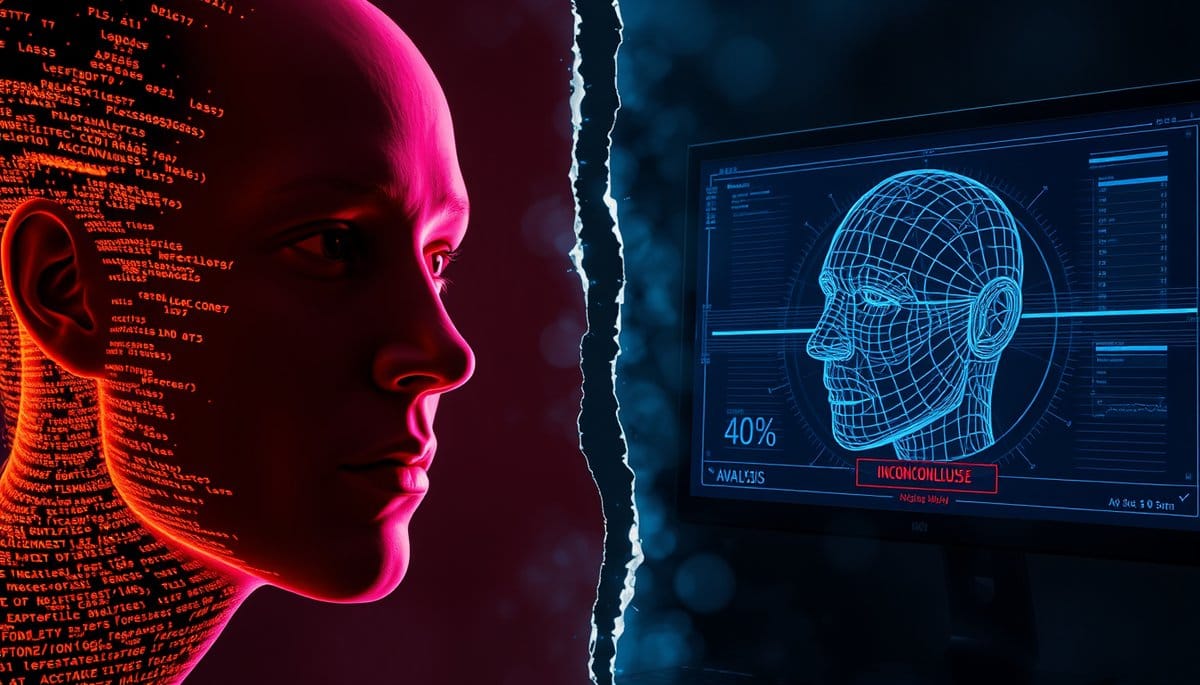
Deepfake detectors are trained to spot the fingerprints of generators that already exist. Every new model release erases those fingerprints, and retraining a detector takes months while making a convincing fake takes seconds. Detection is structurally a lagging indicator, so any defense that depends on it is already behind.
The 96% Accuracy Claim That Falls Apart Outside the Lab
Meta ran the Deepfake Detection Challenge in 2020 with a $1 million prize and 2,114 teams competing. The winning model scored 82.56% on the public test set. On the black box set of videos it had never seen, the same model dropped to 65.18%. That is a coin flip with better marketing.
Four years and a generation of models later, the gap has not closed. A 2024 study from CSIRO and Sungkyunkwan University put 16 leading detectors through real-world conditions and found none of them held up reliably once the content stopped looking like the training data.
Intel's FakeCatcher is the flagship counterexample, advertising 96% accuracy by reading blood flow signals in facial pixels. When BBC journalists tested it in 2023, it flagged authentic Trump footage as fake and waved through material it should have caught.
There is something you only notice after actually using these tools. Take the same clip, run it through a public detector as the original MP4, then send it to yourself over WhatsApp and run the compressed copy. You will frequently get two different verdicts on identical content. Compression strips the exact micro-artifacts the detector was hunting for.
The Retraining Gap: Seconds to Fake, Months to Catch
Detection works by learning the signature flaws of a specific generator: how it renders teeth edges, how it handles hair against a moving background, the frequency noise it leaves in compressed frames. Change the generator and the signature changes with it.
The asymmetry is brutal when you lay the two workflows side by side.
| Stage | Generation side | Detection side |
|---|---|---|
| Trigger | New open-weight model drops | Wait for fakes made with it to appear in the wild |
| Input needed | One photo, 10 seconds of audio | Thousands of labeled real and fake samples |
| Build time | Under 60 seconds per clip | 3 to 6 months to collect, train, validate |
| Cost | $0 to $30/month | Six figures in compute and annotation |
| Deployment | Instant, anywhere | Vendor update cycle, then customer rollout |
There is a second problem that rarely gets mentioned. An attacker can query most detection APIs directly, tweak the output, and iterate until the score comes back clean. That is adversarial optimization, and it is cheap. The detector effectively becomes a free quality-control service for the forger.
Then platforms finish the job. Zoom, WhatsApp, Instagram and TikTok all re-encode video aggressively. The forensic residue a detector needs survives the generator but rarely survives the upload pipeline.
Stop Squinting at Hands and Ears. That Advice Expired in 2023.
Count the fingers. Watch for unnatural blinking. Look at the earrings. This checklist circulated everywhere in 2022 and every single item on it has been fixed.
iProov tested 2,000 consumers in the UK and US in 2025. Only 0.1% correctly identified every piece of real and synthetic content put in front of them. Two people out of two thousand. And those participants knew they were being tested, which is the easiest possible condition. Nobody warns you before the video call.
The bigger problem most coverage misses is the liar's dividend, where genuine evidence gets dismissed as synthetic. In 2023, lawyers in a Tesla Autopilot case argued that recorded video of Elon Musk might be a deepfake. Judge Evette Pennypacker called the argument deeply troubling and rejected it. That tactic is now standard in filings, fraud disputes and HR investigations.
You end up in the worst of both worlds. False negatives let real fraud through. False positives, and the mere existence of plausible deniability, let real criminals argue that the footage of them is fabricated. A detector that is wrong 35% of the time makes both problems worse, because now there is a number to argue about.
What Actually Works Today, and None of It Is an App
If your plan is to install a deepfake detector extension and consider the problem handled, stop. You are wasting your time and building false confidence. Move verification off the media and onto the channel.
1. Call back on a number you already have. Not the number that called you, not a number in the email signature. Your saved contact. This takes about 90 seconds and defeats almost every real-world attack, because the attacker controls the inbound channel only. 2. Set a family passphrase now. Something unguessable and absent from social media. Not your dog's name, not your street. Tell your parents tonight. 3. Enforce a two-person rule on money. Any payment above a threshold you set requires a second human approving through a different channel. Video approval alone should never be sufficient. 4. Check provenance, not pixels. C2PA Content Credentials are now embedded by Adobe, OpenAI and LinkedIn. Missing credentials prove nothing, but present and intact credentials are meaningful evidence. 5. Treat urgency as the tell. Deepfakes are expensive to sustain in conversation. Pressure to act in the next ten minutes is the actual signal.
This is genuinely hard to measure. Nobody publishes clean numbers on how many attacks callback policies stop, because the stopped ones never become incidents.
Key Takeaways
FAQ
Q: Do deepfake detector apps and websites actually work?
A: They work reasonably well on the specific generators they were trained against and poorly on anything newer or heavily compressed, which describes most content you actually receive. Treat a 'likely authentic' result as weak evidence, never as clearance to send money.
Q: Won't watermarking and C2PA Content Credentials solve this?
A: Provenance standards help for content created inside cooperating tools like Adobe, OpenAI and Google, but open-weight models running on someone's laptop simply do not add credentials, and metadata is stripped by most social platforms on upload. Credentials that survive are useful proof of origin; their absence proves nothing at all.
Q: A video landed in my messages right now. How do I check it fast?
A: Do not analyze the video, verify the sender through a channel they do not control by calling your saved number for them. If it claims to be public footage, find the original source through a reverse image search on a keyframe before you share it.
Conclusion
Detection will keep improving and will keep losing, because the people building fakes get to move second and test against every detector on the market. Your defense has to live somewhere the attacker cannot reach: an agreed passphrase, a callback number, a second approver. Pick one person you would wire money for and send them a passphrase today.
💡 Lucas's Insight
Related Posts
- How Does AI Outpace Deepfake Detection Tools?
Deepfake generators get retrained in days while detection tools take months to catch up. That lag is why a fake can be online for weeks before anyone flags it, and why you can't trust detection software to save you. - How to Spot Deepfake Video Call Scams?
Scammers can now fake a live video call of your CEO or your child. The good news: even the best deepfakes still fail simple physical tests you can run mid-call. Here's exactly how to catch them. - How Do Deepfake Video Calls Enable Romance Scams?
Romance scammers used to fail one test: the video call. Real-time face-swap software killed that defense. A criminal in a Southeast Asian scam compound can now appear on camera as a smiling stranger, speak in a cloned voice, and run forty relationships at once.