Which Free SEO Tools Actually Track Rankings?
You don't need a $99/month Ahrefs subscription to track your SEO progress. Google Search Console alone answers the three questions that matter most: are you ranking, are you getting clicks, and is the trend moving up? Pair it with GA4 and one free rank tracker, and you have a complete picture.
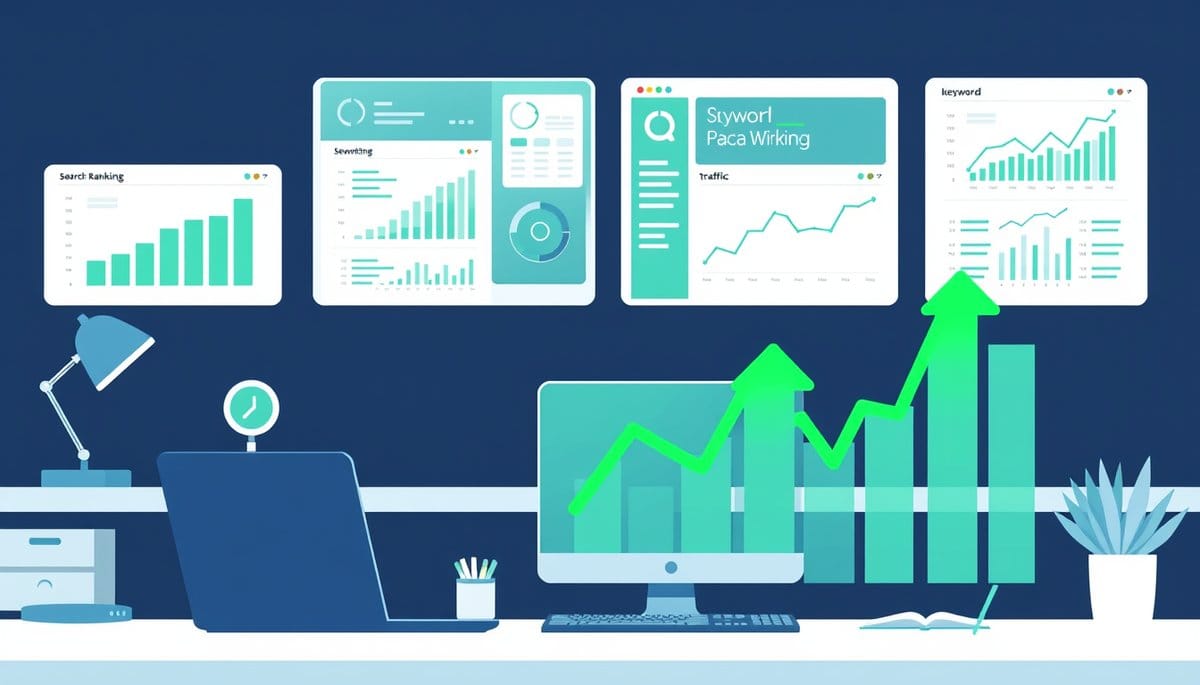
Google Search Console is the single best free SEO tracking tool — full stop. It shows your actual impressions, clicks, average position, and which queries drive traffic, straight from Google's own data. Pair it with GA4 for on-site behavior and Bing Webmaster Tools for a free second-opinion rank tracker, and you have a complete free stack that most paid tools are just wrapping with a prettier interface.
Why Google Search Console Beats Every Paid Tool for Core SEO Tracking
Here's the insight most guides skip: third-party tools like Ahrefs or Semrush estimate your rankings by crawling search results on a schedule. Google Search Console reports what Google actually served to real users. That's not a small difference — that's the difference between a poll and an election result.
Search Console shows you: - **Impressions**: How many times your page appeared in search results - **Clicks**: How many people actually visited - **Average position**: Your typical ranking across all queries triggering that page - **Click-through rate (CTR)**: The ratio that tells you if your title and meta description are doing their job
The Performance report lets you filter by page, query, country, and device. Set the date comparison to the previous 90 days — this gives you enough data to see real trends rather than weekly noise. A page sitting at position 8 with 2,000 impressions and a 3% CTR is screaming for a title rewrite. You'd never see that signal in a rank tracker alone.
Setup takes under 10 minutes. Verify via Google Analytics or HTML tag, submit your sitemap, and you'll start seeing data within 48 hours. There is no paid substitute for this data source because no paid tool has access to it.
The Complete Free SEO Tracking Stack (Ranked by Priority)
You need three tools. In order of importance:
| Tool | What It Tracks | Setup Time | Data Freshness | |---|---|---|---| | Google Search Console | Rankings, impressions, clicks, CTR, crawl errors | 10 min | 2–3 day delay | | Google Analytics 4 | Organic traffic, engagement rate, conversions | 15 min | Near real-time | | Bing Webmaster Tools | Bing rankings + free keyword research | 5 min | Daily | | Google PageSpeed Insights | Core Web Vitals per URL | Instant | On-demand | | Ahrefs Webmaster Tools (free) | Backlinks, broken links, organic keywords | 10 min | Weekly crawl |
**Start here:** 1. Connect Search Console and GA4 together inside Search Console settings — this surfaces Search Console data directly in your GA4 acquisition reports. 2. In Bing Webmaster Tools, import your Search Console verification with one click — instant setup. 3. Add Ahrefs Webmaster Tools (genuinely free for site owners) to get backlink monitoring that Search Console underreports.
That entire stack costs $0 and covers rankings, traffic, backlinks, and site health. The one thing it doesn't give you is competitor keyword data — but that's a research problem, not a tracking problem. Don't conflate the two.
The Metrics That Actually Predict Growth (And the Ones That Fool You)
Most bloggers check their rankings obsessively and ignore the metrics that actually predict future traffic. That's the trap.
**Metrics that matter:** - **Impressions growth week-over-week**: New impressions mean Google is indexing and testing new queries for your content — this leads clicks by 4–8 weeks. - **Pages entering top 10**: Filter Search Console by average position under 10. Count those pages monthly. If that number grows, traffic grows. - **CTR for positions 5–15**: These are your conversion opportunities. A jump from 4% to 7% CTR on a page at position 6 can double your traffic without any ranking improvement.
**Metrics that fool you:** - **Average position across your entire site**: This number is nearly meaningless. One viral post can drag up your site average while everything else stagnates. - **Total sessions from organic**: Seasonal content inflates this. Always compare year-over-year, not month-over-month.
Contrarian point: most SEO guides tell you to track rankings for your target keywords. Here's why that's often wrong for bloggers — your best traffic frequently comes from queries you never consciously targeted. Search Console's query report will show you dozens of variations driving impressions. Those are your next optimization targets and your next post ideas, already validated by real search demand.
What's Changed: Outdated Free Tool Advice Still Circulating
Two things you'll still see recommended that you should ignore:
**1. Google Analytics Universal (UA)**: Shut down July 2024. Any guide recommending UA setup is outdated. GA4 is the only option, and its 'Organic Search' channel in the Traffic Acquisition report is your primary organic traffic dashboard.
**2. Google Search Console's average position as a rank tracker**: Some older guides recommend exporting average position data and treating it like a daily rank tracker. Don't. Average position in GSC is an aggregate across all queries and all users — it fluctuates based on query mix, not just ranking changes. Use it for trend analysis over 30+ day windows only.
One genuinely useful recent addition: Search Console's **Search appearance filters** now include 'AI Overviews' as a filterable type in some accounts rolling out through 2024–2025. If you see that filter, turn it on. It shows you which queries trigger an AI Overview above your result — and whether you're still getting clicks despite that. That data doesn't exist anywhere else and will become the most important signal in your free toolkit within the next 12 months.
Key Takeaways
- Google Search Console is the only tool reporting real Google data — third-party rank trackers estimate positions from crawls, not actual search results.
- Ahrefs Webmaster Tools is free for verified site owners and gives you backlink monitoring that GSC significantly underreports — set it up in 10 minutes.
- Impressions growth in GSC predicts traffic growth by 4–8 weeks — watch this metric before you watch clicks.
- Today: connect GSC and GA4 together inside Search Console settings — this single step gives you organic search data inside GA4's acquisition reports immediately.
- Search Console will soon show AI Overview appearance data as a standard filter — bloggers who understand how to read that signal in 2025 will have a significant competitive advantage.
FAQ
Q: Is Google Search Console enough on its own, or do I really need GA4 too?
A: GSC tells you how people find you; GA4 tells you what they do after they arrive. For a new blogger focused purely on rankings and impressions, GSC alone is enough for the first 6 months — but once you want to know which posts drive email signups or sales, you need GA4's conversion tracking.
Q: Do free tools actually give you enough data, or are you just handicapping yourself vs. paid users?
A: For tracking your own site's SEO progress, free tools are genuinely sufficient — you're not missing anything critical. The real gap is competitor research and keyword difficulty scoring, which matters more for strategy than tracking, and you can fill that partially with the free tier of Semrush (10 queries/day) or Ubersuggest.
Q: How do I know if my SEO is actually improving and not just fluctuating randomly?
A: Set a 90-day comparison window in Search Console's Performance report and count two things: how many pages have entered the top 10, and whether total impressions are up. A consistent upward trend in both over 90 days is signal, not noise — weekly ranking moves almost always are.
Conclusion
Set up Google Search Console and Ahrefs Webmaster Tools today — that single combination covers rankings, click data, and backlinks for $0. Then spend 30 minutes inside Search Console's query report filtering for keywords where you're averaging positions 8–15 with over 500 impressions: those are your fastest wins, and you'll find them within your first session. One honest caveat: free tools tell you what's happening on your own site, not why competitors are outranking you — if you hit a plateau after 6 months, that's when a paid tool like Ahrefs or Semrush earns its cost.
Related Posts
- Why Is Google Search Console Essential for SEO?
The best free SEO tracking tools are Google Search Console, Google Analytics 4, and Ahrefs Free. Together they show you which keywords drive clicks, how users behave on your site, and how your backlink profile grows — all without spending a dollar. - Which AI SEO Tools Work Best in 2025?
The best AI tools for SEO optimization in 2025 are Surfer SEO, Semrush AI, Clearscope, Frase, and NeuronWriter — each built for a distinct stage of the SEO workflow. Choosing the right one depends on whether you need content optimization, keyword research, or competitive analysis. This breakdown cut - What On-Page SEO Factors Drive the Most Gains?
The on-page SEO changes that move rankings fastest are optimizing title tags, improving content depth to match search intent, and fixing internal linking. These three levers directly influence how Google understands, trusts, and surfaces your pages — and you can implement all of them today without a
Also on AI Future Lab
- [Solar Lab | Week 2 Day 1] FASnI3 Lead-Free Perovskite - AI Lab Simulation
{"@context": "https://schema.org", "@type": "NewsArticle", "headline": "[Solar Lab | Week 2 Day 1] FASnI3 Lead-Free Perovskite - AI Lab Simulation", "description": "", "publisher": {"@type": "Organiza