How I Scaled to 1000 Customers with AI Support
Six months ago, I was personally answering 80+ support tickets a day. Today I serve 1000 customers with a two-person team and an AI layer that handles 73% of inquiries automatically. Here's exactly how I got there.


At customer #200, I was answering support tickets at midnight while eating cold pizza. At customer #400, I hired two people and was still behind. It wasn't until I figured out how to scale customer support AI that I stopped dreading Monday mornings — and actually started growing again.
- The Breaking Point: When Human-Only Support Almost Killed My Business
- My Exact AI Support Stack (And What I Tried Before It Worked)
- The Numbers: What Changed After 90 Days
- FAQ
- Conclusion
The Breaking Point: When Human-Only Support Almost Killed My Business
Let me paint you a picture. It's February 2024. I'm running a SaaS tool for freelance designers, and we've just crossed 350 paying customers. Sounds great, right? Except my average response time had ballooned to 14 hours. My NPS score dropped from 52 to 31 in a single quarter. And I was spending $6,800/month on two part-time support reps who were genuinely trying their best but couldn't keep up.
The worst part? I was losing customers not because of my product, but because they felt ignored. I ran a churn survey and 41% of departing customers cited 'slow or unhelpful support' as a reason. That hit hard.
I'd heard about using AI for support but honestly, I was skeptical. I'd tried a basic chatbot in 2023 — one of those decision-tree nightmares — and customers hated it. It felt like a phone tree from 2005. So I dismissed the whole category. That was my first mistake. The landscape had completely changed, and I was about to find out just how much when I seriously tried to scale customer support AI for real this time.
What finally pushed me over the edge was a single weekend where 127 tickets piled up and I spent my entire Sunday triaging them instead of being at my kid's soccer game. Something had to give.

My Exact AI Support Stack (And What I Tried Before It Worked)
Here's what actually worked — and I'll be honest about the stumbles too.
First attempt: I plugged a generic GPT wrapper into my help desk. It hallucinated product features we didn't have and confidently told a customer they could get a refund we don't offer. Lasted three days.
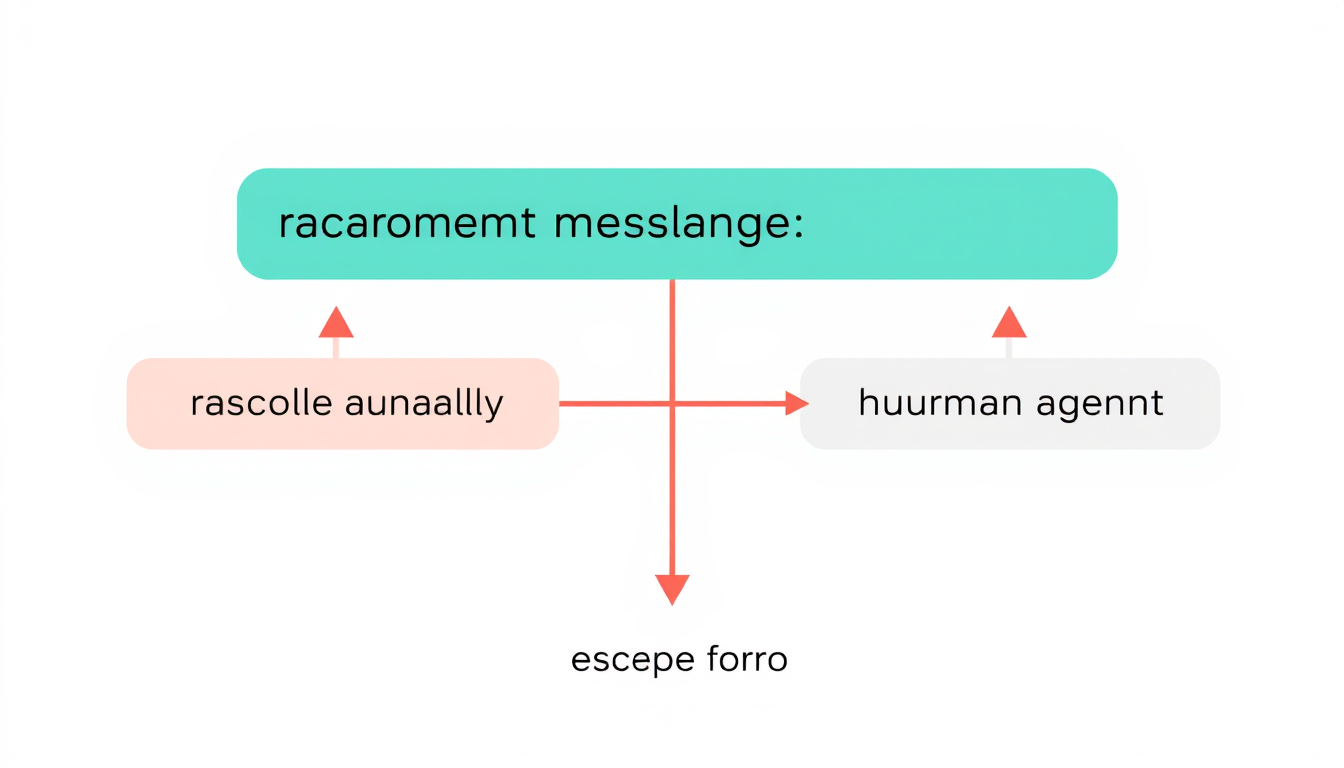
Second attempt: I used Claude's API with a carefully crafted system prompt, fed it our entire knowledge base (about 45 help articles and 200 past ticket conversations), and connected it through Make.com to our Crisp chat widget. This time, I added a critical rule: if confidence is low, escalate to a human immediately.
The setup took me about two weekends. Here's the practical breakdown:
1. **Knowledge base prep** — I spent a full Saturday rewriting our help docs in Q&A format. This was the single highest-ROI task. Garbage in, garbage out. 2. **Claude API integration** — I used Make.com to route incoming Crisp messages to Claude, passing along the customer's plan type and recent activity for context. 3. **Escalation logic** — Any question about billing, refunds, or bugs gets flagged for human review. The AI handles how-to questions, feature explanations, and onboarding guidance. 4. **Feedback loop** — Every AI response includes a tiny 'Was this helpful?' button. I review the 'No' responses weekly and update the knowledge base.
This is the framework that let me genuinely scale customer support AI without making customers feel like they're talking to a robot reading a script.
The Numbers: What Changed After 90 Days
I'm a numbers person, so here's what the first 90 days looked like after going live:
- **Tickets handled by AI without escalation:** 73% (up from 0%, obviously) - **Average first response time:** dropped from 14 hours to 45 seconds - **Monthly support costs:** went from $6,800 to $2,400 (one part-time rep + ~$180/month in API costs) - **NPS score:** climbed back from 31 to 48 - **Customer count:** grew from 540 to 1,000+ (because I finally had time to focus on marketing and product again) - **My Sunday status:** at soccer games where I belong
The $4,400/month savings was meaningful, but the real win was time. I got roughly 25 hours per week back across the team. That time went directly into product improvements and outreach that drove the customer growth.
One honest caveat: the first two weeks were rough. The AI gave a handful of awkward answers, and I had to babysit it closely. By week three, after tuning the knowledge base and tightening the system prompt, it stabilized. If you're going to scale customer support AI, budget two weeks for active tuning. Don't set it and forget it on day one.
Also — and this surprised me — customers started leaving *better* feedback. Several mentioned how fast and helpful support was. They didn't know (or care) it was AI. They just wanted their answer quickly.
❓ FAQ
Q: Won't customers be annoyed they're talking to an AI?
A: In my experience, customers care about speed and accuracy far more than who (or what) is answering. I'm transparent — our chat says 'AI-assisted support' — and I've had exactly two complaints about it in six months. Both were resolved by immediately connecting them to a human.
Q: How much technical skill do I need to set this up?
A: If you can use Zapier or Make.com, you can do this. I'm not a developer. My entire setup uses Make.com scenarios, Claude's API, and my existing help desk. The hardest part is writing good help documentation, which is a content task, not a coding task.
Q: What if the AI gives a wrong answer and upsets a customer?
A: It will happen — plan for it. My safety net is the escalation rule: anything billing-related or flagged as uncertain goes to a human. I also review 'not helpful' flags weekly. In 90 days, I had about 15 genuinely wrong answers out of roughly 4,000 AI-handled conversations. That's a 99.6% accuracy rate after tuning.
Conclusion
Scaling to 1,000 customers didn't require a massive support team or a six-figure budget. It required good documentation, a smart AI layer, and the willingness to iterate for a couple of weeks. If you're drowning in tickets right now, you're exactly where I was — and I promise the other side feels a lot better. Start with Claude's API and a simple Make.com automation. You can scale customer support AI with a weekend of focused work and have your evenings back by the end of the month.