How Long Does It Take to Set Up AI Blog Automation?
A basic AI blog automation system takes 2-8 hours to configure. Advanced systems with custom workflows, SEO integration, and quality controls require 1-4 weeks. Your timeline depends entirely on complexity, tool selection, and content standards.
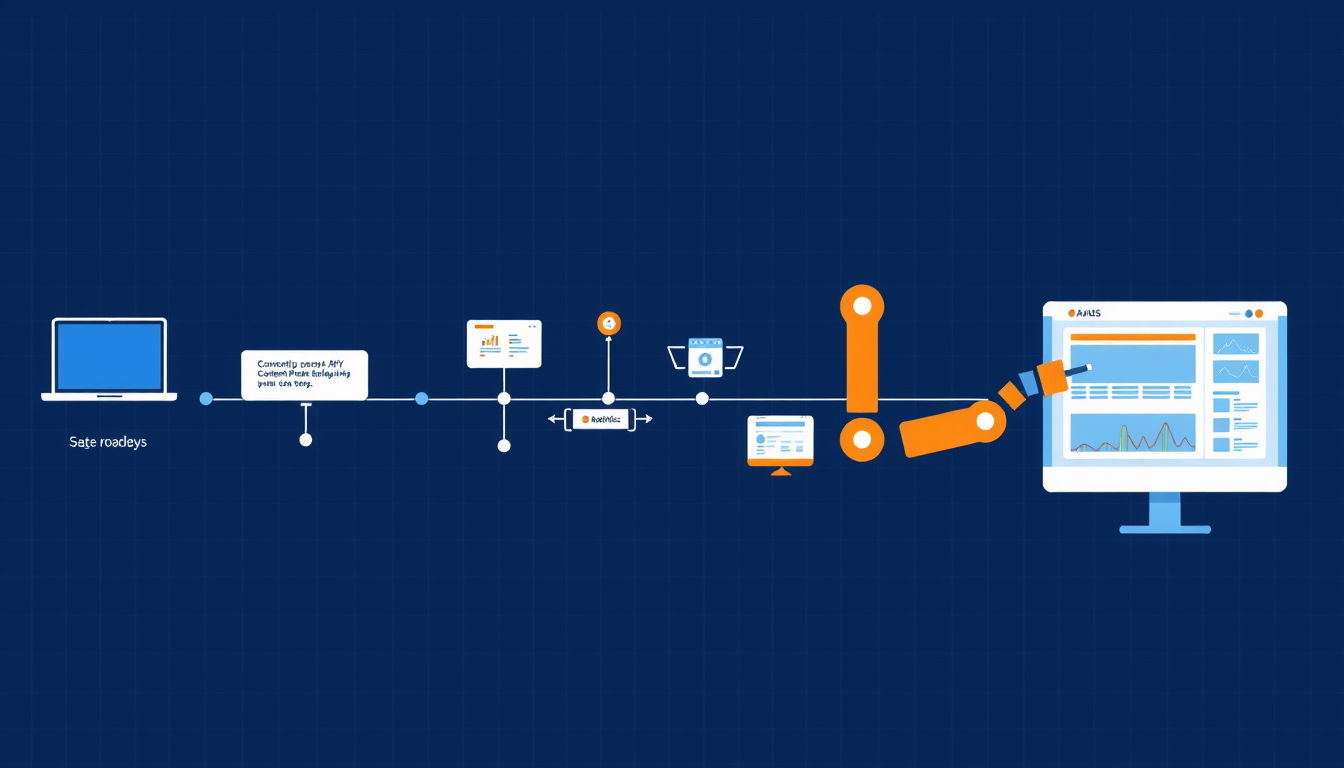
A basic AI blog automation system takes 2-8 hours to set up using no-code tools like Zapier or Make connected to ChatGPT or Claude APIs. A production-grade system with custom prompts, editorial workflows, SEO optimization, and publishing integrations typically requires 1-4 weeks. The biggest time variable is not the tech stack—it's dialing in prompt engineering and quality control to produce content worth publishing.
Basic AI Blog Setup Takes 2-8 Hours
The simplest AI blog automation connects an LLM API to a publishing platform through a workflow tool. Here's the realistic breakdown: signing up for API access (OpenAI, Anthropic, or similar) takes 15-30 minutes. Connecting a workflow automation tool like Zapier, Make, or n8n to your CMS takes 1-2 hours, including authentication and testing. Writing your initial prompt templates for blog generation takes 1-3 hours. Testing the end-to-end pipeline and fixing formatting issues takes another 1-2 hours. At this level, you get a system that generates and publishes drafts on a schedule. The output quality will be generic and likely requires manual editing. This tier works for internal content, draft generation, or low-stakes blogs where volume matters more than polish.
Production-Grade Systems Need 1-4 Weeks
Serious AI blog automation demands layers beyond basic API calls. Week one focuses on prompt engineering: building topic research chains, outline generators, section-by-section writing prompts, and tone calibration. This alone takes 3-5 days of iterative testing. Week two tackles integrations—connecting keyword research tools (Ahrefs, SEMrush APIs), image generation, internal linking logic, and CMS formatting. You'll spend days resolving edge cases in HTML output, metadata generation, and category assignment. Weeks three and four cover quality control: building review workflows, plagiarism checks, fact-verification steps, and human-in-the-loop approval gates. Most teams underestimate this phase. The automation itself is straightforward; making it produce consistently publishable content is the real engineering challenge. Custom-coded solutions using Python or Node.js scripts offer more control but add development time.
Prompt Engineering Is the Hidden Time Sink
Teams consistently report that 40-60% of total setup time goes into prompt development and refinement. Writing a prompt that generates a passable blog post takes minutes. Writing a prompt chain that consistently produces well-structured, on-brand, SEO-optimized content with accurate information takes days of iteration. You need separate prompts for topic ideation, outline creation, section drafting, editing passes, meta description generation, and title optimization. Each prompt requires testing across dozens of topics to identify failure modes. Expect to rewrite your core prompts 5-10 times before stabilizing output quality. Budget at least 15-20 hours purely for prompt engineering on a production system. Skipping this step is why most AI blog setups produce content that reads like obvious AI slop.
Ongoing Optimization Adds 2-5 Hours Weekly
Setup does not end at launch. The first month requires active monitoring and adjustment. AI models update, content quality drifts, and SEO requirements shift. Plan for 2-5 hours per week reviewing output quality, refining prompts based on performance data, updating keyword strategies, and maintaining integrations. Most automation failures happen post-launch when teams assume the system runs itself. Successful operators treat the first 90 days as an extended setup phase, continuously tightening quality thresholds and expanding automation coverage. After three months of active tuning, maintenance typically drops to 1-2 hours weekly. Factor this ongoing investment into your total timeline and resource planning.
Key Takeaways
- A minimal viable AI blog automation system takes 2-8 hours using no-code tools and API connections.
- Production-quality systems with SEO integration and quality controls require 1-4 weeks of focused setup.
- Prompt engineering consumes 40-60% of total setup time and determines output quality more than any other factor.
- The first 90 days after launch require 2-5 hours weekly of active monitoring and refinement.
- Custom-coded pipelines offer superior control but add significant development time compared to no-code platforms.
FAQ
Q: Can I set up AI blog automation with no coding skills?
A: Yes. Platforms like Zapier, Make, and dedicated tools like Byword or Journalist AI require zero coding and can be configured in 2-4 hours. You trade customization flexibility for speed, but non-technical users can absolutely build functional systems.
Q: What's the cheapest way to automate AI blog content?
A: The lowest-cost setup uses the OpenAI API (pay-per-token) connected to a free-tier Make or n8n workflow publishing to WordPress. Total monthly cost runs $20-50 for moderate volume. Dedicated AI writing platforms charge $50-300/month but eliminate setup complexity.
Q: What if the AI-generated content quality is too low after setup?
A: Low quality almost always traces back to weak prompts or missing quality control steps. Add a dedicated editing/rewriting pass in your pipeline, implement scoring criteria to reject subpar drafts, and invest more time in prompt chain refinement. Quality improves dramatically with multi-step generation workflows versus single-prompt approaches.
Conclusion
Setting up an AI blog automation system realistically takes 2-8 hours for a basic pipeline and 1-4 weeks for a production-grade system that publishes quality content. The single most important step before you start building: define your minimum quality standard and design your prompt engineering workflow around it—that decision alone determines whether your system produces valuable content or expensive noise.