How Does Anthropic's OpenClaw API Pricing Work?
Anthropic has blocked Claude Pro and Max subscribers from using their flat-rate plans with third-party AI agent frameworks like OpenClaw, effective April 4, 2026. Developers who relied on subscription plans to power API-driven agents must now pay usage-based API costs on top of their subscription. T
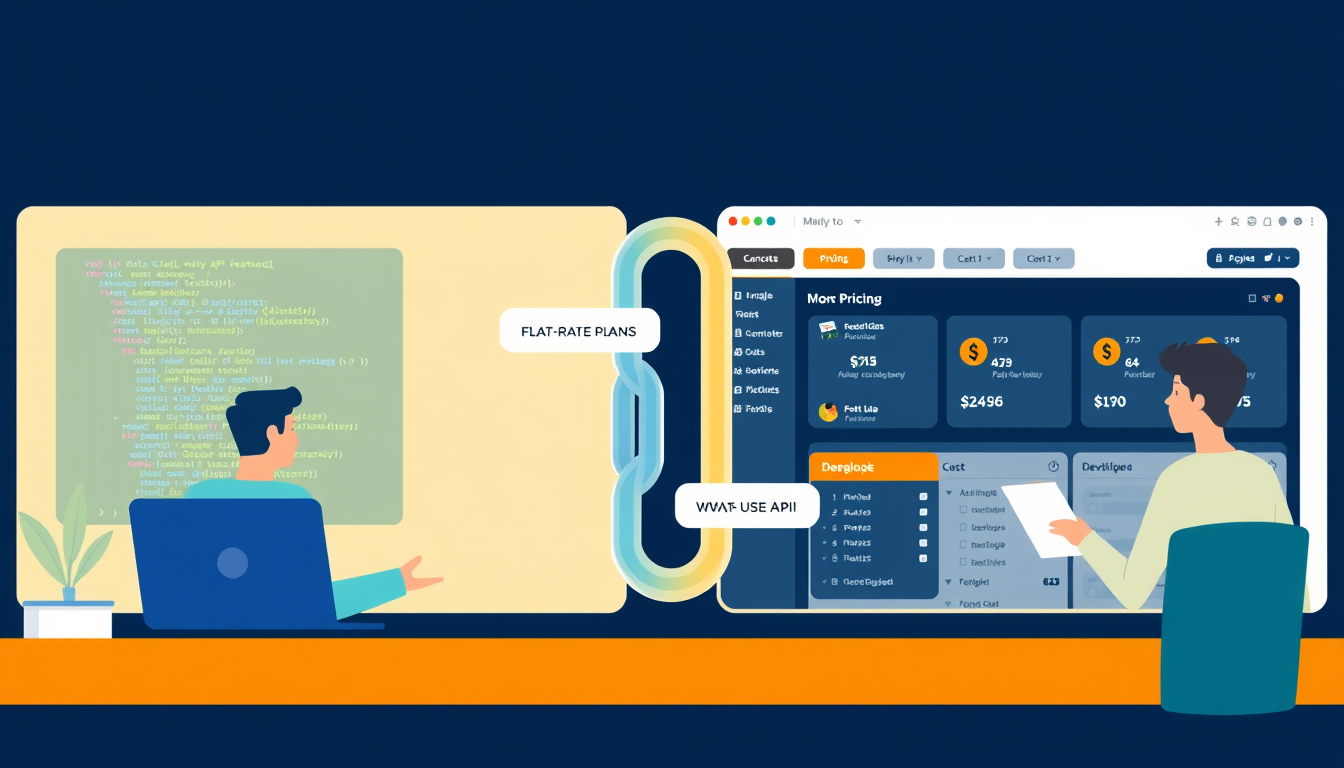
Anthropic has decoupled flat-rate Claude subscriptions (Pro at $20/month, Max at $100–$200/month) from API access for third-party AI agent frameworks like OpenClaw. Starting April 4, 2026, using OpenClaw with Claude requires a separate Anthropic API key billed on a pay-per-token basis, not covered by your subscription. This means higher and less predictable costs for anyone automating tasks with Claude through external tools.
What the Anthropic-OpenClaw Split Actually Means for API Access
Claude subscriptions have always included access to Claude.ai for chat. Many developers and power users also routed their subscription through third-party AI agent frameworks like OpenClaw — tools that automate multi-step tasks by calling Claude repeatedly. Anthropic is ending that arrangement. From April 4, 2026, OpenClaw and similar frameworks must authenticate via a dedicated Anthropic API key, billed at Anthropic's standard token rates (e.g., Claude 3.5 Sonnet costs $3 per million input tokens and $15 per million output tokens as of early 2026). Your $20/month Pro plan will no longer cover those calls. Think of it like a gym membership: it covered classes in the building, but now external fitness apps that tap into the gym's equipment need their own billing account. The subscription and the API are now two separate products with separate pricing.
How to Set Up a Paid Anthropic API Key for OpenClaw or Other Agents
If you use OpenClaw or any Claude-powered agent framework, here is exactly what to do before April 4, 2026. First, create or log into your account at console.anthropic.com. Navigate to 'API Keys' and generate a new key — it will look like: `sk-ant-api03-xxxxxxxxxxxxxxxxxxxx`. Add a payment method under 'Billing'. Then configure OpenClaw with your key. In Python using the Anthropic SDK, it looks like this:
```python import anthropic
client = anthropic.Anthropic(api_key="sk-ant-api03-YOUR_KEY_HERE")
message = client.messages.create( model="claude-3-5-sonnet-20241022", max_tokens=1024, messages=[{"role": "user", "content": "Summarize this report."}] ) print(message.content) ```
For OpenClaw specifically, paste the key into its settings panel under 'AI Provider > Anthropic API Key'. Never hardcode keys in public repositories — use environment variables like `os.environ.get('ANTHROPIC_API_KEY')` instead.
Cost, Security, and Best Practices After the Pricing Change
Switching from a flat subscription to pay-per-token API billing introduces real cost variability. A single agentic task that runs 50 Claude calls could consume hundreds of thousands of tokens. Set spending limits immediately in the Anthropic console under 'Usage Limits' to avoid surprise bills. Monitor your usage dashboard weekly during the transition. On security: treat your API key like a password. Rotate it immediately if it is ever exposed. Use separate keys for separate projects so you can revoke one without breaking everything. Store keys in environment variables or a secrets manager like AWS Secrets Manager or HashiCorp Vault, never in plain text config files. Non-technical users relying on OpenClaw-powered no-code tools should check with the tool vendor — they may absorb the cost change or pass it on through updated pricing. Ask your vendor directly whether their product is affected before April 4.
Key Takeaways
- Claude Pro and Max subscriptions will no longer cover API calls made through third-party agent frameworks like OpenClaw starting April 4, 2026.
- Developers must generate a dedicated Anthropic API key at console.anthropic.com and connect it to billing to continue using OpenClaw.
- API usage is billed per token, making costs variable — set spending caps in the Anthropic console to avoid unexpected charges.
- Never store API keys in source code or public repositories; use environment variables or a secrets manager.
- Non-technical users should contact their no-code tool vendor to understand whether pricing changes will be passed on to them.
FAQ
Q: Can I still use Claude.ai chat with my existing subscription after April 4, 2026?
A: Yes, your Claude Pro or Max subscription continues to cover direct use of Claude.ai for chat and built-in features. Only third-party agent frameworks like OpenClaw are affected and now require a separate API key.
Q: How much will it cost to use Claude via API instead of a subscription?
A: Costs depend on token usage — Claude 3.5 Sonnet runs approximately $3 per million input tokens and $15 per million output tokens. Light users may pay less than a subscription; heavy agentic users could pay significantly more.
Q: What if I accidentally expose my Anthropic API key in a public GitHub repo?
A: Revoke the key immediately in the Anthropic console under 'API Keys' and generate a new one. Review your billing dashboard for any unauthorized usage and contact Anthropic support if you see suspicious charges.
Conclusion
Anthropic's decision to separate subscription access from API-based agent frameworks like OpenClaw is a direct cost-structure change that affects both developers and non-technical users building with Claude. The practical next step is clear: generate a dedicated API key at console.anthropic.com, connect billing, set a spending limit, and store your key securely using environment variables before April 4, 2026.
Related Posts
- How Do You Use Claude Code to Build Your First App?
You can build a real app with Claude Code even if you've never written a line of code. Just install it, describe your idea in plain English, and let Claude write, fix, and run the code for you. This guide walks you through every step. - What Is Answer Engine Optimization (AEO)? 2026 Guide
Answer Engine Optimization (AEO) is the practice of structuring content so AI-powered search engines select it as the authoritative answer. This 2026 guide covers the full AEO framework: from schema markup and entity optimization to content architecture that wins AI citations. - How Will AI Change What Skills You Actually Need?
When a top HR leader says wisdom will define the 2026 workforce, she's naming something you've probably already felt: knowing things matters less than knowing what to do with them. Here's what that actually looks like for your daily work life.
Also on AI Future Lab
- [Company Spotlight] Anthropic: AI Safety - Claude Models
🏢 COMPANY SPOTLIGHT Anthropic Anthropic is an AI safety company developing Claude, a family of large language models trained using Constitutional AI to be h