How Can APIs Save Months of Development?
In 2025, the most powerful APIs developers should know include OpenAI, Stripe, Twilio, Supabase, and Google Maps — each solving a core problem at scale. Knowing which APIs to prioritize saves weeks of build time. This guide breaks down what each does, how to call it, and what it costs.
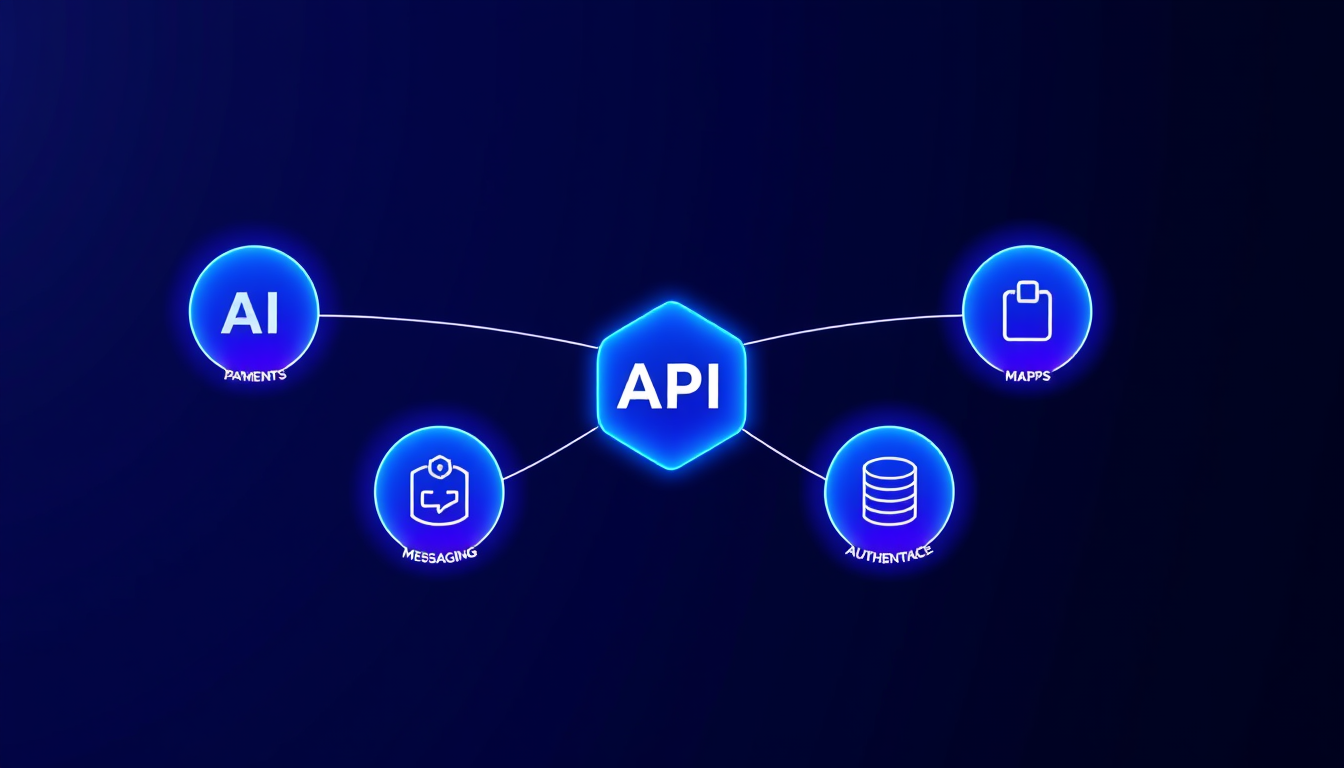
The most powerful APIs in 2025 are the ones that replace months of custom development with a single authenticated request — OpenAI for AI features, Stripe for payments, Twilio for messaging, Supabase for backend infrastructure, and Google Maps for location data. Each offers a free tier to start and production-grade reliability to scale. Mastering these five covers 80% of what most modern apps need.
The 5 Most Powerful APIs Every Developer Should Know in 2025
An API (Application Programming Interface) lets your app talk to another service — sending a request and getting data or an action back. The most powerful APIs are the ones that handle genuinely hard problems so you don't have to build them from scratch.
**OpenAI API** — Add GPT-4o or o3 to any app for text generation, summarization, and reasoning. Powers thousands of production AI products.
**Stripe API** — The industry standard for payments. Handles subscriptions, one-time charges, invoices, and fraud detection across 135+ currencies.
**Twilio API** — Send SMS, WhatsApp messages, and make voice calls programmatically. Used by Airbnb, Uber, and millions of developers.
**Supabase API** — An open-source Firebase alternative giving you a Postgres database, auth, storage, and real-time subscriptions over a REST or GraphQL API instantly.
**Google Maps Platform API** — Location search, routing, geocoding, and embedded maps. Still the most reliable and feature-complete mapping API available.
Each of these has official SDKs, extensive documentation, and an active developer community — meaning you'll find help fast when you hit a wall.
How to Make Your First Call to a Powerful API (Real Example)
Here's how to call the OpenAI Chat API in Python — the same pattern works across nearly every modern API:
```python import openai import os
client = openai.OpenAI(api_key=os.environ.get("OPENAI_API_KEY"))
response = client.chat.completions.create( model="gpt-4o", messages=[ {"role": "user", "content": "Explain APIs in one sentence."} ] )
print(response.choices[0].message.content) ```
And here's the same concept using Stripe to create a payment intent via curl:
```bash curl https://api.stripe.com/v1/payment_intents \ -u sk_test_YOUR_KEY: \ -d amount=2000 \ -d currency=usd ```
Notice the shared pattern: you pass an API key for authentication, send a structured request, and get a structured response back. Every API on this list follows this model. Once you understand it with one API, you can apply it to all of them. Store your keys as environment variables — never hardcode them in source files you commit to Git.
Pricing, Rate Limits, and Choosing the Right API for Your Project
Every powerful API charges differently, and picking the wrong one for your scale can get expensive fast.
**OpenAI** charges per token (roughly per word). GPT-4o costs about $5 per million input tokens — fine for most apps, but monitor usage with their dashboard.
**Stripe** charges 2.9% + $0.30 per transaction, with no monthly fee. You only pay when you earn.
**Twilio** charges per message ($0.0079/SMS in the US) and per minute for calls. Costs scale linearly — easy to predict.
**Supabase** has a generous free tier (500MB database, 50,000 monthly active users) before a $25/month Pro plan.
**Google Maps** gives $200/month in free credits, covering roughly 28,000 map loads — enough for most early-stage apps.
Three rules when adopting a new API: (1) Set spending alerts before you go live. (2) Check rate limits — OpenAI and Google Maps both throttle aggressive callers. (3) Read the terms of service for production use cases, especially around data retention and reselling. Starting with free tiers is smart; just know exactly where the billing starts.
Key Takeaways
- OpenAI, Stripe, Twilio, Supabase, and Google Maps are the five APIs with the highest developer leverage in 2025.
- Every modern API follows the same core pattern: authenticate with a key, send a request, receive structured data back.
- Always load API keys from environment variables — never hardcode them in source files committed to version control.
- Most top APIs offer free tiers sufficient for development and early-stage production — set billing alerts before launching.
- Mastering one API's request-response pattern makes learning every other API significantly faster.
FAQ
Q: Which API is easiest for a complete beginner to start with?
A: Supabase is the most beginner-friendly — it auto-generates a REST API from your database schema with no configuration required. You can have data reading and writing from a web app in under 10 minutes using their JavaScript SDK.
Q: Are there powerful free APIs that never charge anything?
A: Yes — Open-Meteo (weather data), REST Countries, and NASA's public APIs are fully free with no key required for low-volume use. For production apps, however, the most capable APIs like OpenAI and Stripe do charge beyond their free tiers.
Q: What if I exceed my API rate limit in production?
A: Most APIs return a 429 Too Many Requests error when you hit rate limits — your code should catch this and implement exponential backoff (retry after 1s, then 2s, then 4s). For sustained high traffic, contact the API provider to request a rate limit increase.
Conclusion
The most powerful APIs in 2025 — OpenAI, Stripe, Twilio, Supabase, and Google Maps — let small teams ship production-grade features that would otherwise take months to build. Start by picking the one that solves your most immediate problem, make your first authenticated request using the pattern shown above, and set a spending alert before you go live. That single habit will save you from 90% of the painful surprises developers hit when scaling.
Related Posts
- Which APIs Will Dominate Development in 2025?
In 2025, the most powerful APIs developers should know include OpenAI, Stripe, Google Maps, Twilio, and GitHub. These APIs unlock AI generation, payments, location, messaging, and automation — and mastering even two or three of them dramatically expands what you can build. - What Is Answer Engine Optimization (AEO)? 2026 Guide
Answer Engine Optimization (AEO) is the practice of structuring content so AI-powered search engines select it as the authoritative answer. This 2026 guide covers the full AEO framework: from schema markup and entity optimization to content architecture that wins AI citations. - How to Organize API Keys Across Multiple Projects?
The safest way to manage multiple API keys across projects is to store each key in a project-specific .env file, never hardcode them, and use a secrets manager for production. This prevents key leakage, accidental cross-project usage, and billing surprises.